
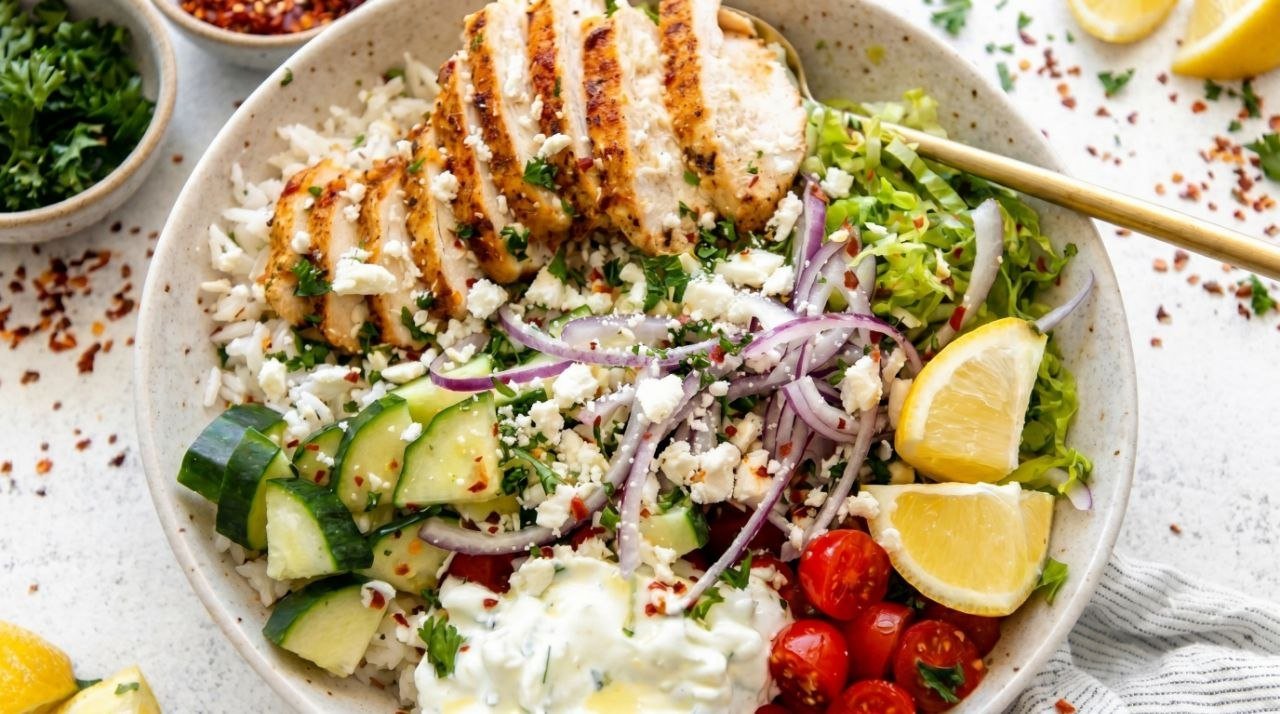
Greek Chicken Bowls are a complete meal built in layers — juicy lemon-oregano marinated chicken thighs sliced over a bed of fluffy rice or crisp romaine, topped with cool cucumber-tomato salad, briny kalamata olives, crumbled feta cheese, and a generous drizzle of creamy tzatziki that pulls every component together into a bowl that tastes bright, fresh, and deeply satisfying all at once. The entire thing comes together in under forty minutes of active work, travels well for meal prep, and feeds a family without requiring any skill beyond knowing how to slice and assemble. It is the kind of dinner that looks more composed than it actually is, which is exactly what a weeknight needs.
What makes this version better than a standard grilled chicken bowl is the marinade-as-dressing technique — the same lemon, garlic, olive oil, and oregano mixture that tenderizes the chicken before cooking is also brushed over the finished slices right off the heat, so the meat is flavored twice rather than once. Most recipes marinate and discard, losing half the built flavor in the process. Reserving a separate portion of the marinade before the raw chicken touches it and using it as a finishing sauce at the end means every bite of chicken carries the full brightness of the marinade at both the core and the surface, without any cross-contamination risk.
Why Greek Chicken Bowls Work Every Time
The reason Greek Chicken Bowls succeed as a meal prep and weeknight format is that every component holds its quality independently in the refrigerator without degrading the others. The marinated chicken stays juicy sliced and stored for up to four days because the olive oil in the marinade coats the cut surfaces and prevents moisture from escaping. The cucumber-tomato salad stays crisp because it is dressed with lemon and olive oil rather than a creamy dressing that would break down the cell walls of the vegetables overnight. The tzatziki thickens slightly as it chills, which actually improves its texture by the second day. Each component can be made in a batch at the start of the week and assembled fresh to order at each meal, which means the bowl tastes freshly made every time rather than like a leftover reheated in a container.
The Science Behind Greek Chicken Bowls
The marinade works through two mechanisms simultaneously. The lemon juice contains citric acid, which partially denatures the surface proteins in the chicken — it unravels their tightly coiled structure slightly, creating micro-pores in the meat surface that allow the olive oil and aromatic compounds from the garlic and oregano to penetrate a few millimeters deeper than they would on unmarinated meat. This is why a lemon-based marinade produces chicken that tastes seasoned through its texture rather than just coated on the outside. Marinating for at least thirty minutes achieves most of the benefit — beyond two hours, the acid begins to over-denature the proteins and the outer layer of the chicken becomes slightly mushy rather than tender, so an overnight marinade in an acidic mixture is not always better than a shorter one.
The tzatziki works because of the strained yogurt base — Greek yogurt has had most of its liquid whey removed through straining, which concentrates both the fat and the protein content and produces a thick, stable sauce that does not separate or become watery when cucumber is added to it. The cucumber must be salted and drained before mixing into the yogurt for the same reason: raw cucumber is approximately 95 percent water, and adding it unsalted to the yogurt introduces enough moisture to turn the tzatziki runny within minutes of mixing. Salting draws the water out through osmosis before it ever reaches the yogurt, which preserves the thick consistency of the sauce from the moment it is made to the moment it is spooned over the finished bowl.
What Goes In

Four components, one bowl, and everything holds in the fridge for four days.
1 1/2 lbs boneless skinless chicken thighs.
Juice and zest of 2 large lemons, divided between marinade and finishing sauce.
4 tablespoons olive oil, divided.
4 cloves garlic, minced, divided.
2 teaspoons dried oregano.
1 teaspoon kosher salt and 1/2 teaspoon black pepper, for the marinade.
2 cups cooked rice, quinoa, or orzo as the bowl base.
1 English cucumber, diced small.
1 cup cherry tomatoes, halved.
1/2 cup kalamata olives, pitted and halved.
4 oz crumbled feta cheese.
1 cup full-fat Greek yogurt for tzatziki.
1/2 cucumber, grated and squeezed dry, for tzatziki.
1 tablespoon fresh dill, chopped, for tzatziki.
Want to Mix It Up?
Use cauliflower rice as the bowl base instead of white rice if you want a lower-carbohydrate version — it absorbs the drippings from the sliced chicken and the tzatziki more readily than regular rice and provides a neutral, slightly nutty flavor that does not compete with the bright lemon-oregano seasoning.
Substitute chicken breast for chicken thighs if you prefer a leaner result, but reduce the cooking time by 2 to 3 minutes per side and check the internal temperature at 160 degrees Fahrenheit rather than waiting for visual cues alone — breast dries out faster than thigh and is less forgiving if the pan runs hot.
Replace the tzatziki with hummus if you want a dairy-free version that still gives the bowl a creamy, rich element — a good hummus has enough fat from the tahini and olive oil to bind the bowl the same way yogurt sauce does, and its earthy depth pairs naturally with the lemon and oregano in the chicken marinade.
Add roasted red peppers, artichoke hearts, or thinly sliced red onion to the vegetable layer for a more substantial bowl with additional Mediterranean flavor. Red onion in particular sharpens the acidity of the cucumber salad and cuts through the richness of the feta in a way that makes the whole bowl taste more alive.
How to Make Greek Chicken Bowls
Step 1 – Mix and divide the marinade: In a small bowl, whisk together the lemon juice, lemon zest, olive oil, minced garlic, oregano, salt, and pepper until fully combined. Pour half of this mixture over the chicken thighs in a shallow dish or zip-top bag and toss to coat every surface evenly. Cover and refrigerate for a minimum of 30 minutes and a maximum of 2 hours. Transfer the remaining half of the marinade to a separate sealed container and refrigerate it separately — this is the finishing sauce and must never contact the raw chicken.
Step 2 – Make the tzatziki: Grate the half cucumber on the large holes of a box grater directly onto a clean kitchen towel. Sprinkle with a pinch of salt, gather the towel, and twist it firmly over the sink to squeeze out as much liquid as possible — the cucumber should feel nearly dry when you open the towel. In a bowl, stir together the Greek yogurt, squeezed cucumber, fresh dill, one clove of minced garlic, and a squeeze of lemon until uniform. Taste for salt, then cover and refrigerate until serving. Tzatziki that has chilled for at least 20 minutes is noticeably thicker and more cohesive than tzatziki served immediately after mixing.
Step 3 – Make the cucumber-tomato salad: Combine the diced cucumber, halved cherry tomatoes, and kalamata olives in a bowl. Drizzle with one tablespoon of olive oil and a squeeze of lemon juice, then toss and season with salt and pepper to taste. Let the salad sit at room temperature while the chicken cooks so the vegetables have time to absorb the seasoning and release a small amount of their natural juice into the dressing, which deepens the flavor across the whole salad.
Step 4 – Cook the chicken: Heat a large cast iron skillet or grill pan over medium-high heat until it is genuinely hot — a drop of water should evaporate immediately on contact. Remove the chicken from the marinade and pat the surface dry with paper towels, which removes excess liquid that would cause the chicken to steam rather than sear. Cook the thighs for 5 to 6 minutes per side without moving them until they are golden brown with visible char marks and read 165 degrees Fahrenheit on an instant-read thermometer. Transfer to a cutting board and rest for 5 minutes before slicing against the grain into strips.
Step 5 – Apply the finishing sauce and assemble: While the chicken is still warm from resting, pour the reserved marinade finishing sauce over the sliced strips and toss gently so every cut surface is coated. The residual heat draws the sauce into the meat as the slices cool. To assemble each bowl, start with a base of rice or grain, add a portion of sliced chicken, spoon the cucumber-tomato salad alongside it, then top with crumbled feta and a generous drizzle of tzatziki. Serve immediately for a warm bowl, or pack each component separately for meal prep and assemble cold throughout the week.
3 Mistakes That Ruin Greek Chicken Bowls
Marinating the chicken for too long: The citric acid in the lemon juice begins over-denaturing surface proteins after about two hours, changing the texture of the outer layer from tender to slightly mushy and grainy. The sweet spot is 30 minutes to 2 hours — enough time to flavor the meat and open its surface for absorption, but not so long that the acid degrades the texture you are trying to achieve. An overnight lemon marinade consistently produces worse chicken than a 45-minute one.
Not drying the chicken before searing: Marinade left on the surface of the chicken means wet protein hitting a hot pan, which creates steam instead of direct contact with the metal. Steam prevents browning entirely — the Maillard reaction that produces the golden, flavorful crust requires direct dry heat, not moisture. Pat each thigh firmly dry with paper towels immediately before it goes into the pan, even if it means removing a visible layer of marinade from the surface.
Adding unsalted cucumber directly to the tzatziki: Raw cucumber is almost entirely water, and that water releases into the yogurt the moment the two are combined, turning the sauce thin and runny within minutes. Salt the grated cucumber, let it sit for two minutes, then squeeze it as dry as possible before it touches the yogurt. This single step is the difference between a tzatziki that holds its thick, creamy consistency for three days and one that becomes a puddle by the time the bowl reaches the table.
What to Serve With Greek Chicken Bowls
Greek Chicken Bowls are a complete meal on their own, but warm pita bread, roasted chickpeas, or a simple lemon-dressed green salad extend the plate naturally if you are feeding a larger group. For a full Mediterranean-inspired dinner, pair them with our Eggplant Parmesan as a hearty vegetarian alternative that uses similar Mediterranean flavor principles and gives guests who do not eat meat a satisfying main. If you want a dessert that balances the bright, savory flavors of the bowl with something light and sweet, our Easy Lemon Bars continue the lemon theme of the meal without competing with it.

Easy Greek Chicken Bowls
Ingredients
Method
- How to Make Greek Chicken Bowls
- Step 1 – Mix and divide the marinade: In a small bowl, whisk together the lemon juice, lemon zest, olive oil, minced garlic, oregano, salt, and pepper until fully combined. Pour half of this mixture over the chicken thighs in a shallow dish or zip-top bag and toss to coat every surface evenly. Cover and refrigerate for a minimum of 30 minutes and a maximum of 2 hours. Transfer the remaining half of the marinade to a separate sealed container and refrigerate it separately — this is the finishing sauce and must never contact the raw chicken.
- Step 2 – Make the tzatziki: Grate the half cucumber on the large holes of a box grater directly onto a clean kitchen towel. Sprinkle with a pinch of salt, gather the towel, and twist it firmly over the sink to squeeze out as much liquid as possible — the cucumber should feel nearly dry when you open the towel. In a bowl, stir together the Greek yogurt, squeezed cucumber, fresh dill, one clove of minced garlic, and a squeeze of lemon until uniform. Taste for salt, then cover and refrigerate until serving. Tzatziki that has chilled for at least 20 minutes is noticeably thicker and more cohesive than tzatziki served immediately after mixing.
- Step 3 – Make the cucumber-tomato salad: Combine the diced cucumber, halved cherry tomatoes, and kalamata olives in a bowl. Drizzle with one tablespoon of olive oil and a squeeze of lemon juice, then toss and season with salt and pepper to taste. Let the salad sit at room temperature while the chicken cooks so the vegetables have time to absorb the seasoning and release a small amount of their natural juice into the dressing, which deepens the flavor across the whole salad.
- Step 4 – Cook the chicken: Heat a large cast iron skillet or grill pan over medium-high heat until it is genuinely hot — a drop of water should evaporate immediately on contact. Remove the chicken from the marinade and pat the surface dry with paper towels, which removes excess liquid that would cause the chicken to steam rather than sear. Cook the thighs for 5 to 6 minutes per side without moving them until they are golden brown with visible char marks and read 165 degrees Fahrenheit on an instant-read thermometer. Transfer to a cutting board and rest for 5 minutes before slicing against the grain into strips.
- Step 5 – Apply the finishing sauce and assemble: While the chicken is still warm from resting, pour the reserved marinade finishing sauce over the sliced strips and toss gently so every cut surface is coated. The residual heat draws the sauce into the meat as the slices cool. To assemble each bowl, start with a base of rice or grain, add a portion of sliced chicken, spoon the cucumber-tomato salad alongside it, then top with crumbled feta and a generous drizzle of tzatziki. Serve immediately for a warm bowl, or pack each component separately for meal prep and assemble cold throughout the week.
Notes
