
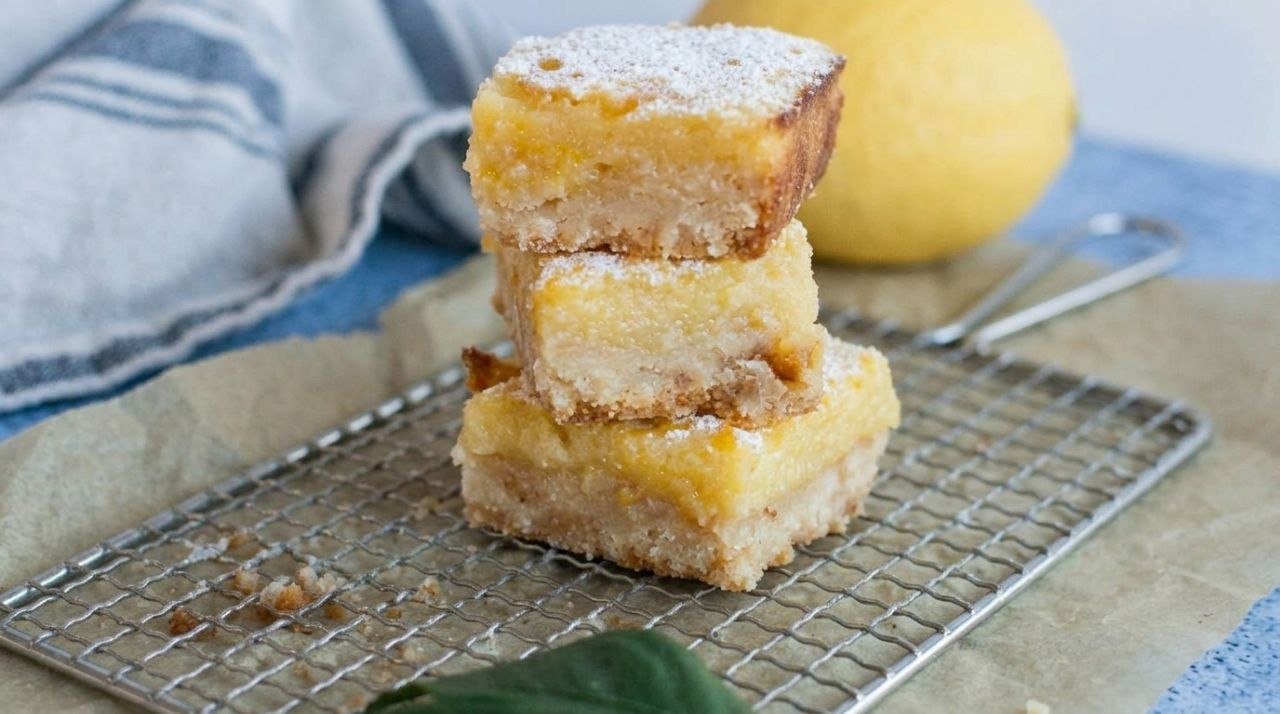
Picture a tray of lemon bars cooling on the counter: the crust is golden and tender, the filling is glossy and bright, and the scent of fresh citrus makes the whole kitchen feel lighter the moment you slice into the pan. That contrast is exactly what makes lemon bars so satisfying, because each bite gives you something rich and buttery first, then a clean burst of lemon at the end. They look simple, but when made well, they taste polished enough to serve at a brunch, a holiday table, or alongside afternoon coffee.
This version keeps the ingredient list short and the method straightforward without sacrificing flavor or texture. The crust bakes into a firm shortbread-like base that supports the filling, while the lemon layer sets into a soft custard that is tangy, smooth, and just sweet enough to balance the acidity. It is the kind of dessert that feels bright and homemade without requiring special equipment or advanced baking skills, which is why it is such a dependable recipe to keep on hand.
Why You’ll Love This Recipe
First, the recipe is simple enough for beginners because the crust and filling use basic ingredients that are easy to measure, mix, and bake without complicated technique. Second, the flavor feels balanced and refined, with the buttery base softening the sharpness of the lemon so the bars never taste too sour or too sweet. Third, lemon bars are make-ahead friendly, which means you can bake them the day before and let them chill until the filling sets beautifully and the flavor becomes even better. Fourth, they travel well and cut neatly when fully cooled, making them a smart choice for picnics, potlucks, bake sales, or any table where you want a dessert that looks elegant without extra effort.
The Science Behind Lemon Bars
The texture of lemon bars comes from two different baking processes working together: shortbread-style crust formation and custard setting. In the crust, butter coats the flour and limits gluten development, which is why the base stays tender and crumbly rather than tough. In the filling, eggs act as the structure-building protein that thickens as it bakes, turning the liquid lemon mixture into a soft set custard. Sugar balances the acidity of the lemon juice while also helping the filling retain a smooth texture instead of tasting sharp or chalky. You can read more about custard on Wikipedia: Custard.
What You Need

The Buttery Crust:
All-purpose flour – 1 1/2 cups | Unsalted butter – 3/4 cup, softened | Powdered sugar – 1/4 cup | Salt – 1/4 tsp
The Tangy Lemon Filling:
Granulated sugar – 1 cup | Eggs – 3 large | Fresh lemon juice – 1/2 cup | Lemon zest – from 2 lemons | All-purpose flour – 2 tbsp | Baking powder – 1/2 tsp
For Finishing:
Powdered sugar – for dusting
How to Make Easy Lemon Bars
Step 1 – Prepare the pan: Preheat the oven to 350 degrees F (175 degrees C) and line an 8×8 inch baking pan with parchment paper, leaving enough overhang on two sides to lift the bars out later. This step may seem small, but it makes a big difference because lemon bars are delicate once cooled and parchment gives you clean slices without breaking the crust.
Step 2 – Make the crust: In a bowl, combine the flour, softened butter, powdered sugar, and salt until the mixture looks crumbly and evenly moistened. Press it firmly into the bottom of the prepared pan, making sure the layer is even from corner to corner, because an uneven crust will bake at different speeds and can create a dry edge with a soft center.
Step 3 – Bake the crust: Bake the crust for 18 to 20 minutes, or until it looks lightly golden around the edges and just set in the middle. The goal is not deep browning here, because the crust should finish baking gently without becoming hard, which allows it to stay tender under the filling.
Step 4 – Whisk the filling: While the crust bakes, whisk the granulated sugar, eggs, lemon juice, lemon zest, flour, and baking powder in a medium bowl until the mixture is smooth and fully combined. Whisking well matters because it dissolves the sugar more evenly and helps the filling bake into a uniform layer instead of separating or looking patchy.
Step 5 – Pour over the hot crust: Once the crust comes out of the oven, pour the lemon filling directly over the warm base. Doing this while the crust is still hot helps the two layers bond together, which reduces the chance of the filling sliding away from the base after baking and cooling.
Step 6 – Bake until set: Return the pan to the oven and bake for 20 to 25 minutes, or until the center is just set and no longer jiggles when the pan is nudged gently. The bars should look slightly glossy on top and feel firm around the edges, but avoid overbaking because too much time in the oven can make the filling rubbery instead of soft and creamy.
Step 7 – Cool completely: Place the pan on a wire rack and let the bars cool to room temperature before chilling them in the refrigerator for at least 1 hour. Cooling is not optional here, because the filling continues to set as it rests and cutting too early can cause the bars to collapse or smear instead of slicing cleanly.
Step 8 – Dust and slice: Lift the bars out using the parchment overhang, place them on a cutting board, and dust the top generously with powdered sugar just before serving. Use a sharp knife and wipe it clean between cuts for the neatest squares, then serve chilled or at cool room temperature for the best texture and flavor.
3 Mistakes That Ruin Lemon Bars
Not baking the crust enough: If the crust is pale and underbaked, it can stay soft under the filling and lose the crisp, buttery texture that makes lemon bars so satisfying. Bake it until just lightly golden so it can support the filling without turning soggy later.
Overbaking the lemon filling: The filling should set softly, not dry out in the oven. If it bakes too long, it can crack, turn rubbery, and lose the smooth custard-like texture that gives lemon bars their charm, so watch the center closely near the end of baking.
Cutting before the bars are fully chilled: Warm lemon bars are too soft to slice cleanly, and the filling can shift or smear across the crust. Always let them cool completely and chill before cutting if you want the neat squares shown in bakery-style photos.
What to Serve with Easy Lemon Bars
These lemon bars pair beautifully with fresh berries, a cup of hot tea, vanilla ice cream, or light whipped cream. Their bright citrus flavor also works well after heavier meals because the acidity cleans the palate and leaves the finish feeling clean and refreshing.

Easy Lemon Bars Recipe (Buttery Crust with Tangy Lemon Filling)
Ingredients
Method
- How to Make Easy Lemon Bars
- Step 1 – Prepare the pan: Preheat the oven to 350 degrees F (175 degrees C) and line an 8×8 inch baking pan with parchment paper, leaving enough overhang on two sides to lift the bars out later. This step may seem small, but it makes a big difference because lemon bars are delicate once cooled and parchment gives you clean slices without breaking the crust.
- Step 2 – Make the crust: In a bowl, combine the flour, softened butter, powdered sugar, and salt until the mixture looks crumbly and evenly moistened. Press it firmly into the bottom of the prepared pan, making sure the layer is even from corner to corner, because an uneven crust will bake at different speeds and can create a dry edge with a soft center.
- Step 3 – Bake the crust: Bake the crust for 18 to 20 minutes, or until it looks lightly golden around the edges and just set in the middle. The goal is not deep browning here, because the crust should finish baking gently without becoming hard, which allows it to stay tender under the filling.
- Step 4 – Whisk the filling: While the crust bakes, whisk the granulated sugar, eggs, lemon juice, lemon zest, flour, and baking powder in a medium bowl until the mixture is smooth and fully combined. Whisking well matters because it dissolves the sugar more evenly and helps the filling bake into a uniform layer instead of separating or looking patchy.
- Step 5 – Pour over the hot crust: Once the crust comes out of the oven, pour the lemon filling directly over the warm base. Doing this while the crust is still hot helps the two layers bond together, which reduces the chance of the filling sliding away from the base after baking and cooling.
- Step 6 – Bake until set: Return the pan to the oven and bake for 20 to 25 minutes, or until the center is just set and no longer jiggles when the pan is nudged gently. The bars should look slightly glossy on top and feel firm around the edges, but avoid overbaking because too much time in the oven can make the filling rubbery instead of soft and creamy.
- Step 7 – Cool completely: Place the pan on a wire rack and let the bars cool to room temperature before chilling them in the refrigerator for at least 1 hour. Cooling is not optional here, because the filling continues to set as it rests and cutting too early can cause the bars to collapse or smear instead of slicing cleanly.
- Step 8 – Dust and slice: Lift the bars out using the parchment overhang, place them on a cutting board, and dust the top generously with powdered sugar just before serving. Use a sharp knife and wipe it clean between cuts for the neatest squares, then serve chilled or at cool room temperature for the best texture and flavor.
Notes
