
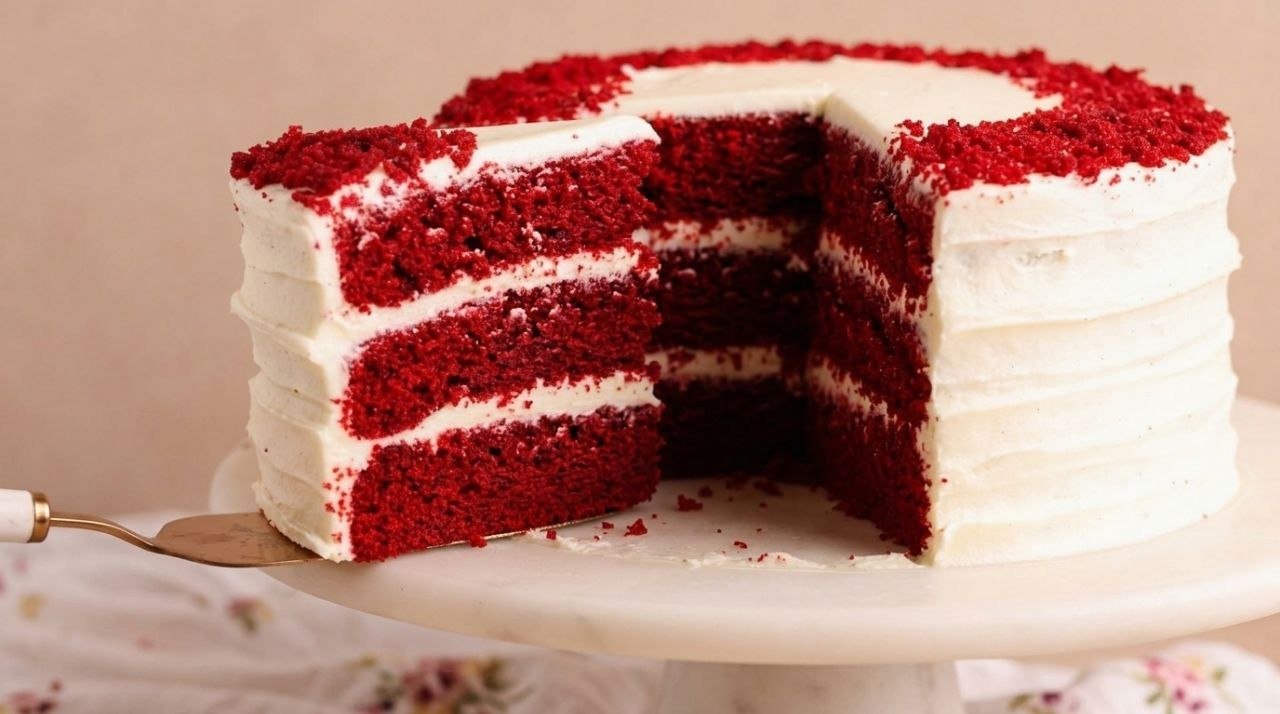
Picture slicing through a tall, deeply crimson cake to reveal layers that are impossibly moist and tender, with a fine crumb that practically melts on the tongue before the cool, tangy cream cheese frosting even registers. The color is dramatic and unmistakable, the texture is soft enough to eat with nothing but a fork and a glass of cold milk, and the flavor sits in that rare space between chocolate and vanilla where neither dominates but both are clearly present. Red velvet cake has held its place as one of the most beloved American layer cakes for over a century because it delivers on every level: visual impact, distinctive taste, and a texture that remains moist for days after baking.
What makes this particular recipe stand apart is the combination of buttermilk, vinegar, and a touch of cocoa that gives the cake its signature character without making it taste overwhelmingly of any single ingredient. The cream cheese frosting is rich and slightly tangy, which cuts through the sweetness of the cake perfectly and creates a balance that you keep coming back to bite after bite. Whether you are baking it for a birthday, a holiday table, or simply because you want a cake that looks as good as it tastes, this recipe gives you a result that is consistent, impressive, and genuinely worth making from scratch.
Why You’ll Love This Recipe
First, the cake layers bake up incredibly moist and stay that way for days because the buttermilk and oil work together to keep the crumb tender long after the cake has cooled, which makes it ideal for making a day ahead without any loss of quality. Second, the flavor is genuinely distinctive, with a mild cocoa undertone and a subtle tang from the buttermilk and vinegar that you will not find in any other cake, making each bite feel unique rather than like a generic chocolate or vanilla layer cake. Third, the cream cheese frosting is easy to make and nearly impossible to overwork, unlike buttercream, and it spreads smoothly over the layers without requiring special tools or advanced decorating skills. Fourth, the visual result is stunning regardless of your skill level because the contrast between the deep red cake and the bright white frosting creates a dramatic presentation that looks professionally made even when the frosting is simply spread with a spatula.
The Science Behind Red Velvet
The original red color in traditional red velvet cake came from a natural chemical reaction between anthocyanins in cocoa powder and the acidic ingredients in the batter, specifically buttermilk and vinegar, which caused the cocoa to turn a reddish-brown hue when baked. Modern cocoa processing removes most of the anthocyanins through Dutch-processing, which is why contemporary recipes use food coloring to recreate the vivid red that the cake became famous for after the mid-twentieth century. The vinegar in the recipe does more than add color chemistry. It also reacts with the baking soda to create carbon dioxide bubbles that lighten the batter and give the cake its characteristic fluffy, tender crumb. The oil used instead of butter keeps the cake moist at cold temperatures because oil stays liquid even when chilled, unlike butter which solidifies in the refrigerator and makes a refrigerated cake feel dense. You can read more about this on Wikipedia: Red velvet cake.
What You Need
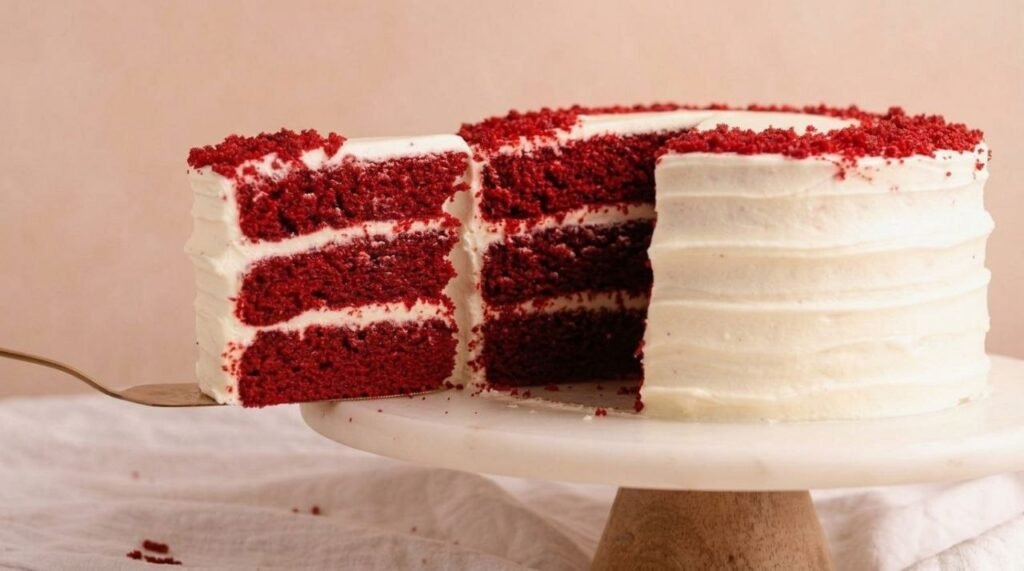
The Red Velvet Cake Layers:
All-purpose flour – 2 1/2 cups | Granulated sugar – 1 1/2 cups | Unsweetened cocoa powder – 2 tbsp | Baking soda – 1 tsp | Salt – 1 tsp | Eggs – 2 large, room temperature | Vegetable oil – 1 cup | Buttermilk – 1 cup, room temperature | Red food coloring – 2 tbsp liquid or 1 tsp gel | White vinegar – 1 tsp | Pure vanilla extract – 1 tsp
The Cream Cheese Frosting:
Full-fat cream cheese – 16 oz (2 blocks), softened | Unsalted butter – 1/2 cup, softened | Powdered sugar – 4 cups, sifted | Pure vanilla extract – 2 tsp | Salt – pinch
How to Make Classic Red Velvet Cake
Step 1 – Prepare the pans and oven: Preheat the oven to 350 degrees F (175 degrees C) and grease two 9-inch round cake pans generously with butter or non-stick spray, then line the bottoms with circles of parchment paper and grease the parchment as well. This double preparation prevents the layers from sticking even at the edges, which is important because red velvet cake tends to be more delicate than denser cakes and can tear if the sides catch on an ungreased pan wall during unmolding.
Step 2 – Mix the dry ingredients: In a large bowl, whisk together the flour, sugar, cocoa powder, baking soda, and salt until combined and no clumps of cocoa remain. Sifting the dry ingredients together or whisking them thoroughly is an important step because small lumps of cocoa or baking soda that make it into the batter without dispersing can create bitter spots or uneven rise in the finished cake.
Step 3 – Mix the wet ingredients: In a separate large bowl or the bowl of a stand mixer, whisk together the eggs, oil, buttermilk, food coloring, vinegar, and vanilla until the mixture is smooth and the color is uniform. Using room temperature eggs and buttermilk matters here because cold wet ingredients can cause the oil to seize slightly and create an uneven emulsion that leads to a dense, slightly gummy crumb instead of the light, fluffy texture this cake is known for.
Step 4 – Combine wet and dry: Pour the wet ingredients into the dry ingredients and stir gently with a spatula or mix on low speed just until no dry streaks remain and the batter looks smooth and uniformly red. Overmixing at this stage develops excess gluten in the flour, which tightens the crumb and turns what should be a pillowy, tender cake into something closer to bread in texture, so stop mixing the moment the batter comes together.
Step 5 – Divide and bake: Divide the batter evenly between the two prepared pans and smooth the tops with a spatula to ensure the layers bake at the same height. Bake for 28 to 33 minutes, or until a toothpick inserted into the center of each layer comes out with just a few moist crumbs clinging to it. Do not wait for the toothpick to come out completely dry, because that means the cake has already dried out slightly and the final texture will be less moist than it should be.
Step 6 – Cool the layers: Let the pans cool on a wire rack for 15 minutes, then run a thin knife around the edges of each pan, invert the layers onto the rack, and peel away the parchment. Allow the layers to cool completely to room temperature before frosting, which takes approximately 1 hour at room temperature or 30 minutes if you place them on the rack in a cool room. A warm layer will melt the cream cheese frosting on contact and cause it to slide off rather than adhere smoothly.
Step 7 – Make the cream cheese frosting: In the bowl of a stand mixer fitted with the paddle attachment, beat the softened cream cheese and butter together on medium speed for 2 to 3 minutes until completely smooth and fluffy with no remaining lumps. Add the sifted powdered sugar one cup at a time, mixing on low after each addition to prevent a cloud of sugar from filling the kitchen, then add the vanilla and salt, increase the speed to medium-high, and beat for one final minute until the frosting is light, smooth, and holds its shape when lifted with a spatula.
Step 8 – Assemble and frost the cake: Place the first cake layer on a serving plate or cake board and spread about one cup of frosting evenly over the top using an offset spatula, spreading it all the way to the edges. Set the second layer on top, pressing gently to adhere, then apply a thin crumb coat of frosting around the entire outside of the cake and refrigerate for 15 minutes to lock in any loose crumbs. Apply the remaining frosting in a thick, even layer over the top and sides, creating whatever finish you prefer, smooth and minimalist or textured with swirls, then refrigerate for at least 30 minutes before slicing to allow the frosting to set firm and the layers to settle into each other cleanly.
3 Mistakes That Ruin Red Velvet Cake
Using cold ingredients straight from the refrigerator: Cold eggs and cold buttermilk prevent the batter from emulsifying properly, which results in a dense, uneven crumb and sometimes a slightly sunken center after baking. Always bring your eggs and buttermilk to room temperature at least 30 minutes before mixing, and if you forget, place the eggs in a bowl of warm water for 5 minutes to take the chill off quickly.
Overmixing the batter after combining wet and dry: Red velvet batter looks smooth and glossy and it is tempting to keep mixing to make sure everything is fully incorporated, but even 30 seconds of extra mixing after the flour is hydrated can overdevelop the gluten and make the cake noticeably tougher than it should be. Mix only until the last visible streak of flour disappears and stop immediately.
Frosting a warm or hot cake: Cream cheese frosting has a lower melting point than buttercream, and even a slightly warm cake layer will cause it to become loose and slide down the sides of the cake no matter how carefully you applied it. This is the single most common reason a beautifully baked red velvet cake ends up looking messy and unprofessional in photos, so patience during the cooling step is absolutely non-negotiable.
What to Serve with Red Velvet Cake
This cake is a complete dessert on its own, but it pairs beautifully with a scoop of vanilla ice cream, fresh raspberries or strawberries, a cup of hot coffee or espresso, or cold whole milk. The slight bitterness of coffee in particular creates a wonderful contrast against the sweet frosting and the mild cocoa flavor of the cake, making each bite feel more complex and satisfying than when the cake is eaten alone.

Classic Red Velvet Cake with Cream Cheese Frosting (Moist & Fluffy)
Ingredients
Method
- How to Make Classic Red Velvet Cake
- Step 1 – Prepare the pans and oven: Preheat the oven to 350 degrees F (175 degrees C) and grease two 9-inch round cake pans generously with butter or non-stick spray, then line the bottoms with circles of parchment paper and grease the parchment as well. This double preparation prevents the layers from sticking even at the edges, which is important because red velvet cake tends to be more delicate than denser cakes and can tear if the sides catch on an ungreased pan wall during unmolding.
- Step 2 – Mix the dry ingredients: In a large bowl, whisk together the flour, sugar, cocoa powder, baking soda, and salt until combined and no clumps of cocoa remain. Sifting the dry ingredients together or whisking them thoroughly is an important step because small lumps of cocoa or baking soda that make it into the batter without dispersing can create bitter spots or uneven rise in the finished cake.
- Step 3 – Mix the wet ingredients: In a separate large bowl or the bowl of a stand mixer, whisk together the eggs, oil, buttermilk, food coloring, vinegar, and vanilla until the mixture is smooth and the color is uniform. Using room temperature eggs and buttermilk matters here because cold wet ingredients can cause the oil to seize slightly and create an uneven emulsion that leads to a dense, slightly gummy crumb instead of the light, fluffy texture this cake is known for.
- Step 4 – Combine wet and dry: Pour the wet ingredients into the dry ingredients and stir gently with a spatula or mix on low speed just until no dry streaks remain and the batter looks smooth and uniformly red. Overmixing at this stage develops excess gluten in the flour, which tightens the crumb and turns what should be a pillowy, tender cake into something closer to bread in texture, so stop mixing the moment the batter comes together.
- Step 5 – Divide and bake: Divide the batter evenly between the two prepared pans and smooth the tops with a spatula to ensure the layers bake at the same height. Bake for 28 to 33 minutes, or until a toothpick inserted into the center of each layer comes out with just a few moist crumbs clinging to it. Do not wait for the toothpick to come out completely dry, because that means the cake has already dried out slightly and the final texture will be less moist than it should be.
- Step 6 – Cool the layers: Let the pans cool on a wire rack for 15 minutes, then run a thin knife around the edges of each pan, invert the layers onto the rack, and peel away the parchment. Allow the layers to cool completely to room temperature before frosting, which takes approximately 1 hour at room temperature or 30 minutes if you place them on the rack in a cool room. A warm layer will melt the cream cheese frosting on contact and cause it to slide off rather than adhere smoothly.
- Step 7 – Make the cream cheese frosting: In the bowl of a stand mixer fitted with the paddle attachment, beat the softened cream cheese and butter together on medium speed for 2 to 3 minutes until completely smooth and fluffy with no remaining lumps. Add the sifted powdered sugar one cup at a time, mixing on low after each addition to prevent a cloud of sugar from filling the kitchen, then add the vanilla and salt, increase the speed to medium-high, and beat for one final minute until the frosting is light, smooth, and holds its shape when lifted with a spatula.
- Step 8 – Assemble and frost the cake: Place the first cake layer on a serving plate or cake board and spread about one cup of frosting evenly over the top using an offset spatula, spreading it all the way to the edges. Set the second layer on top, pressing gently to adhere, then apply a thin crumb coat of frosting around the entire outside of the cake and refrigerate for 15 minutes to lock in any loose crumbs. Apply the remaining frosting in a thick, even layer over the top and sides, creating whatever finish you prefer, smooth and minimalist or textured with swirls, then refrigerate for at least 30 minutes before slicing to allow the frosting to set firm and the layers to settle into each other cleanly.
Notes
