
This easy cioppino is the dish I make when I want dinner to feel like a celebration without spending all day in the kitchen. Clams, mussels, shrimp, scallops and big flakes of white fish simmer in a garlicky tomato and white wine broth scented with fennel and a little chili heat. You bring the whole pot to the table, hand out bowls and a loaf of crusty sourdough, and everyone digs in.
Below I walk you through where this seafood stew comes from, the ingredients, how to choose and handle fresh seafood safely, the step-by-step method, tips, variations, what to serve alongside, common mistakes and how to store leftovers. The printable recipe card with exact measurements and estimated nutrition is waiting at the bottom of the post.

Why This Cioppino Recipe Works
Cioppino was born on the San Francisco waterfront, where Italian immigrant fishermen cooked whatever the boats brought in with tomatoes, wine and garlic. The result is a rustic, generous seafood stew that tastes like the coast, and a few smart steps make the home version just as good.
- A broth that is built first. Onion, fennel, garlic and tomato paste cook down slowly, then wine and tomatoes simmer for 25 minutes so the base is rich before any seafood goes in.
- Seafood added in stages. Clams need the longest, fish and mussels come next and shrimp and scallops go in last, so nothing turns rubbery.
- Clam juice and stock together. Bottled clam juice adds a deep briny flavor that tastes like the shellfish cooked all day.
- Fennel for sweetness. A sliced fennel bulb softens into the broth and adds a gentle anise note that pairs beautifully with tomato.
- A little heat. Red pepper flakes give a soft warmth that keeps every spoonful lively.
It looks impressive, but the whole stew comes together in one pot in about 75 minutes, and most of that time is hands-off simmering.
Ingredients You Will Need
Cioppino is flexible, so think of this list as a guide. Use the freshest seafood your market has that day.
- Olive oil: Three tablespoons for softening the vegetables.
- Onion, fennel and garlic: One yellow onion, one fennel bulb and six cloves of garlic form the aromatic base.
- Tomato paste: Two tablespoons, cooked until brick red, for depth.
- Dry white wine: One and a half cups (360 ml) of Sauvignon Blanc or Pinot Grigio. Some San Francisco cooks use red wine, which gives a darker, earthier broth.
- Crushed tomatoes: One 28-ounce can (794 g) for body.
- Seafood stock and clam juice: Two cups of seafood or fish stock plus one 8-ounce bottle of clam juice.
- Herbs and spices: Bay leaves, dried oregano, thyme and red pepper flakes.
- Clams and mussels: One pound (450 g) each of littleneck clams and mussels, scrubbed.
- White fish: One pound of halibut, cod or rockfish cut into 1 1/2-inch chunks.
- Shrimp and scallops: One pound of large shrimp and 1/2 pound of sea scallops.
- Fresh parsley and basil: For a bright finish.
Choosing and Handling Seafood Safely
Good seafood makes great cioppino, so it is worth a minute of care at the counter. Fresh fish should smell clean and like the ocean, never sour or strongly fishy, and the flesh should be firm and spring back when pressed.
- Clams and mussels: Shells should be tightly closed. If one is slightly open, tap it on the counter; it should close within a minute. Discard any with cracked shells or that stay open.
- Shrimp: Frozen raw shrimp is often the freshest choice, since most shrimp is frozen on the boat. Thaw it overnight in the refrigerator or in a colander under cold running water.
- Scallops: Look for dry-packed sea scallops that are ivory to pale pink and smell sweet.
- Fish: Choose firm, thick fillets that hold together in the broth. Thin, delicate fish like sole will fall apart.
Keep everything cold until the moment it goes into the pot, and rinse clams and mussels under cold water, pulling off any stringy mussel beards just before cooking.
How to Make Cioppino
Use a large 7 to 8-quart Dutch oven or soup pot so there is plenty of room for the shellfish to open. Have all your seafood prepped and chilled before you start the broth.
- Soften the vegetables. Heat the olive oil over medium heat. Add the onion and fennel and cook for 8 minutes until soft and lightly golden.
- Add garlic and paste. Stir in the garlic, red pepper flakes and tomato paste and cook for 2 minutes until the paste darkens.
- Deglaze with wine. Pour in the wine, scrape up the browned bits and simmer for 3 minutes to cook off the raw alcohol taste.
- Simmer the broth. Add the crushed tomatoes, stock, clam juice, bay leaves, oregano and thyme. Bring to a boil, reduce the heat and simmer uncovered for 25 minutes.
- Cook the clams. Season the broth with salt and pepper, add the clams, cover and cook for 5 minutes.
- Add mussels and fish. Nestle in the mussels and fish, cover and simmer gently for 4 minutes.
- Finish with shrimp and scallops. Add the shrimp and scallops, cover and cook for 3 to 4 minutes until the shrimp are pink and opaque, the scallops are firm and the fish reaches 145°F (63°C) and flakes easily.
- Check and serve. Discard any clams or mussels that did not open and the bay leaves. Sprinkle with parsley and basil and serve at once.
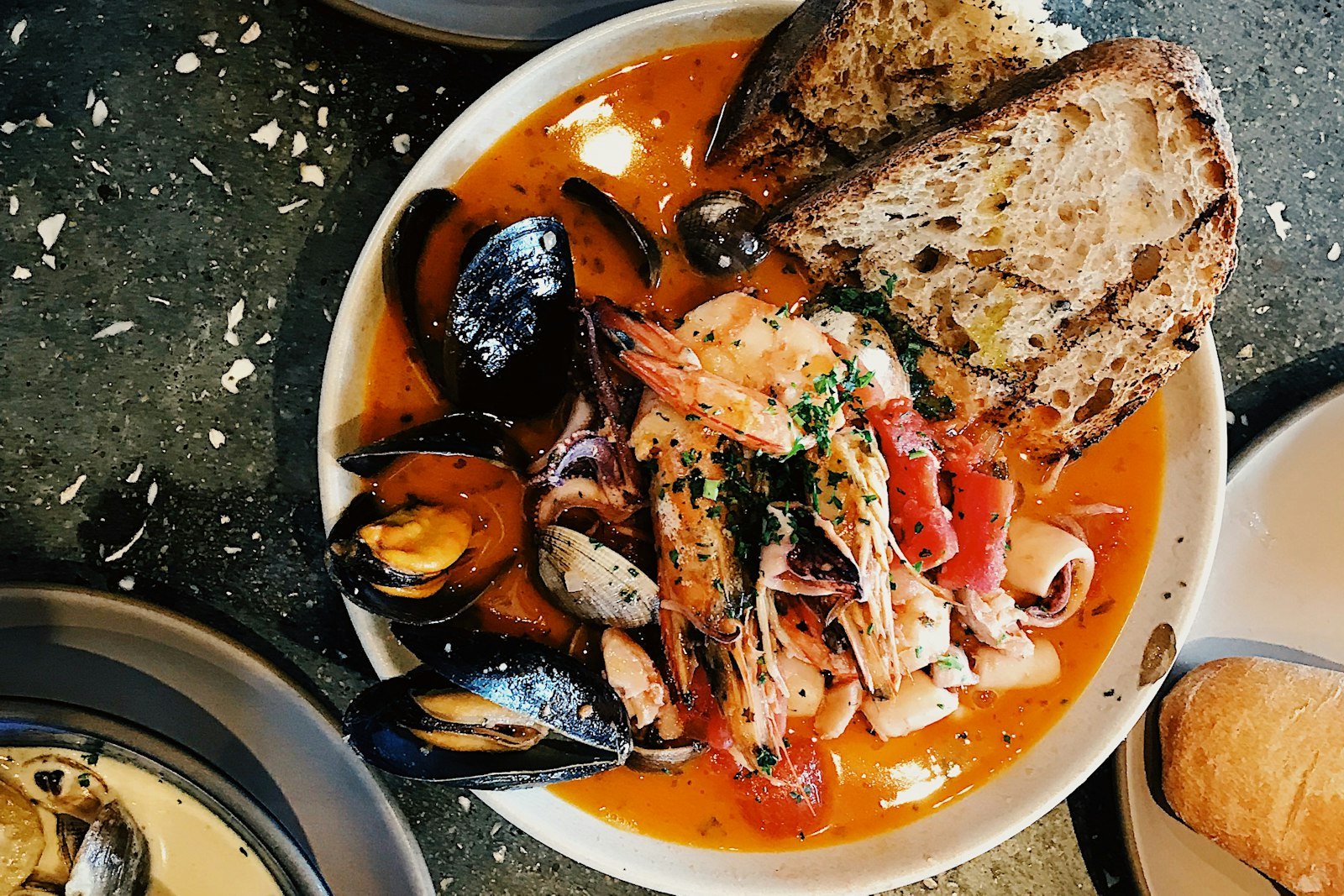
Stir gently once the seafood is in. A large spoon pushed along the bottom is enough to move things around without breaking the fish.
Tips for the Best Seafood Stew
- Taste the broth before the seafood. Clam juice is salty, so season lightly at first and adjust at the end.
- Keep it at a gentle simmer. A hard boil toughens shrimp and breaks fish into shreds.
- Use the lid. Steam trapped under the lid opens the shellfish quickly and evenly.
- Pat scallops dry. Dry scallops stay plump and sweet instead of watery.
- Serve right away. Seafood keeps cooking in the hot broth, so get it into bowls quickly.
If you love shellfish, try my simple white wine garlic steamed mussels or a cozy bowl of linguine with clams. For a quick weeknight pasta, the garlic butter shrimp scampi pasta is always a winner. Browse every fish and shellfish dish in my seafood recipes collection.
Easy Variations
- Dungeness crab: For the classic San Francisco touch, add cooked, cracked Dungeness crab legs with the shrimp just to heat through.
- Red wine cioppino: Swap the white wine for a dry Zinfandel or Chianti for a richer, deeper broth.
- Budget-friendly: Use only mussels, shrimp and cod. Mussels are usually the least expensive shellfish and still look stunning.
- Spicy: Add a chopped Calabrian chili or double the red pepper flakes.
- Without wine: Replace the wine with extra stock plus 1 tablespoon of red wine vinegar for acidity.
- Feast of the Seven Fishes: Cioppino easily covers several fishes in one pot, which makes it a smart centerpiece for Christmas Eve on December 24.
Whichever version you choose, keep the same order of cooking: the sturdiest shellfish first and the most delicate seafood last. Clams and crab can handle a few extra minutes, while shrimp and scallops need only a short, gentle simmer. Follow that rhythm and your cioppino will turn out tender and juicy every time, no matter what the market had on ice that morning.
What to Serve With Cioppino
A big bowl of seafood stew needs something to soak up the broth. These are my favorite partners.
- Sourdough: The San Francisco classic. Toast thick slices and rub them with a cut garlic clove.
- Garlic bread: A pan of cheesy garlic pull-apart bread is a crowd-pleaser.
- Green salad: Arugula with lemon, olive oil and shaved Parmesan keeps the meal light.
- Simple pasta or polenta: Serve the stew over a little cooked linguine or soft polenta for a heartier dinner.
Set out an empty bowl for shells and plenty of napkins. Cioppino is meant to be eaten with your hands as much as a spoon.
Common Mistakes and How to Fix Them
Here are the problems I see most often with homemade cioppino and how to avoid them.
| Problem | Likely cause | How to fix it |
|---|---|---|
| Rubbery shrimp | Added too early or boiled hard | Add shrimp last and simmer gently for 3 to 4 minutes |
| Fish falls apart | Fillets too thin or stirred too much | Use thick, firm fish in large chunks and stir gently |
| Gritty broth | Clams not cleaned well | Scrub clams and soak them in cold salted water for 20 minutes |
| Broth too salty | Clam juice plus salted stock | Use low-sodium stock and add salt only at the end |
| Thin, flat flavor | Broth not simmered long enough | Simmer the tomato base a full 25 minutes before adding seafood |
Make Ahead, Storage and Reheating
The tomato broth can be made up to 2 days ahead and refrigerated, or frozen for up to 3 months. Reheat it to a simmer and add the seafood just before serving for the best texture. The FDA has a useful guide to selecting and serving seafood safely.
Refrigerate leftovers within 2 hours in an airtight container and enjoy them within 2 days. Pull the meat from the shells first so it takes less space. Reheat gently on the stove until steaming hot and 165°F (74°C).
I do not recommend freezing the finished stew, since the shrimp and fish turn soft and dry once thawed. Freeze only the broth and cook fresh seafood in it later.
Frequently Asked Questions
What is cioppino?
Cioppino is a tomato and wine seafood stew created by Italian immigrant fishermen in San Francisco, filled with shellfish and fish.
What is the difference between cioppino and bouillabaisse?
Bouillabaisse is a French Provençal fish soup flavored with saffron and orange. Cioppino has a heartier tomato and wine broth.
Can I use frozen seafood in cioppino?
Yes. Thaw frozen shrimp, scallops and fish in the refrigerator overnight and pat them dry before adding them to the broth.
What do I do with clams or mussels that do not open?
Discard them. Shellfish that stay closed after cooking should not be eaten.
How do I know when the fish is done?
It turns opaque and flakes easily with a fork, and it reaches 145°F (63°C) in the thickest part.
Ready to cook? Here is the full printable cioppino recipe with exact measurements and estimated nutrition.
Easy Cioppino
Ingredients
Method
- Heat the olive oil in a large Dutch oven over medium heat. Cook the onion and fennel for 8 minutes until soft.
- Stir in the garlic, red pepper flakes and tomato paste and cook for 2 minutes.
- Add the wine, scrape up the browned bits and simmer for 3 minutes.
- Add the crushed tomatoes, stock, clam juice, bay leaves, oregano and thyme. Bring to a boil, then simmer uncovered for 25 minutes. Season with salt and pepper.
- Add the clams, cover and cook for 5 minutes.
- Add the mussels and fish, cover and simmer gently for 4 minutes.
- Add the shrimp and scallops, cover and cook for 3 to 4 minutes until the shrimp are pink and opaque and the fish flakes and reaches 145°F (63°C).
- Discard any shellfish that did not open and the bay leaves. Garnish with parsley and basil and serve with crusty bread.
Notes
I hope this San Francisco seafood stew brings a little coastal magic to your table. If you make it, please leave a comment and a star rating below and tell me which seafood you used. Happy cooking, friends!
Free email bonus
30-Minute Meals
Loved this recipe? Get my collection of fast, family-favorite dinners, plus new seasonal recipes straight to your inbox.