
There is a moment when the pot of cream, butter and sugar turns from pale and bubbly to deep amber, and the whole kitchen smells like warm toffee. That moment is why I make homemade caramels every December. They are softer, creamier and far more buttery than anything from a bag, and once you wrap a few in parchment, they are a gift that looks as if it took a candy shop to make.
Many people avoid caramel because it sounds risky. It is not, as long as you have a candy thermometer, a heavy pot and a little respect for the molten sugar. The whole recipe uses six ingredients, and the single most important step is simply watching the temperature climb to 245 degrees F (118 C).
In this guide I walk through each stage, explain why the thermometer matters, and share the safety rules I follow whenever hot sugar is on the stove. I also include troubleshooting for the most common problems, wrapping tips and ideas for packaging them as gifts.

What Makes Caramel Soft or Hard
Caramel texture comes down to one thing: how much water remains in the sugar when you stop cooking. At 235 degrees F you get a very soft, almost spoonable caramel. At 245 degrees F the candy sets into a soft, chewy square that holds its shape. At 255 degrees F and above it turns firm and will pull at your teeth.
That is why a reliable thermometer is worth the few dollars it costs. Guessing by color or time almost never works, because the speed of cooking depends on your stove, your pot and even the weather. Corn syrup keeps the sugar from crystallizing, and cream and butter supply the richness and the chew.
- Six ingredients and no special equipment beyond a thermometer
- Soft and creamy, never sticky or tooth-breaking at 245 degrees F
- Perfect for gifting, because each piece is individually wrapped
- Easy to flavor with sea salt, vanilla bean, espresso or bourbon
Ingredients and Smart Swaps
- Heavy cream (1 cup): use real heavy cream with at least 36 percent fat. Half-and-half makes a thinner, grainier caramel.
- Unsalted butter (1/2 cup, 8 tablespoons): cut into pieces so it melts evenly.
- Granulated sugar (1 cup): plain white sugar gives the cleanest caramel flavor.
- Light corn syrup (1/2 cup): this prevents sugar crystals. Do not skip it.
- Fine salt (1/2 teaspoon): balances the sweetness. Add flaky sea salt on top for a salted version.
- Pure vanilla extract (1 teaspoon): stirred in off the heat so the aroma stays strong.
You will also need an 8-inch square pan, parchment paper, a long-handled wooden spoon, a candy thermometer and squares of wax paper or parchment for wrapping.
Hot Sugar Safety
Caramel is molten sugar, and it can reach temperatures far above boiling water. It sticks to skin and causes serious burns, so I treat every batch with care. Read through these rules before you light the burner.
- Keep children and pets out of the kitchen while the pot is on the stove.
- Use a long-handled spoon and a deep pot, and wear oven mitts when stirring.
- Never taste the caramel while it is hot, and never lick the spoon until it cools.
- Keep a bowl of ice water nearby. If caramel touches skin, run the area under cold water immediately and seek medical care for a large or deep burn.
- Add the vanilla off the heat and stand back, because the mixture can spatter and steam.
- Soak the pot in hot water to dissolve leftover candy, rather than scraping it.
Step-by-Step Instructions
Line an 8-inch square pan with parchment, leaving an overhang on two sides, and lightly butter it. Check your thermometer first by placing it in boiling water. It should read 212 degrees F, and if it reads a degree or two off, adjust your target accordingly.
- Combine the cream, butter and salt in a small saucepan and warm over low heat until the butter melts. Keep it warm.
- In the larger heavy saucepan, stir the sugar and corn syrup with 1/4 cup of water over medium heat until the sugar dissolves.
- Clip the thermometer to the pot, making sure the tip is submerged but not touching the bottom. Bring to a boil without stirring until the syrup turns a light golden color, about 8 to 10 minutes.
- Slowly pour the warm cream mixture into the sugar, stirring gently. It will bubble hard, so pour with care.
- Cook over medium heat, stirring slowly and constantly with a wooden spoon, scraping the bottom and corners, until the thermometer reaches 245 degrees F (118 C). This takes about 12 to 18 minutes.
- Remove the pot from the heat at once, stir in the vanilla and pour the caramel into the prepared pan without scraping the pot.
- Let it cool at room temperature, uncovered, for at least two hours until firm.
Watch the pot closely once the cream goes in. The temperature climbs slowly through the 220s, then races through the last ten degrees, so stay by the stove for the final few minutes. The caramel will deepen in color from pale gold to a rich honey shade, and the bubbles will become large and slow. If the mixture seems to be browning too fast, lower the heat slightly rather than stopping the stirring.
Cut and Wrap
Once the caramel is fully set, lift the slab out using the parchment overhang and place it on a cutting board. Lightly oil a sharp chef’s knife and cut the slab into strips, then into one-inch squares. If the caramel is too soft to cut cleanly, chill it for 20 minutes first.
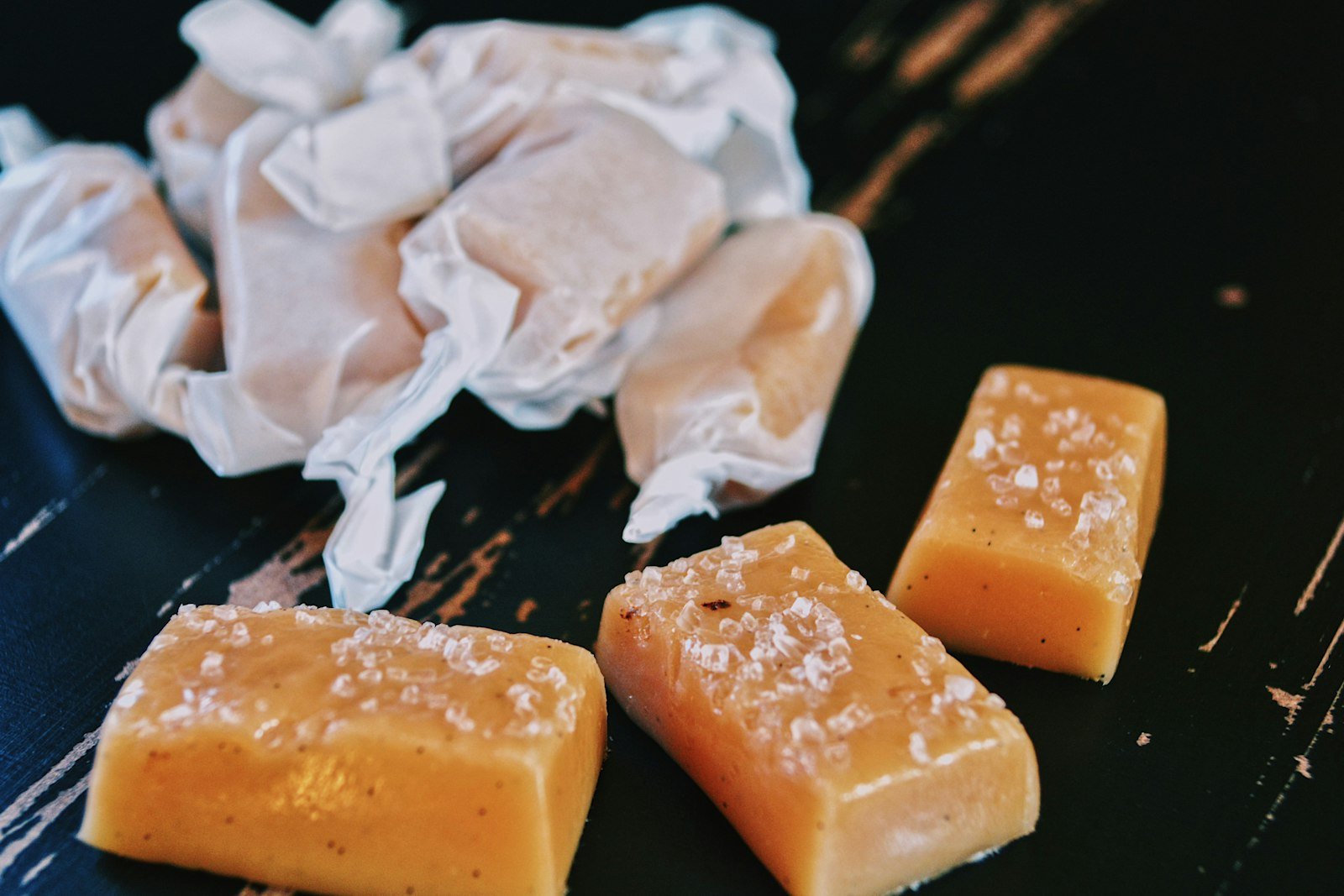
Cut 4-inch squares of wax paper or parchment, place a caramel in the center and roll the paper around it, then twist both ends like a candy wrapper. Wrapping prevents the pieces from sticking together and keeps them tidy in a gift box.
For a salted version, sprinkle flaky sea salt over the surface just after pouring, while the caramel is still warm. If you love the flavor of caramel in other forms, try it on my salted caramel popcorn or alongside a plate of caramel apple dip.
Work in a cool kitchen and let the candy firm up fully before you wrap it. Warm caramel will slowly spread inside its paper and lose its sharp square corners. If you have many to wrap, set up a small assembly line: one person cuts, one places the papers and one twists. It turns a chore into a lovely evening of holiday music and conversation.
Troubleshooting Caramel
| Problem | Cause and fix |
|---|---|
| Caramel is too hard | Cooked past 245 degrees F. Remelt with a few tablespoons of cream and re-cook to 240. |
| Caramel is too soft or runny | Not cooked long enough. Return to the pot with 2 tablespoons of cream and cook to 245. |
| Grainy texture | Sugar crystals formed. Wash down the pot sides with a wet brush and avoid stirring before the cream goes in. |
| Greasy or separated | Heat was too high or cream was cold. Whisk in a spoonful of hot water and keep heat at medium. |
| Burnt taste | Heat too high or pan too thin. Use a heavy pot and keep it at medium. |
Flavor Variations and Gift Ideas
- Sea salt: top with flaky salt.
- Espresso: add 2 teaspoons of instant espresso powder with the vanilla.
- Bourbon or rum: stir in 1 tablespoon off the heat.
- Chocolate dipped: dip the bottoms in melted dark chocolate and set on parchment.
- Pecan: sprinkle chopped toasted pecans over the top before setting, or layer on butter pecan cheesecake as a garnish.
For gifts, stack twenty wrapped caramels in a small jar or a lined tin and tie the lid with a ribbon and a handwritten tag. A box of caramels, a pouch of easy chocolate fudge and a bag of cookies makes a beautiful holiday sampler.
Label each box with the date and a short note about the flavors inside, and mention that the caramels contain dairy and, if you add nuts, tree nuts. A tag that says to keep them cool and eat within three weeks helps the recipient enjoy them at their best, and it makes the gift look thoughtful and professional.
Storage and Food Safety
Store wrapped caramels in an airtight container at cool room temperature for up to three weeks. In warm weather, keep them in the refrigerator, where they will last up to a month, and bring them back to room temperature before eating for the best chew. Freezing works for up to three months in a sealed bag.
Because the recipe is made with dairy, the USDA recommends not leaving cream-based treats out in the warmth for long periods. The leftovers and food safety guidelines explain safe storage times if you are packing candy for shipping.
Frequently Asked Questions
What temperature should homemade caramels reach?
For soft, chewy caramels that hold their shape, cook to 245 degrees F (118 C). Go lower for a softer candy and higher for a firmer one.
Can I make caramels without a candy thermometer?
It is possible with the cold-water test, but results are less reliable. A thermometer costs little and removes the guesswork.
Why is my caramel grainy?
Sugar crystals started to grow. Dissolve the sugar fully before boiling, keep the corn syrup in the recipe and avoid scraping crystals from the sides into the pot.
How do I cut caramels without sticking?
Lightly oil the knife or use a pizza cutter, and chill the slab briefly if it is too soft.
How far ahead can I make caramels for gifts?
They keep for about three weeks at room temperature when wrapped, so make them up to two weeks before the holiday.
If you make a batch, I would love to hear about it. Leave a rating and a comment below, and browse more candy-shop sweets in my dessert recipes.
Soft Chewy Homemade Caramels
Ingredients
Equipment
Method
- Line an 8-inch square pan with parchment and lightly butter it.
- Warm the cream, butter and salt in a small pan over low heat until the butter melts.
- In a heavy pot, stir the sugar, corn syrup and water until dissolved. Boil without stirring until light golden, 8 to 10 minutes.
- Carefully pour in the warm cream mixture while stirring gently.
- Cook, stirring constantly, until the thermometer reads 245 F (118 C), about 12 to 18 minutes.
- Remove from the heat, stir in vanilla and pour into the pan.
- Cool 2 hours until firm, then cut into 1-inch squares and wrap in parchment.
Notes
There is something deeply satisfying about unwrapping a soft, golden caramel you made yourself. Take your time, trust your thermometer and share the sweetness with someone you love. Warmly, Chef Amber.
Free email bonus
30-Minute Meals
Loved this recipe? Get my collection of fast, family-favorite dinners, plus new seasonal recipes straight to your inbox.