
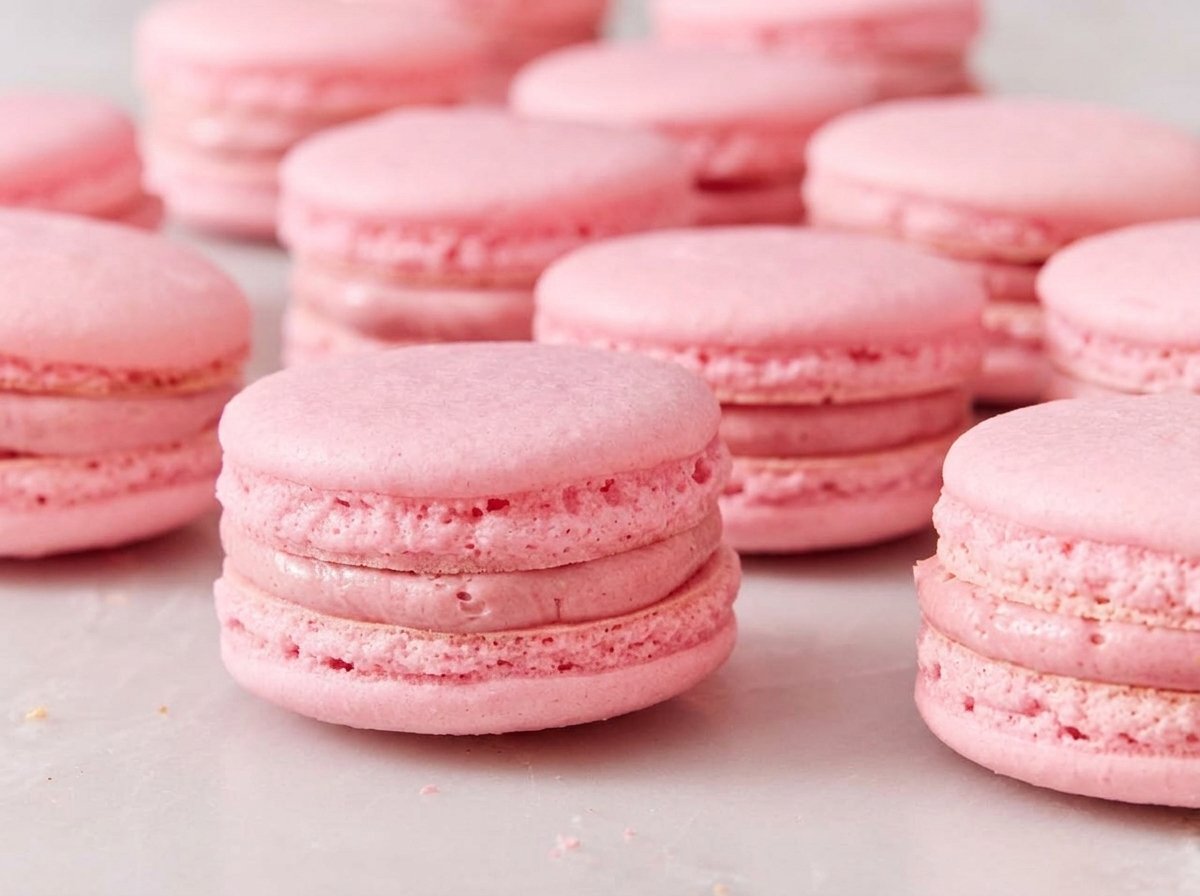
The first time I pulled a tray of French macarons from my oven, I stood there in disbelief. Every shell had a smooth dome, a lacy ruffle at the base and not a single crack. It took me four failed batches to get there, and I want to save you those batches.
Macarons have a reputation for being difficult, but the truth is they are simply precise. The recipe uses only almond flour, powdered sugar, egg whites and sugar. What matters is the method: how you whip the meringue, how you fold, how long you rest the shells and how hot your oven really runs.
This guide walks you through each stage with the visual cues I rely on, plus a troubleshooting list for hollow shells, cracked tops and missing feet. I have also included a festive Christmas color plan, so you can build a cookie box that looks like it came from a French patisserie.
What Makes a Macaron a Macaron
A French macaron is a delicate sandwich cookie. Two airy almond meringue shells hug a spoonful of filling, and the shells have a thin crisp surface that gives way to a chewy, almost marshmallowy middle. The ruffle around the bottom edge is called the foot, and it is the sign of a well-made shell.
The French method, the one in this recipe, whips raw egg whites with granulated sugar into a stiff meringue and folds in a mixture of almond flour and powdered sugar. It is the most common home method and needs no sugar syrup or thermometer.
- Naturally gluten free: the shells contain almond flour instead of wheat flour.
- Few ingredients: four basics plus a pinch of cream of tartar.
- Endlessly customizable: change the color, the flavor and the filling.
- Great for gifting: they keep well and look beautiful in a box.
If you like small, elegant cookies for the holidays, these pair nicely with a tray of peppermint meltaways and a few classic Christmas sugar cookies.
Ingredients and Why Each One Matters
Macarons reward accuracy, so use a kitchen scale. Cup measurements are included in the recipe card, but grams will give you the most consistent results.
- Almond flour: 100 g (1 cup), finely ground and blanched. Coarse almond meal leaves bumpy shells.
- Powdered sugar: 100 g (3/4 cup plus 1 tablespoon). It sweetens and stabilizes the batter.
- Egg whites: 70 g (about 2 large), separated carefully with no trace of yolk.
- Granulated sugar: 50 g (1/4 cup) to build a strong, glossy meringue.
- Cream of tartar: a small pinch to help the whites hold their structure.
- Gel food coloring: a tiny amount. Liquid coloring adds moisture and can ruin the batter.
About aged egg whites: many bakers separate the whites a day ahead and keep them covered in the refrigerator. Removing a little moisture makes the whites whip more reliably, but fresh whites at room temperature work fine as long as the bowl is spotless. A drop of grease or yolk keeps the meringue from rising.
Step-by-Step Macaron Shells
Read through all of the steps before you begin. Once the meringue is whipped, you will move quickly.
- Line two baking sheets with parchment or silicone macaron mats. Fit a piping bag with a round tip about half an inch wide.
- Sift the almond flour and powdered sugar together twice into a large bowl.
- Whip the egg whites and cream of tartar on medium speed until foamy. Add the granulated sugar a spoonful at a time, then raise the speed to high.
- Beat until the meringue is stiff and glossy and holds a firm peak that does not droop when you lift the whisk. Add gel color in the last 30 seconds.
- Add half the dry mixture and fold with a flexible spatula, scraping around the bowl and cutting through the center. Add the rest and keep folding.
- Stop when the batter flows off the spatula in a thick ribbon and you can draw a figure eight without the ribbon breaking. It should melt back into itself in about 10 seconds.
- Pipe 1.5 inch (4 cm) circles about an inch apart, holding the bag straight above the tray.
- Rap the trays firmly on the counter five or six times to release trapped air. Pop any surface bubbles with a toothpick.
- Let the shells rest, uncovered, for 30 to 60 minutes until the tops feel dry and are no longer sticky to a light touch.
- Bake at 300F (150C) on the middle rack for 17 to 18 minutes. The shells should not wobble when you nudge a foot. Cool completely before removing.
Patience during the rest is what creates feet. The dry skin forces the rising air out at the bottom edge, instead of cracking the top.
Macaronage: The Fold That Decides Everything
Macaronage is the fancy word for folding the dry mixture into the meringue. It is the step that worries most beginners, and it is where most batches succeed or fail.
- Undermixed: the batter is thick and lumpy and leaves peaks on the piped shells. Baked shells will be bumpy and may crack.
- Just right: the batter falls in a slow, continuous ribbon and settles smoothly within about 10 seconds.
- Overmixed: the batter is runny and spreads into thin puddles. The shells will be flat, with no feet.
Check often. After each few folds, lift the spatula and watch the batter. It is much easier to add a few more folds than to rescue an overmixed bowl. I usually need between 40 and 55 folds, but your own count will vary with the size of the bowl and the strength of the meringue.
Vanilla Buttercream Filling
A simple American-style buttercream is the easiest filling. It is stable, sweet and pipes beautifully.
- 1/2 cup (115 g) unsalted butter, softened but still cool
- 1 1/2 cups (180 g) powdered sugar, sifted
- 1 teaspoon vanilla extract
- 1 to 2 tablespoons heavy cream or milk
- A pinch of salt
Beat the butter until pale and creamy, then add the sugar a little at a time. Mix in the vanilla, salt and enough cream to reach a smooth, pipeable consistency. Pipe a ring of filling near the edge of one shell, leaving the center hollow, then top with a matching shell and twist gently so the filling spreads to the edges.
For a different flavor, fold a spoonful of raspberry jam into the center of the ring or use my white hot chocolate flavors as inspiration: a little melted white chocolate stirred into the buttercream tastes lovely with a pink shell.
Christmas Colors and Flavor Ideas
Macarons are the perfect canvas for the holiday season. Here are color and flavor pairings that look striking together on a tray.
- Candy cane: pink shells, peppermint buttercream and crushed candy cane on the edge.
- Pistachio evergreen: pale green shells with pistachio buttercream.
- Cranberry orange: deep red shells and orange zest buttercream.
- Snowflake: white shells, vanilla filling and a dusting of edible shimmer.
- Gingerbread: beige shells with a pinch of cinnamon and ginger in the buttercream.
- Chocolate mint: green shells with chocolate ganache filling.
Gel colors darken as the shells bake, so aim for a slightly lighter batter than the shade you want. Red is the trickiest, because it takes more gel and can leave a bitter taste. Use a bright, concentrated red and add it to the meringue instead of the batter.
Troubleshooting Macarons
- Cracked tops: the shells did not rest long enough, the oven was too hot or air bubbles were trapped. Rest longer and check your oven with a thermometer.
- No feet: the batter was overmixed, too wet or the shells were baked before the skin formed. Fold less and rest more.
- Hollow shells: the meringue was overwhipped or the oven was too hot. Lower the temperature by 10 degrees F and try again.
- Lopsided or tilted feet: uneven heat or a tray that was too thin. Double up on baking sheets and rotate halfway.
- Browned tops: the rack was too high. Bake on the middle rack and tent with foil if needed.
- Sticking to the paper: they were underbaked or removed while warm. Add a minute and cool fully before peeling.
- Wrinkled surface: the batter was too stiff. Fold a few more strokes next time.
Keep notes on each batch. Because every oven is different, writing down the bake time and temperature that worked is the quickest route to perfect macarons.
Storage, Maturing and Food Safety
Here is the part that surprises people: macarons taste better a day after assembly. Fill them, then refrigerate in an airtight container for 24 hours. The moisture from the filling softens the shells to that classic chewy texture.
- Refrigerator: up to 5 days in an airtight container. Bring to room temperature for 15 minutes before serving.
- Freezer: freeze filled macarons for up to 2 months, layered between parchment. Thaw in the refrigerator.
- Unfilled shells: store airtight at room temperature for 2 days, or freeze for a month.
- Make ahead: bake the shells up to 3 days early and fill them the day before serving.
Because butter-based fillings and egg-based desserts should not sit out for long, keep macarons chilled until just before serving and leave them out for no more than two hours. The USDA explains safe holding times in its leftovers and food safety guidance.
Frequently Asked Questions
Why do my macarons not have feet?
Missing feet usually point to an overmixed batter or to shells that were baked before a dry skin formed. Fold only until the batter flows in a slow ribbon, then rest the piped shells until they are no longer tacky.
Do I really need to age the egg whites?
It is not required. Aged whites can whip a bit more easily, but fresh whites at room temperature work well if you measure by weight and your bowl is completely clean.
Can I use almond meal instead of almond flour?
Almond meal is coarser and contains skins, which makes bumpy, brownish shells. Choose finely ground blanched almond flour and sift it twice.
How do I know when macarons are done baking?
Gently touch the top of a shell. If it slides on its feet, bake another minute or two. When the shell stays firm and attached, it is done. Let it cool before peeling it off the paper.
Why are my macarons hollow inside?
Hollow shells come from a meringue that was whipped too stiff, a batter that was undermixed or an oven that is too hot. Try a lower temperature and fold until the ribbon test passes.
If you bake a batch, please leave a star rating and tell me in the comments how your shells turned out. For more elegant holiday treats, browse all of my dessert recipes.
French Macarons
Ingredients
Equipment
Method
- Line two baking sheets and fit a piping bag with a round tip.
- Sift the almond flour and powdered sugar together twice.
- Whip the egg whites and cream of tartar until foamy, then add the granulated sugar gradually and beat to stiff, glossy peaks. Add gel color.
- Fold in the dry mixture in two additions until the batter flows in a slow ribbon and a figure eight holds for about 10 seconds.
- Pipe 1.5 inch circles, rap the trays firmly on the counter and pop surface bubbles.
- Rest 30 to 60 minutes until a dry skin forms.
- Bake at 300F (150C) for 17 to 18 minutes. Cool completely before removing.
- Beat the butter, powdered sugar, vanilla, salt and cream until smooth.
- Pipe buttercream on half of the shells and sandwich with the rest.
- Refrigerate in an airtight container for 24 hours before serving for the best texture.
Notes
I still remember the thrill of that first perfect tray, and I hope this guide brings you the same moment of joy. Take your time, trust the visual cues and enjoy the process. Happy baking, friends. Chef Amber
Free email bonus
30-Minute Meals
Loved this recipe? Get my collection of fast, family-favorite dinners, plus new seasonal recipes straight to your inbox.