
There is something special about a warm scone with a cup of tea on a cold morning, and these cranberry orange scones may be my favorite. They are buttery and flaky with crisp edges and a tender middle, packed with fresh orange zest and chewy, tart cranberries, and finished with a sweet orange glaze that sets into a thin, shiny shell. They look like they came from a bakery, yet they take less than an hour from start to finish.
In this post I will explain the ingredients, how to cut in the butter, how to shape and cut the dough, how to bake the scones until golden and how to glaze them. You will also find variations, a make ahead and freezing plan, a common mistakes table and storage tips. The printable recipe card with exact measurements and estimated nutrition is at the bottom of the post.
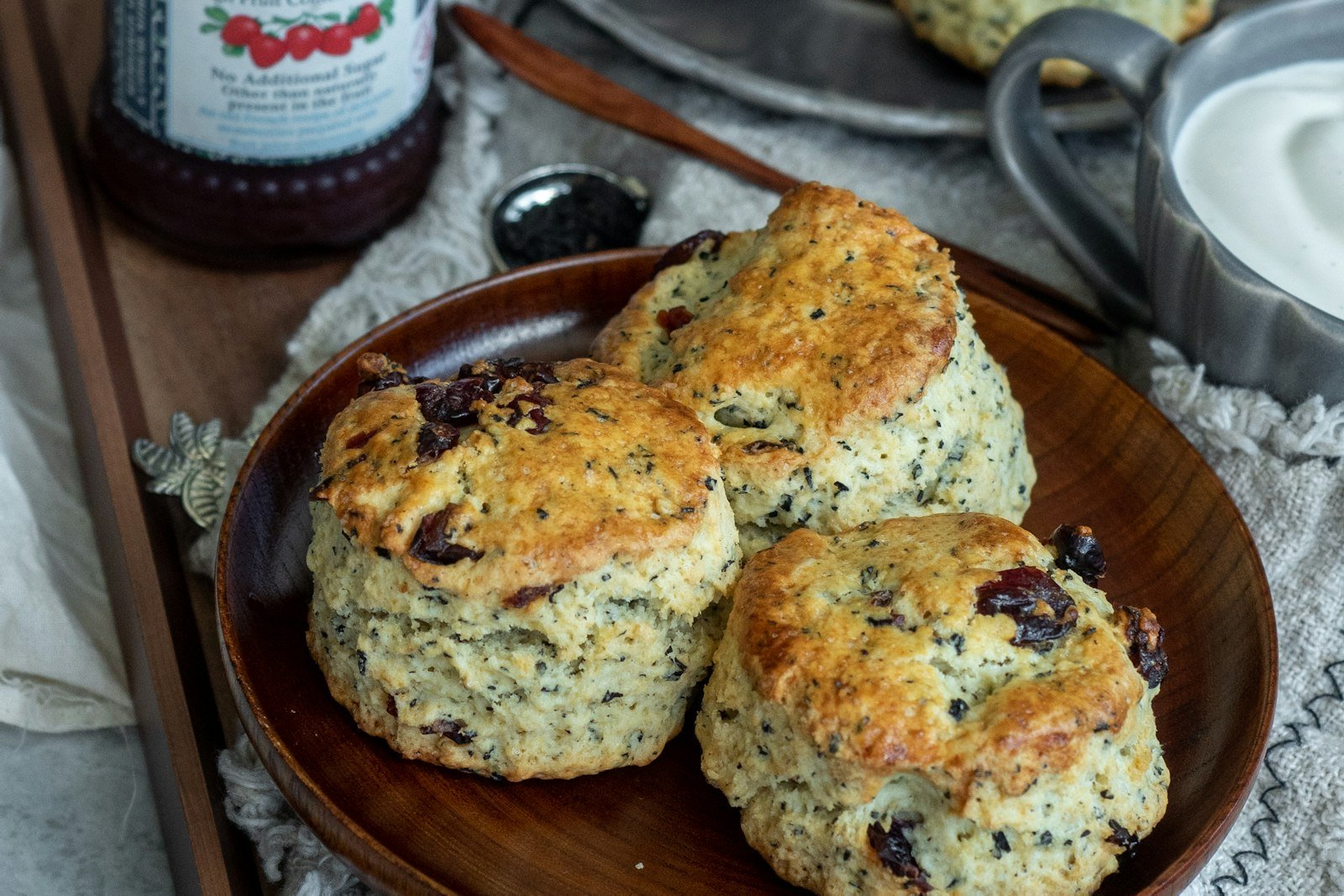
Why These Cranberry Orange Scones Work
A great scone is tall, flaky and tender, not dry or dense. That comes down to a few simple habits: very cold butter, a light hand with the dough and a hot oven. Everything else in this recipe is designed to add flavor, from the orange zest rubbed into the sugar to the cranberries that bring a pop of tartness against the sweet glaze.
- Flaky layers. Small pieces of cold butter melt in the oven and create steam, which lifts the dough into layers.
- Bright orange flavor. Zest rubbed into the sugar releases its fragrant oils, and juice in the glaze keeps it fresh.
- Tart cranberries. Dried cranberries stay chewy and balance the sweetness.
- No special tools. You only need a bowl, a fork or pastry cutter and a baking sheet.
- Freezer friendly. Shape and freeze the wedges, then bake straight from the freezer.
If you love this flavor pairing, you may also like my cranberry orange bread, a moist loaf that is perfect for gift giving.
Ingredients You Will Need
The ingredient list is short, so each item does real work. Here is what to know.
- All-purpose flour: 2 1/2 cups (315 g), spooned and leveled, not scooped.
- Baking powder: One tablespoon, which gives the scones their lift. Check that it is fresh.
- Sugar: 1/3 cup (65 g) granulated, mixed with the orange zest.
- Cold unsalted butter: 1/2 cup (113 g), cut into small cubes and chilled until firm.
- Heavy cream: 2/3 cup (160 ml), very cold, plus a little for brushing.
- Egg: One large egg, which adds richness and structure.
- Orange: One large orange, for zest in the dough and juice in the dough and glaze.
- Dried cranberries: 3/4 cup (95 g). Sweetened dried cranberries are easiest to find.
- Powdered sugar: For the glaze, mixed with fresh orange juice.
Zest the orange before you juice it. Zesting a squeezed orange is awkward and messy, and one large orange gives you all the zest and juice you need.
About the cranberries: if your dried cranberries feel very hard or leathery, soak them in hot water or orange juice for 10 minutes, then drain and pat them completely dry. Softened fruit stays plump in the oven instead of turning into tough little pebbles, and it will not pull moisture out of the dough.
If you want to use a different fat, cold shortening makes a very tender scone, but butter gives better flavor and color, and it is the better choice for this recipe.
How to Make Cranberry Orange Scones
Heat the oven to 400°F (200°C) and line a baking sheet with parchment paper. A hot oven is key for quick rise and golden edges.
- Rub the zest into the sugar. In a large bowl, rub the orange zest into the sugar with your fingertips until fragrant and slightly damp.
- Add the dry ingredients. Whisk in the flour, baking powder and salt.
- Cut in the butter. Add the cold butter and work it in with a pastry cutter or your fingertips until the mixture looks like coarse crumbs with some pea-sized pieces.
- Mix the wet ingredients. Whisk the cold cream, egg and 2 tablespoons of orange juice in a small bowl.
- Combine. Pour the wet mixture into the flour mixture, add the cranberries and stir with a fork until a shaggy dough forms. Do not overmix.
- Shape. Turn the dough onto a floured surface, pat it into a 7-inch round about 1 inch thick and cut it into 8 wedges.
- Chill. Place the wedges on the baking sheet and chill in the refrigerator for 15 minutes.
- Bake. Brush with cream and bake for 18 to 22 minutes, until golden. Cool for 10 minutes before glazing.
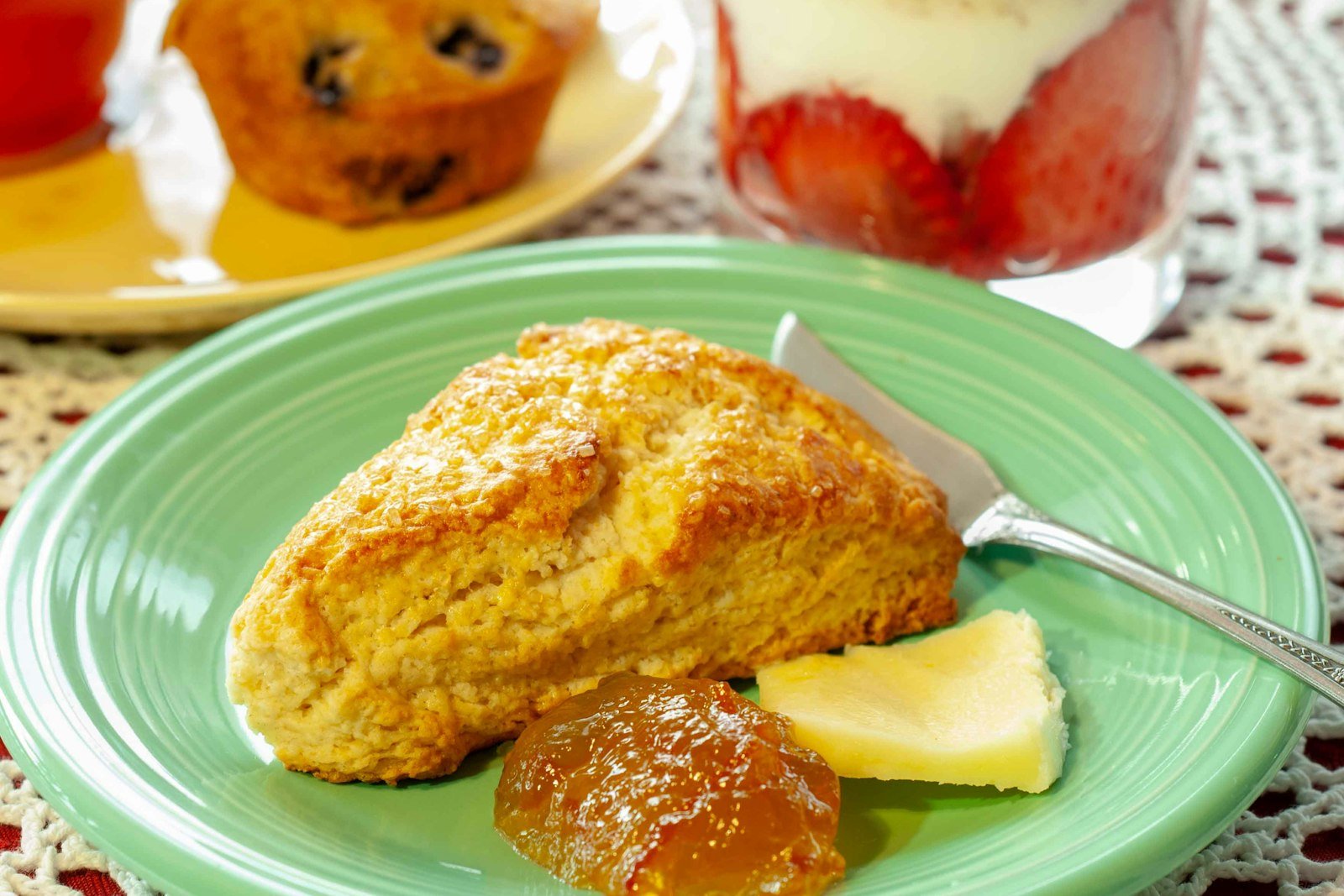
If the dough feels dry and will not come together, press it gently with your hands and add a teaspoon of cream. If it is sticky, dust it lightly with flour. A slightly shaggy dough is perfect, because overworking it develops gluten and makes scones tough.
Tips for Tall, Flaky Scones
- Keep everything cold. Cold butter and cream are the foundation of a flaky scone.
- Do not twist the cutter. If you cut rounds instead of wedges, press straight down so the edges can rise.
- Handle gently. Mix until just combined. A few dry spots are fine.
- Chill before baking. A quick rest keeps the butter firm and the scones from spreading.
- Space them apart. Leave about 2 inches between wedges for even browning.
- Glaze when cooled. A warm scone melts the glaze, while a slightly cooled one holds a pretty drizzle.
- Weigh if you can. A kitchen scale takes the guesswork out of the flour, which is the most common reason scones turn dry.
One more trick: fold the dough over itself two or three times before you pat it out. This simple fold, like a letter, builds extra layers without developing much gluten. Do it quickly with floured hands, then stop, because every extra turn warms the butter.
For another grab-and-go option, try my savory bacon cheddar scones, and browse all of my bread and baking recipes for more brunch ideas.
Easy Variations
- Fresh cranberries: Use 1 cup of coarsely chopped fresh or frozen cranberries and increase the sugar by 2 tablespoons.
- White chocolate: Fold in 1/2 cup of white chocolate chips.
- Nutty crunch: Add 1/2 cup of chopped toasted pecans or walnuts.
- Drop scones: Add 2 extra tablespoons of cream and scoop the dough in mounds for a rustic shape.
- Mini scones: Cut into 16 small wedges and bake for 13 to 15 minutes.
- Cinnamon sugar top: Skip the glaze and sprinkle coarse sugar on top before baking.
- Buttermilk swap: Replace the cream with cold buttermilk for a tangier crumb.
Orange Glaze Made Simple
The glaze is where these scones go from good to great. Whisk 1 cup of powdered sugar with 2 to 3 tablespoons of fresh orange juice until thick and pourable, and add a pinch of zest for pretty flecks. Start with 2 tablespoons and add the rest a teaspoon at a time, because a little extra juice thins the glaze quickly.
Drizzle it over the cooled scones with a spoon, or dip the tops for a fuller coat. Let the glaze set for 15 minutes so it forms a thin crackly shell. If you like a more tart topping, replace one tablespoon of juice with lemon juice.
Serve the scones warm with butter, orange marmalade or a spoonful of whipped cream. They go well with a pot of black tea, a latte or hot cocoa, and they sit comfortably beside scrambled eggs and fruit on a Christmas morning brunch spread.
Make Ahead and Freezer Plan
Scones are best on the day they are baked, but the dough freezes beautifully, so you can have fresh ones for holiday guests with almost no effort.
| When | What to do | Why it helps |
|---|---|---|
| Up to 2 months ahead | Cut the wedges and freeze on a tray, then bag them | Bake straight from the freezer for fresh scones |
| The night before | Shape the wedges, cover and refrigerate | Morning baking takes just 20 minutes |
| Morning of | Brush with cream and bake, adding 3 to 5 minutes if frozen | Warm scones, crisp edges |
| Before serving | Glaze after cooling for 15 minutes | A neat, set glaze |
Do not thaw frozen wedges before baking. Placing them straight from the freezer into a hot oven helps them keep their shape and rise tall.
Common Mistakes and How to Fix Them
| Problem | Likely cause | How to fix it |
|---|---|---|
| Tough scones | Dough overmixed or kneaded | Mix just until combined and pat gently |
| Flat scones | Butter too warm or old baking powder | Chill the dough and check the baking powder date |
| Dry, crumbly scones | Too much flour or overbaking | Spoon and level the flour and pull when golden |
| Glaze runs off | Scones too warm or glaze too thin | Cool the scones and add powdered sugar to thicken |
| Soggy bottoms | Wet cranberries or an underheated oven | Pat the cranberries dry and preheat fully |
Storage and Food Safety
Store cooled scones in an airtight container at room temperature for up to 2 days. Because these scones contain cream and egg, I refrigerate them if my kitchen is warm. The USDA offers clear guidance on leftovers and food safety for baked goods that sit out for a long time.
To reheat, warm a scone at 325°F (165°C) for 5 to 7 minutes until the edges crisp up again. Baked scones can also be frozen unglazed for up to 2 months.
Frequently Asked Questions
Can I make cranberry orange scones ahead of time?
Yes. Freeze the shaped wedges and bake from frozen, or refrigerate the cut wedges overnight and bake them in the morning.
Why are my scones dry?
Too much flour or overbaking is usually the cause. Measure the flour carefully and pull the scones as soon as they are golden.
Can I use fresh cranberries?
Yes. Use coarsely chopped fresh or frozen cranberries and add 2 extra tablespoons of sugar to balance their tartness.
Do I need to chill the dough?
It is not required, but a 15 minute chill keeps the butter firm and gives taller, flakier scones.
Can I use milk instead of heavy cream?
You can use half-and-half or buttermilk, but the scones will be slightly less rich. Whole milk makes them drier.
Ready to bake? Here is the full printable cranberry orange scones recipe with exact measurements and estimated nutrition.
Cranberry Orange Scones
Ingredients
Method
- Heat the oven to 400°F (200°C) and line a baking sheet with parchment.
- Rub the orange zest into the sugar, then whisk in the flour, baking powder and salt.
- Cut in the cold butter until the mixture looks like coarse crumbs with some pea-sized pieces.
- Whisk the cream, egg and 2 tablespoons of orange juice, pour into the flour mixture, add the cranberries and stir until a shaggy dough forms.
- Pat the dough into a 7-inch round about 1 inch thick on a floured surface and cut into 8 wedges.
- Place on the baking sheet, chill 15 minutes, brush with cream and bake for 18 to 22 minutes, until golden.
- Cool for 10 to 15 minutes. Whisk the powdered sugar, orange juice and zest until pourable and drizzle over the scones. Let set for 15 minutes.
Notes
I hope these flaky, citrusy scones make your holiday brunch table feel extra special. If you bake them, please leave a comment and a star rating below and tell me what you paired them with. Happy baking, friends!
Free email bonus
30-Minute Meals
Loved this recipe? Get my collection of fast, family-favorite dinners, plus new seasonal recipes straight to your inbox.