
Some desserts look far more difficult than they are, and cinnamon sugar palmiers are the best example. These elegant, heart-shaped French cookies seem like something from a pastry shop window, yet you make them with a single sheet of puff pastry, a few spoonfuls of cinnamon sugar and a sharp knife.
As they bake, the sugar melts into a glassy caramel and the pastry puffs into hundreds of paper-thin layers. The result is a cookie that shatters when you bite it, with a toasty, buttery flavor and a warm cinnamon finish. They are sometimes called elephant ears, butterfly cookies or palm leaves, depending on who you ask.
I make a tray whenever I need something impressive on short notice, such as unexpected guests, a cookie swap or a Christmas Eve dessert plate. If you enjoy working with pastry, you will also love my puff pastry christmas tree and the savory spinach puff pastry pinwheels.

What You Need to Make Palmiers
- Puff pastry: 1 sheet (about 9 by 10 inches, or 8 ounces), thawed according to the package. All-butter puff pastry has the best flavor, but any variety works.
- Granulated sugar: 1/2 cup (100 g), plus more for the work surface.
- Ground cinnamon: 2 teaspoons for a pronounced cinnamon flavor, or 1 teaspoon for a milder one.
- Pinch of salt: optional, but it makes the caramel taste richer.
- Vanilla or orange zest: optional flavor boosters.
- Parchment paper: essential for easy release and cleanup.
Thaw the pastry in the refrigerator overnight, or on the counter for 30 to 40 minutes, until it is flexible but still cool. If it is too warm, the butter softens and the layers merge, which means fewer flaky layers when baked.
A Short History of the Palm Leaf Cookie
The name palmier is French for palm tree, and the cookie takes its name from the shape of a palm leaf when viewed from above. Cut and baked, each slice opens into a double spiral, which most people see as a heart or a pair of butterfly wings. The technique is the same one pastry cooks have used for generations: layer sugar into laminated dough, fold it, slice it, and let the oven do the rest.
What I love most is how forgiving the idea is. The puff pastry is already laminated for you, with hundreds of thin layers of butter and dough. Your only job is to add sugar and shape the cookie, and the heat of the oven turns that sugar into a glossy amber candy that coats every flaky layer.
Step-by-Step: Roll, Slice and Bake
- Whisk the sugar, cinnamon and salt together in a small bowl.
- Sprinkle a clean work surface with 2 tablespoons of the cinnamon sugar. Unfold the pastry on top and press it gently so the sugar sticks.
- Sprinkle the pastry with the remaining mixture, then press it in lightly with a rolling pin so the sugar embeds rather than falls off.
- Fold the two short sides of the pastry toward the center so they meet in the middle, like closing a book.
- Fold both sides over once more, so the folded edges meet in the middle again. You should now see a long log with a visible center seam.
- Wrap the log in parchment or plastic and chill for 20 minutes to firm up the butter. This step makes clean slices.
- Heat the oven to 400F (200C) and line two baking sheets with parchment.
- Slice the log into 1/2-inch (1.25 cm) pieces with a sharp serrated knife, using a gentle sawing motion so the layers do not squash.
- Place the slices cut side up on the pans, at least 2 inches apart, because they will spread and puff.
- Bake 8 minutes, flip each cookie with a spatula, then bake 6 to 8 more minutes until deeply golden and caramelized.
- Cool for 2 minutes on the pan, then move to a wire rack. The sugar hardens quickly as it cools.
A few practical notes make the folding easier. Work on a lightly sugared surface rather than a floured one, because flour can dull the caramel and leave a pasty film. If the pastry cracks along the fold lines, press the crack together with your fingertip, since the butter will re-seal it. And if your sheet is a different size from mine, simply fold until the two sides meet in the center, and slice the cookies to your preferred width.
Why You Must Flip Them
Flipping may seem fussy, but it is the single most important technique for palmiers. The sugar on the bottom melts into the pan and caramelizes in a puddle. Turning the cookies midway lets the other side meet the hot pan and create the same crisp glass-like surface on both sides.
Use a thin metal spatula and flip gently, as the cookies are tender and hot. If the sugar sticks to the parchment, give them a minute to cool and release. Never use wax paper, which can smoke in the oven.
Tips for Perfect Palmiers
- Keep the pastry cold. If it softens while you are working, slide it back into the refrigerator for 10 minutes.
- Use a sharp knife. A dull blade squashes the layers and the cookies puff unevenly.
- Leave room to spread. Crowded cookies merge and cannot caramelize on the edges.
- Use enough sugar. A thin layer will not caramelize. The sugar should lightly coat the whole sheet.
- Cool on a rack. Cookies left on the hot pan can stick as the caramel hardens.
Troubleshooting
- Cookies are pale and soft: They need more time. Bake until deep golden, as the color equals the crispness.
- They unrolled: The log was not chilled or the folds were loose. Chill for the full 20 minutes next time.
- Sugar burned: The oven runs hot or the cookies were too close to the top element. Bake on the center rack and lower the temperature to 375F (190C).
- Cookies are tough: Overworked pastry loses its layers. Handle it as little as possible.
Flavor Variations
Once you know the method, palmiers are an open canvas. Keep the technique the same and change the filling.
- Chocolate hazelnut: Spread a thin layer of chocolate hazelnut spread over the pastry before folding.
- Orange: Mix 1 tablespoon of orange zest into the sugar.
- Brown sugar and pecan: Swap half the sugar for brown sugar and add 1/4 cup of finely chopped toasted pecans.
- Almond: Brush with a little almond extract mixed with water and add chopped almonds.
- Savory: Skip the sugar and use pesto, grated parmesan or tapenade for a party appetizer.
- Chocolate dipped: Dip half of each cooled cookie in melted dark chocolate for an elegant finish.
Make-Ahead, Storage and Food Safety
Palmiers are a great make-ahead cookie. You can prepare the rolled log up to 2 days ahead and refrigerate it tightly wrapped, then slice and bake when you are ready. For longer storage, freeze the unbaked log for up to 2 months, then slice it while still frozen and add 2 minutes to the baking time.
- Room temperature: Store baked cookies in an airtight container for up to 3 days. Humidity softens the caramel, so avoid humid spots.
- Freezer: Baked palmiers freeze for 1 month. Refresh them in a 350F oven for 4 minutes to re-crisp.
- Do not refrigerate baked cookies. The moisture will soften the layers.
Puff pastry is made with butter, and the unbaked log should be kept cold and not left out for long. For general guidance on handling and storing perishable foods, see the USDA page on leftovers and food safety.
When to Serve Palmiers
These cookies suit nearly any occasion because they are light, crisp and not heavy. Pair them with coffee after dinner, set them on a holiday cookie tray beside christmas pinwheel cookies, or serve them with a cup of tea in the afternoon. For brunch, tuck a few beside a bowl of fresh berries and some whipped cream.
On New Year’s Eve, a tray of palmiers with a drizzle of melted chocolate looks very elegant beside a glass of sparkling juice. They also make a charming homemade gift packed in a clear box with a ribbon, as they are sturdy enough to travel when layered carefully with parchment.
Palmiers for Parties and Cookie Swaps
Because the work is mostly hands-off, palmiers are ideal when you are baking several things at once. While the log chills, you can mix another recipe, and while the first tray bakes, you can slice the second. Two trays of cookies take roughly 40 minutes of total time, and only about 15 of it needs your attention.
- Bake the cookies the morning of a party so the caramel is at its crispest.
- Stack them in a tall glass jar for a casual centerpiece on a dessert table.
- Make mini palmiers by slicing the log into 1/4-inch pieces and baking for 3 minutes less per side.
- Add them to a cookie box alongside kolaczki for a mix of flaky and tender textures.
Frequently Asked Questions
Why did my palmiers not puff?
The pastry was too warm when baked, or it was pressed too hard. Keep it cold, use a sharp knife and handle it gently so the butter layers stay separate.
Can I use homemade puff pastry?
Yes, and it makes beautiful palmiers. Roll it out to roughly the same size as a store-bought sheet, about 1/8 inch thick, and follow the same folding steps.
Do I have to chill the log before slicing?
It is strongly recommended. Chilling firms the butter so the knife makes clean cuts and the layers stay intact.
How do I keep palmiers crisp?
Store them in an airtight container at room temperature, away from humidity. Re-crisp in a 350F oven for a few minutes if they soften.
Can I make palmiers with a different filling?
Definitely. Try chocolate hazelnut spread, orange zest sugar, or even pesto and parmesan for a savory version. Keep the filling thin so the pastry can rise.
If you try these cinnamon sugar palmiers, leave a rating and comment below to let me know how they turned out. For more cookies and sweets, visit my dessert recipes.
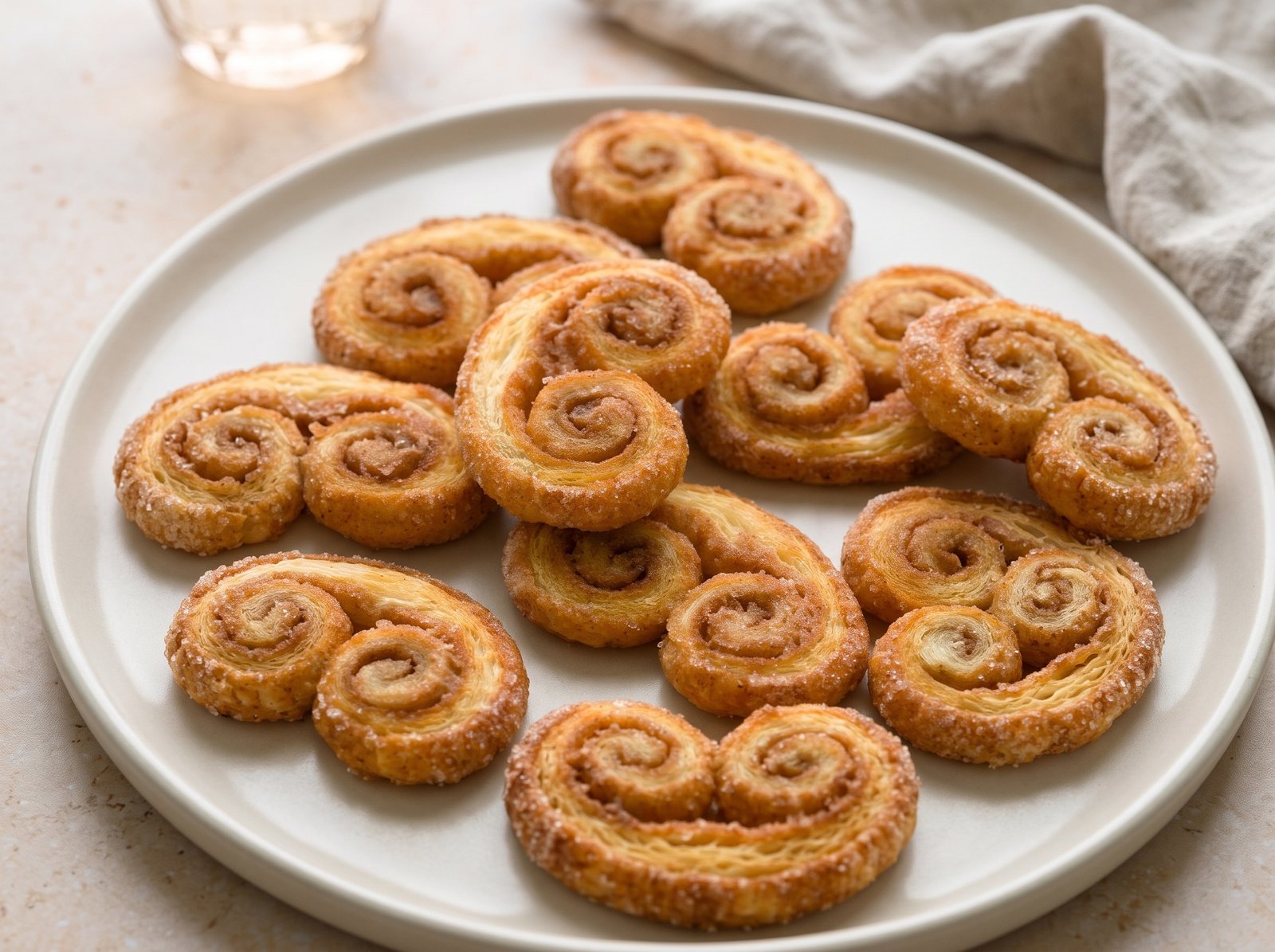
Cinnamon Sugar Palmiers
Ingredients
Equipment
Method
- Mix the sugar, cinnamon and salt.
- Sprinkle the work surface with some of the mixture, unfold the pastry on top and cover with the remaining sugar, pressing it in with a rolling pin.
- Fold the two short sides to meet in the middle, then fold again so the edges meet at the center seam.
- Wrap and chill the log for 20 minutes.
- Heat the oven to 400F (200C) and line two sheets with parchment.
- Slice the log into 1/2-inch pieces and place cut side up 2 inches apart.
- Bake 8 minutes, flip each cookie and bake 6 to 8 minutes more until deep golden.
- Cool 2 minutes on the pan, then transfer to a wire rack.
Notes
There is real joy in a recipe that looks fancy but asks for almost nothing. Keep a sheet of puff pastry in your freezer and you are always one roll and one slice away from a bakery-worthy treat. Happy baking, Chef Amber
Free email bonus
30-Minute Meals
Loved this recipe? Get my collection of fast, family-favorite dinners, plus new seasonal recipes straight to your inbox.