
A beautiful prime rib roast is the ultimate holiday dinner, and it is much easier to make than its reputation suggests. In this recipe a bone-in standing rib roast is salted a day or two ahead, rubbed with garlic herb butter, roasted low and slow until evenly cooked from edge to edge, then blasted in a hot oven for a deep, crackly crust. Every slice is juicy, tender and full of beefy flavor.
In this post I explain how to buy the right roast, why dry brining and the reverse sear method work so well, step-by-step directions, safe internal temperatures, a simple horseradish sauce, tips, mistakes to avoid and how to store leftovers. The printable recipe card with exact measurements and estimated nutrition is at the bottom of the post.

Why This Prime Rib Recipe Works
Prime rib is an expensive cut, so you want a method that takes the guesswork out of it. Slow roasting and finishing with high heat, often called the reverse sear, is the most forgiving way I know to cook a large roast at home.
- Dry brining. Salting the roast and leaving it uncovered in the fridge seasons the meat deeply and dries the surface so it browns beautifully.
- Low oven temperature. Roasting at 250°F (120°C) cooks the meat gently and evenly, so you get rosy meat almost all the way to the edge instead of a thick gray band.
- Rest before searing. Resting after the slow roast lets the juices settle, and the final blast of heat rewarms the outside.
- High-heat finish. A few minutes at 500°F (260°C) creates a crisp, deeply browned crust right before serving.
- Garlic herb butter. Butter, garlic, rosemary, thyme and black pepper melt into the crust and perfume the drippings.
Best of all, the long, slow stretch gives you a wide window. A few extra minutes in the oven will not ruin the roast, which takes a lot of stress out of a holiday dinner.
How to Buy a Standing Rib Roast
Prime rib and standing rib roast are the same cut, from the rib section of the steer. The name prime rib is traditional and does not always mean USDA Prime grade, so check the label for the grade.
- Size: Plan on one rib for every two people. A 3-rib roast weighs about 6 1/2 to 7 1/2 pounds (3 to 3.4 kg) and serves 6 to 8.
- Grade: USDA Prime has the most marbling and is a splurge. Choice is excellent and easier to find.
- First cut: Ask for the first cut, also called the loin end or small end. It is more tender and has a larger eye of meat.
- Bones on or off: Ask the butcher to cut the bones off and tie them back on. They insulate the meat while it roasts and make carving easy.
- Order ahead: Rib roasts sell out in December, so reserve yours a week or two before Christmas.
Ingredients You Will Need
Good beef needs very little help. Here is everything for the roast and the sauce.
- Bone-in rib roast: Three ribs, about 7 pounds (3.2 kg).
- Kosher salt: For the dry brine. Use 2 tablespoons of Diamond Crystal or 1 tablespoon plus 1 teaspoon of Morton, which is saltier by volume.
- Black pepper: Coarsely ground for a peppery crust.
- Unsalted butter: Softened, as the base of the herb rub.
- Garlic, rosemary and thyme: Fresh herbs give the best flavor and aroma.
- Horseradish sauce: Sour cream, prepared horseradish, Dijon, lemon juice and chives.
How to Make a Prime Rib Roast
Start one or two days before you plan to serve it. The active work is short; the oven does almost everything.
- Dry brine. One to two days ahead, pat the roast dry and season it all over with the kosher salt. Set it bone side down on a rack over a rimmed baking sheet and refrigerate uncovered.
- Bring it out. About 2 hours before roasting, take the roast out of the fridge. Heat the oven to 250°F (120°C) with a rack in the lower third.
- Make the herb butter. Mash the softened butter with the garlic, rosemary, thyme and black pepper. Spread it over the top and sides of the roast.
- Slow roast. Set the roast bone side down in a roasting pan and insert a probe thermometer into the center of the thickest part, not touching bone. Roast until it reaches your target pull temperature, about 3 1/2 to 4 1/2 hours for a 7-pound roast.
- Rest. Transfer the roast to a board, tent loosely with foil and rest for 30 to 45 minutes. Meanwhile, heat the oven to 500°F (260°C).
- Sear. Return the roast to the hot oven for 8 to 12 minutes, until the outside is deeply browned and crisp.
- Carve and serve. Cut the strings, slice off the bones in one piece, then slice the meat across the grain about 3/4 inch thick. Serve with horseradish sauce and the pan drippings.
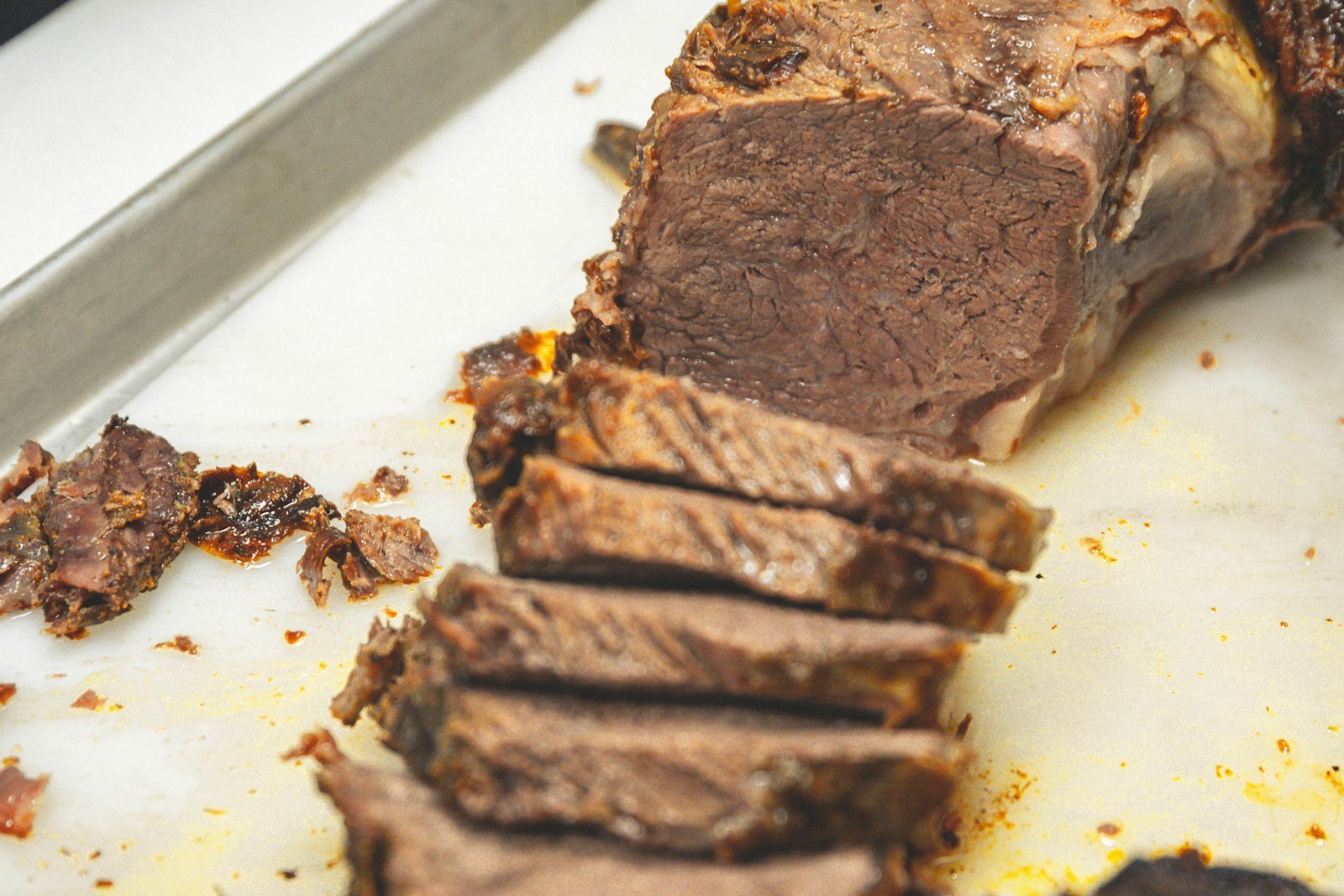
Because the roast cooks so gently, carryover cooking during the rest is small, usually just 3 to 5 degrees. The short sear adds very little more, which is why this method is so accurate.
Prime Rib Temperature Guide
The USDA recommends cooking beef roasts to a minimum internal temperature of 145°F (63°C), measured in the thickest part, followed by a rest of at least 3 minutes. That is the safest choice and gives you a medium roast with just a hint of pink. You can find it on the USDA safe minimum internal temperature chart.
Many cooks prefer prime rib less done. If you choose a rarer roast, these are the pull temperatures to use with this low-and-slow method, knowing they are below the USDA recommendation.
| Doneness | Remove from the 250°F oven at | Final temperature after rest and sear |
|---|---|---|
| Rare (personal preference) | 115 to 118°F (46 to 48°C) | About 120 to 125°F (49 to 52°C) |
| Medium-rare (personal preference) | 122 to 125°F (50 to 52°C) | About 128 to 132°F (53 to 56°C) |
| Medium, USDA safe minimum | 138 to 140°F (59 to 60°C) | 145°F (63°C) or higher |
| Medium-well | 145 to 148°F (63 to 64°C) | About 150 to 155°F (66 to 68°C) |
Pregnant guests, young children, older adults and anyone with a weakened immune system should be served slices cooked to at least 145°F (63°C). The end pieces of the roast are always more done, which makes it easy to please everyone.
Tips for the Best Standing Rib Roast
- Do not skip the dry brine. Even 24 hours makes a noticeable difference in flavor and crust.
- Trust the thermometer, not the clock. Roast shapes and ovens vary, so timing is only a guide.
- Plan a buffer. Start the roast an hour earlier than you think. It can rest, tented, for up to 1 hour before the final sear.
- Save the drippings. Spoon the fat and juices from the pan over the slices or use them for a quick jus.
- Slice right before serving. Prime rib loses heat and juice quickly once carved.
Complete your holiday feast with creamy garlic mashed potatoes, cacio e pepe Brussels sprouts and fluffy homemade dinner rolls, and if you would rather braise, try my red wine braised pot roast. More festive menu ideas live on my holiday recipes page.
Easy Variations
- Classic high-heat method: Roast at 450°F (230°C) for 20 minutes, then reduce to 325°F (165°C) and roast until it reaches your pull temperature. Expect a thicker browned band and more carryover, so pull 5 to 10 degrees earlier.
- Boneless roast: Use a 5-pound boneless rib roast, tie it every 2 inches and start checking the temperature after 2 1/2 hours.
- Peppercorn crust: Press 2 tablespoons of coarsely cracked mixed peppercorns into the herb butter.
- Mustard herb crust: Brush the roast with Dijon before spreading on the herb butter.
Want a simple jus to go with it? While the roast rests, pour off all but 2 tablespoons of fat from the pan, set it over medium heat and cook a minced shallot for 2 minutes. Add 1/2 cup of dry red wine and scrape up the browned bits, then add 2 cups of low-sodium beef broth and a sprig of thyme. Simmer for 8 to 10 minutes until reduced by about a third, season to taste and strain into a warm gravy boat.
Common Mistakes and How to Fix Them
| Problem | Likely cause | How to fix it |
|---|---|---|
| Thick gray band | Oven too hot for too long | Roast low at 250°F (120°C) and sear at the end |
| Pale, soft crust | Surface was wet | Dry brine uncovered and pat dry before searing |
| Overcooked roast | No thermometer or pulled too late | Use a probe and pull at your target temperature |
| Bland meat | Salted just before roasting | Dry brine for 1 to 2 days |
| Tough slices | Cut with the grain or too thick | Slice across the grain about 3/4 inch thick |
Storage and Leftovers
Refrigerate leftovers within 2 hours in airtight containers for up to 4 days. Reheat slices gently, covered, in a 250°F (120°C) oven with a spoonful of broth or jus until warmed through, or to 165°F (74°C) for leftovers you want fully reheated. The USDA explains more in its guide to leftovers and food safety.
Freeze sliced prime rib for up to 3 months. Leftovers make incredible steak sandwiches, beef hash and French dip, and the bones add rich flavor to a pot of beef stock.
Frequently Asked Questions
What is the difference between prime rib and standing rib roast?
They are the same cut. Standing rib roast describes a bone-in rib roast that stands on its bones; prime rib is the traditional name.
What temperature should prime rib be cooked to?
The USDA recommends 145°F (63°C) with a 3-minute rest. Many cooks prefer it rarer, pulling it at 122 to 125°F (50 to 52°C) for medium-rare.
How long does a prime rib roast take at 250°F?
Plan on about 30 to 40 minutes per pound for the slow roast, plus resting and a short sear. Always cook to temperature, not time.
How much prime rib do I need per person?
Plan on about one rib for every two people, or roughly 3/4 to 1 pound of bone-in roast per person.
Do I need to cover prime rib while it roasts?
No. Roast it uncovered so the surface stays dry and forms a good crust. Tent it loosely only while it rests.
Ready to cook? Here is the full printable prime rib roast recipe with exact measurements and estimated nutrition.
Prime Rib Roast with Garlic Herb Butter
Ingredients
Method
- One to two days ahead, pat the roast dry, season all over with the kosher salt and refrigerate uncovered on a rack set over a rimmed baking sheet.
- Remove the roast from the fridge 2 hours before cooking. Heat the oven to 250°F (120°C).
- Mash the butter with the garlic, rosemary, thyme and pepper and spread it over the top and sides of the roast.
- Place bone side down in a roasting pan, insert a probe thermometer into the thickest part away from the bone and roast until it reaches your pull temperature: 138 to 140°F (59 to 60°C) for the USDA-recommended 145°F (63°C) after resting, or 122 to 125°F (50 to 52°C) if you prefer medium-rare. This takes about 3 1/2 to 4 1/2 hours.
- Tent loosely with foil and rest for 30 to 45 minutes. Increase the oven to 500°F (260°C).
- Return the roast to the oven for 8 to 12 minutes until deeply browned. Remove the bones, slice across the grain and serve.
- Stir together the sour cream, horseradish, Dijon, lemon juice, chives and salt. Refrigerate until serving.
Notes
I hope this prime rib makes your holiday table feel extra special. If you make it, please leave a comment and a star rating below and tell me how you like your roast cooked. Merry Christmas, friends!
Free email bonus
30-Minute Meals
Loved this recipe? Get my collection of fast, family-favorite dinners, plus new seasonal recipes straight to your inbox.