
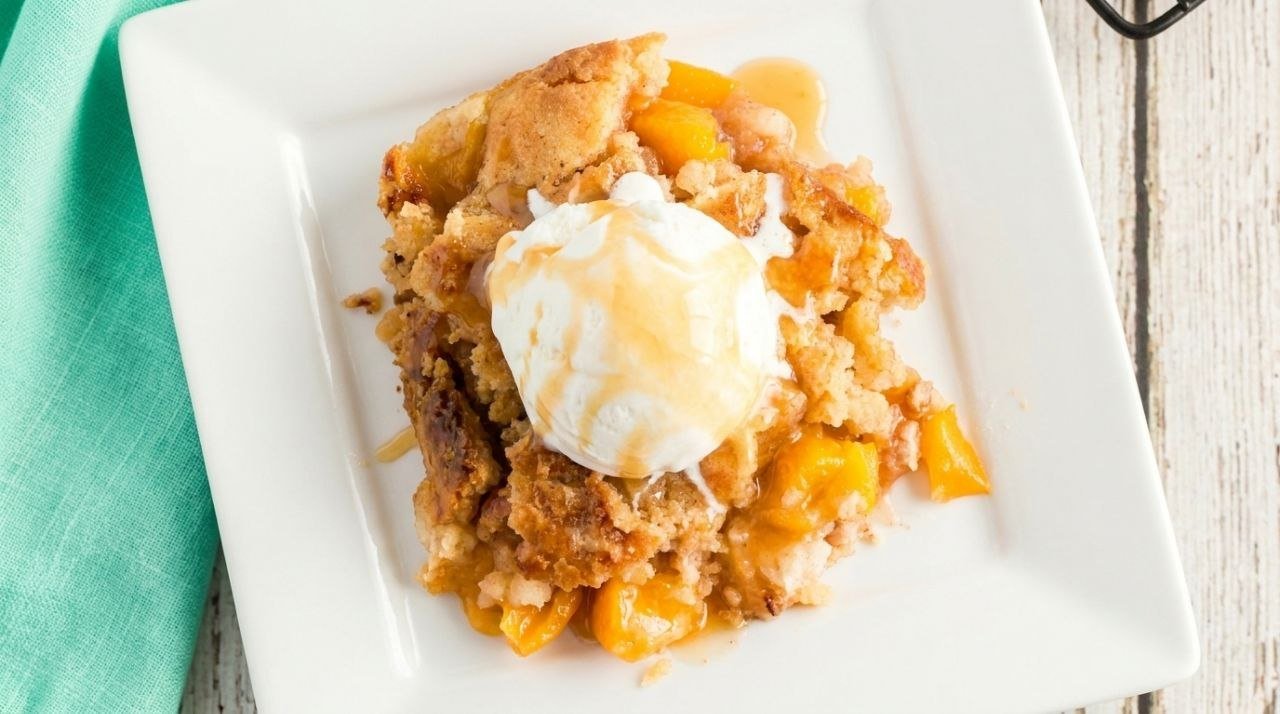
This peach cobbler dump cake is the kind of dessert that sounds too simple to be worth making until you pull it out of the oven — golden, bubbling, smelling of caramelized peaches and buttery cake — and realize it is genuinely one of the best things you have made all summer. Three ingredients go into a 9×13 pan in about four minutes of total prep: canned peach pie filling on the bottom, a box of yellow cake mix over the top, and cold butter sliced thin and laid across the whole surface. The oven does the rest, and forty-five minutes later you have a dessert that has the soul of a from-scratch peach cobbler with none of the work, none of the mess, and none of the twenty-ingredient recipe that usually goes with it.
What makes this the summer version of a dump cake is peaches — one of the few fruits that intensifies dramatically under oven heat, releasing its juice into the pan as the crust forms above it and developing a deep, amber-toned, almost jammy sweetness that canned peaches in syrup are perfectly built to deliver. The yellow cake mix on top absorbs the rising steam from below and the melting butter from above simultaneously, producing a topping that is neither cake nor biscuit but something in between: golden, slightly crisp at the edges, soft and almost pudding-like where the peach juice has fully saturated it from beneath. Served warm with vanilla ice cream melting into the hot crust, it is the definition of summer comfort food.
Why Canned Peaches Are the Right Choice Here
Using canned peach pie filling rather than fresh peaches is not a compromise in this recipe — it is the correct technical decision. Fresh peaches vary wildly in sweetness, juice content, and ripeness depending on the season, the variety, and how long they have been sitting. Canned peach pie filling is already sweetened, thickened with starch to the correct consistency, and packed in syrup that provides the exact amount of liquid the dump cake method needs to hydrate the dry cake mix from below as it bakes. Fresh peaches release an unpredictable amount of juice in the oven, which can leave the topping either too dry where the fruit is under-juicy or turn the bottom of the pan into a thin, watery puddle where the fruit was too ripe. Canned filling eliminates all of that variability and produces a consistent, properly thickened fruit layer every single time, regardless of the season or what is available at the store.
The Butter Science That Builds the Crust
The butter in a dump cake does something more specific than simply adding richness — it controls the hydration, browning, and texture of the topping in ways that no other fat quite replicates in this format. Cold butter sliced into thin pats and laid across the dry cake mix melts gradually and unevenly as the oven heats up, which produces a topping that is simultaneously crispy in spots where the butter pooled densely and soft in spots where the butter was thinner and the fruit juice absorbed more heavily from below. This deliberate unevenness is a feature rather than a flaw: the contrast between the golden, slightly crisp patches and the softer, almost steamed sections creates the textural complexity that makes the topping interesting to eat bite after bite.
The fat content of the butter also drives the Maillard reaction on the surface of the cake mix at the elevated temperatures of the oven. Butter has a relatively low smoke point compared to other fats, which means the milk solids in the butter begin to brown at the oven temperatures used in this recipe, contributing a toasty, nutty undertone to the crust’s flavor that plain vegetable oil or shortening cannot replicate. This is the same reason that brown-butter desserts taste deeper and more complex than their plain-butter counterparts — the milk solids caramelize alongside the sugars in the cake mix and produce flavor compounds that smell and taste far more sophisticated than the three-ingredient list of this recipe would suggest.
What Goes In
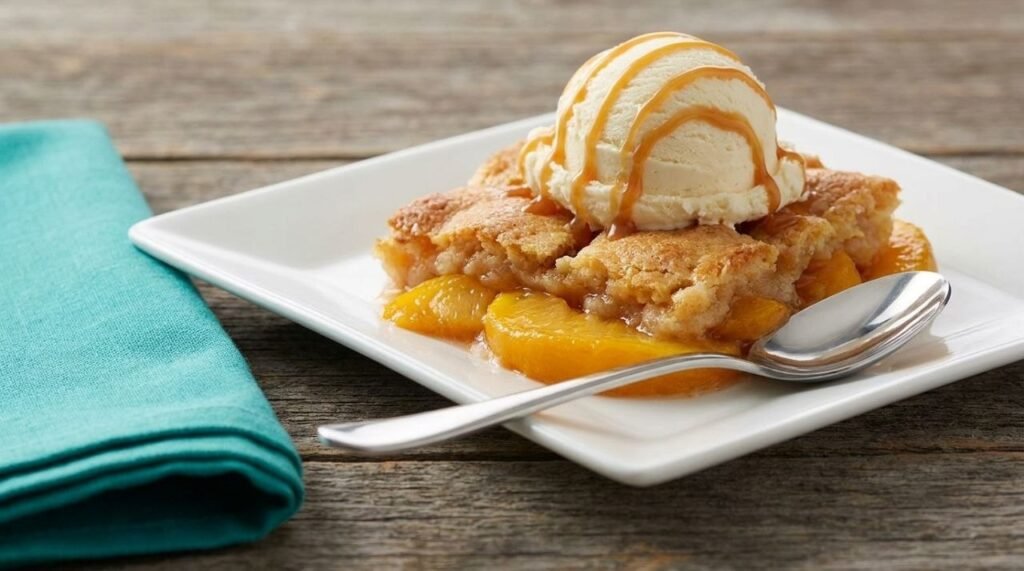
Three ingredients — that is genuinely all.
2 (21 oz) cans peach pie filling
1 (15.25 oz) box yellow cake mix
3/4 cup unsalted butter, cold, sliced into thin pats (1.5 sticks)
Want to Elevate It?
Sprinkle one teaspoon of cinnamon and half a teaspoon of nutmeg directly over the peach pie filling before adding the cake mix — both spices amplify the warm, fruity notes of the peach and make the finished dessert taste closer to a spiced peach cobbler than a plain dump cake.
Use a spice cake mix instead of yellow for a version with built-in warm spice notes that complement peaches perfectly without needing to add separate seasonings.
Add a cup of fresh or frozen blueberries scattered over the peach filling before the cake mix goes on top — the blueberries provide a tart, jammy counterpoint to the sweeter peach base and make the fruit layer visually more appealing when served.
Stir a teaspoon of almond extract into the peach filling before baking — almond and peach share aromatic compounds from the same botanical family, which is why almond extract amplifies the flavor of peach more effectively than almost any other addition, including vanilla.
How to Make Peach Cobbler Dump Cake
Step 1 – Prep the pan and oven: Preheat your oven to 350 degrees F. Lightly spray a 9×13 inch baking dish with nonstick cooking spray. A metal pan gives the best browning on the edges and bottom, but glass or ceramic works well — expect five to eight additional minutes of bake time with glass since it heats more slowly than metal and takes longer to drive the golden browning on the topping surface.
Step 2 – Add the peach layer: Open both cans of peach pie filling and spread them evenly across the bottom of the prepared baking dish. If the filling contains large peach slices, use a spoon to spread and distribute them so every section of the pan has a roughly equal amount of fruit and sauce. The peach layer should cover the entire bottom of the pan in a thick, even layer with no bare spots visible through the fruit.
Step 3 – Add the dry cake mix: Open the box of yellow cake mix and sprinkle the entire contents evenly over the peach layer. Do not stir, do not mix, and do not add any of the ingredients listed on the cake box — the only thing going into the pan is the dry powder. Spread the mix gently with a spoon or your fingers to create an even, unbroken blanket over the peaches. Any bare patches will not brown properly; any thick mounds will stay chalky in the center.
Step 4 – Lay the butter pats: Slice the cold butter into thin pieces approximately one quarter inch thick and lay them across the surface of the dry cake mix in a grid pattern, covering as much of the surface as possible. The goal is maximum coverage — the more of the cake mix surface touched by butter, the more evenly the topping will brown. Any dry patches of cake mix not covered by butter will absorb juice from below but will not brown on top, which produces the softer, more cobbler-like texture rather than the crispier golden crust that well-buttered sections develop.
Step 5 – Bake and serve: Bake uncovered at 350 degrees F for 45 to 55 minutes, until the top is deeply golden brown, the edges are visibly bubbling, and the surface feels set and dry rather than wet or loose when you tilt the pan slightly. The bubbling should be active around the perimeter — if only the very edges are bubbling and the center looks pale and still, give it another five minutes. Remove from the oven and cool for at least ten minutes before serving — the fruit layer is extremely hot directly out of the oven and needs time to settle and thicken slightly before spooning. Serve warm with vanilla ice cream or whipped cream.
3 Mistakes That Ruin Peach Dump Cake
Stirring the layers together: The dump cake format works specifically because the layers remain separate and interact through heat-driven moisture transfer rather than manual mixing. Stirring the peach filling into the dry cake mix before baking creates a thick, sticky batter that bakes into a dense, homogeneous cake with none of the textural contrast between the jammy fruit bottom and the golden crust top. Once the layers are in the pan, the only thing you touch is the butter placement — everything else is the oven’s job.
Using only one can of peach filling: A single can of pie filling spread across a 9×13 pan creates an extremely thin fruit layer that bakes dry before the topping finishes browning. The result is a dessert with a beautiful golden crust and almost no fruit layer underneath — closer to a buttery yellow cake than a cobbler. Two cans create the thick, generous, jammy peach base that makes dump cake worth eating and gives the topping enough moisture to develop the proper range of textures from crispy at the surface to soft and fruit-soaked at the bottom.
Pulling the cake before the center is fully golden: The center of a dump cake — where the butter coverage is thinnest and the fruit juice is most concentrated — always takes longer to brown than the edges. A common mistake is pulling the cake when the edges look done while the center still looks pale and slightly powdery on top. That pale center is under-baked dry cake mix that will taste floury and raw when served. Wait for the entire surface to be golden and for vigorous bubbling all the way across the pan, not just at the perimeter.
What to Serve with Peach Cobbler Dump Cake
This dessert is best served warm, which makes it a natural anchor for any summer gathering or casual dinner where you want a crowd-pleasing finish that required almost no effort to produce. Vanilla ice cream is the classic pairing — the cold cream melts into the hot peach layer and turns each bowl into a warm-and-cold, sweet-and-creamy combination that is difficult to improve on. Lightly sweetened whipped cream works equally well for a lighter finish. If you are building a summer dessert table, this dump cake pairs naturally alongside our Lemon Blueberry Dump Cake so guests can choose between the warm, spiced stone-fruit version and the brighter, more tart citrus-berry version — both are the same format, both bake at the same temperature, and both can go into the oven together to finish at the same time. For a no-bake option alongside it, our Strawberry Crunch Cheesecake Cups provide the cold, creamy contrast that makes the hot dump cake taste even better by comparison.

Easy Peach Cobbler Dump Cake
Ingredients
Equipment
Method
- How to Make Peach Cobbler Dump Cake
- Step 1 – Prep the pan and oven: Preheat your oven to 350 degrees F. Lightly spray a 9×13 inch baking dish with nonstick cooking spray. A metal pan gives the best browning on the edges and bottom, but glass or ceramic works well — expect five to eight additional minutes of bake time with glass since it heats more slowly than metal and takes longer to drive the golden browning on the topping surface.
- Step 2 – Add the peach layer: Open both cans of peach pie filling and spread them evenly across the bottom of the prepared baking dish. If the filling contains large peach slices, use a spoon to spread and distribute them so every section of the pan has a roughly equal amount of fruit and sauce. The peach layer should cover the entire bottom of the pan in a thick, even layer with no bare spots visible through the fruit.
- Step 3 – Add the dry cake mix: Open the box of yellow cake mix and sprinkle the entire contents evenly over the peach layer. Do not stir, do not mix, and do not add any of the ingredients listed on the cake box — the only thing going into the pan is the dry powder. Spread the mix gently with a spoon or your fingers to create an even, unbroken blanket over the peaches. Any bare patches will not brown properly; any thick mounds will stay chalky in the center.
- Step 4 – Lay the butter pats: Slice the cold butter into thin pieces approximately one quarter inch thick and lay them across the surface of the dry cake mix in a grid pattern, covering as much of the surface as possible. The goal is maximum coverage — the more of the cake mix surface touched by butter, the more evenly the topping will brown. Any dry patches of cake mix not covered by butter will absorb juice from below but will not brown on top, which produces the softer, more cobbler-like texture rather than the crispier golden crust that well-buttered sections develop.
- Step 5 – Bake and serve: Bake uncovered at 350 degrees F for 45 to 55 minutes, until the top is deeply golden brown, the edges are visibly bubbling, and the surface feels set and dry rather than wet or loose when you tilt the pan slightly. The bubbling should be active around the perimeter — if only the very edges are bubbling and the center looks pale and still, give it another five minutes. Remove from the oven and cool for at least ten minutes before serving — the fruit layer is extremely hot directly out of the oven and needs time to settle and thicken slightly before spooning. Serve warm with vanilla ice cream or whipped cream.
Notes
