
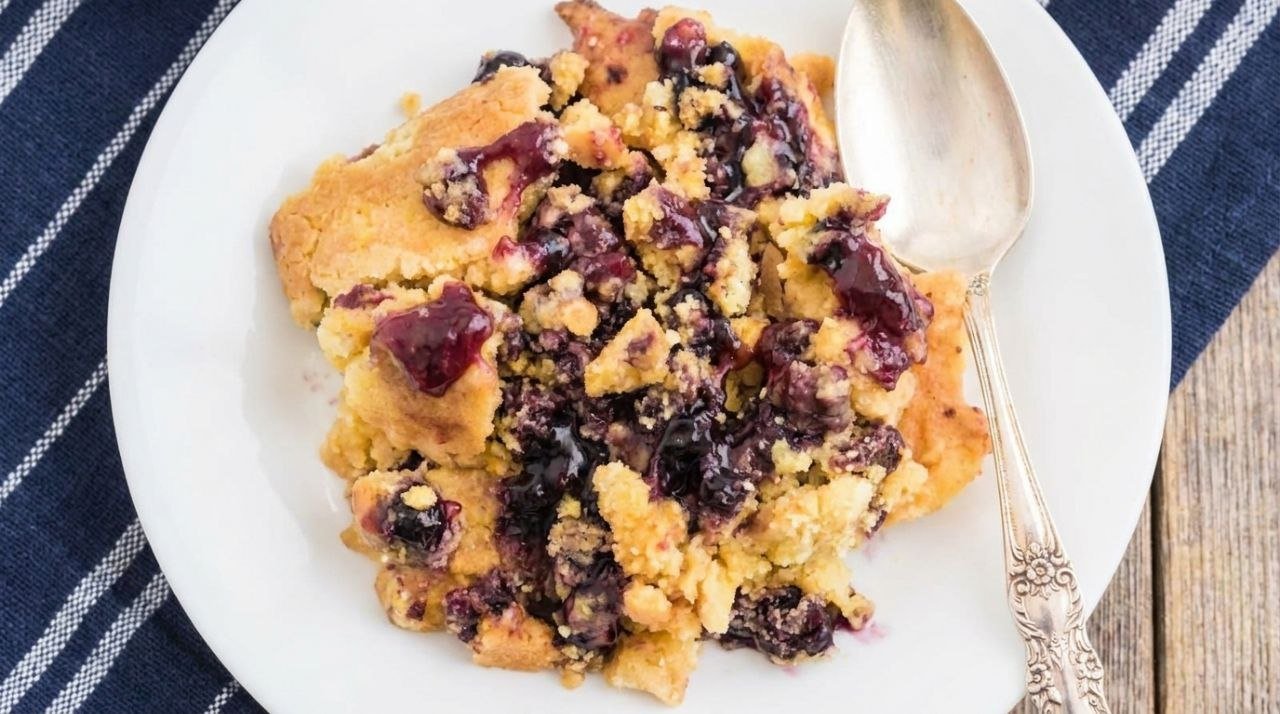
This lemon blueberry dump cake takes the classic “dump and bake” idea to its simplest form — three pantry ingredients, one baking dish, and about five minutes of active work. Sweet blueberry pie filling bakes under a blanket of lemon cake mix and melted butter, and as it cooks the bottom turns into a bubbly, jammy fruit layer while the top transforms into a golden, buttery crust that tastes like the topping of a cobbler. Served warm with a scoop of vanilla ice cream, it has all the comfort of a homemade fruit dessert with none of the effort of making a pie crust or mixing a traditional cake batter.
What makes this recipe genuinely useful is how flexible it is while staying almost impossibly easy. You can use canned blueberry pie filling, fresh blueberries, or frozen blueberries straight from the bag, swap the lemon cake mix for yellow or vanilla if that is what you have, and adjust the amount of butter to make the topping richer or lighter without changing the method. It is the definition of a “back pocket” dessert: keep a box of lemon cake mix, a couple of cans of blueberry pie filling, and a stick of butter on hand and you are never more than an hour away from a warm, bubbling fruit dessert that feeds a crowd.
Why Dump Cakes Work So Well
Dump cakes work because they flip traditional baking on its head. Instead of mixing a batter in a separate bowl and carefully layering components, everything is assembled directly in the baking dish — fruit on the bottom, dry cake mix in the middle, and butter on top — and the oven handles the mixing and transformation for you. As the cake bakes, the fruit layer heats and releases juice, the dry mix hydrates from below and from the melted butter above, and the top crust forms naturally as the butter and cake mix interact, creating a cobbler-like texture without a separate crumb topping. The result looks and tastes far more involved than the three ingredients and one pan would suggest.
The Science Behind the Gooey Center and Crisp Top
The texture of a good dump cake comes from the way moisture moves through the layers as the dessert bakes. The blueberries and pie filling at the bottom start with a high water content, and as they heat up the water turns to steam and rises through the dry cake mix, hydrating the starch and sugar granules as it passes. At the same time, the melted butter poured on top seeps downward, coating the cake mix particles in fat. The top layer of cake mix, which receives more butter than fruit juice, essentially fries and bakes in place, forming a crisp, golden crust. The lower portion, which receives more fruit juice than butter, turns into a soft, spoonable layer that sits somewhere between a cake and a thickened blueberry sauce.
The blueberries themselves contribute more than flavor and color. As they heat, the cell walls in the fruit break down and release pectin, a natural gelling agent found in many fruits that helps the bottom layer thicken as it cools. The lemon flavor in the cake mix and any added lemon zest introduce citric acid, which brightens the flavor of the blueberries and keeps their color vibrant instead of dulling as they bake. The browning on top comes largely from the Maillard reaction between the proteins and sugars in the cake mix as the butter raises the surface temperature high enough to trigger that complex browning chemistry, which is what gives the crust its deep flavor and appealing color.
What Goes In
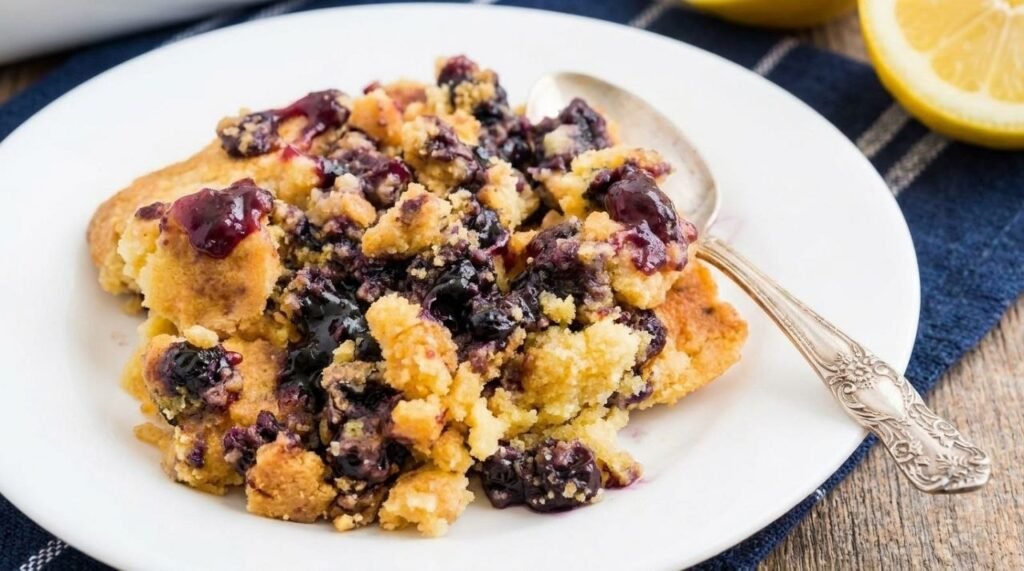
Three ingredients, all easy to keep on hand.
2 (21 oz) cans blueberry pie filling
1 (15.25 oz) box lemon cake mix
3/4 cup unsalted butter, melted (1 1/2 sticks)
Want to Switch It Up?
Use fresh or frozen blueberries instead of pie filling — about 3 cups total — and sprinkle them with 1/4 cup sugar and the zest of one lemon before adding the cake mix to mimic the sweetness and texture of canned filling.
Swap the lemon cake mix for yellow or vanilla cake mix if that is what you have, and add a teaspoon of grated lemon zest over the blueberries to keep the citrus flavor front and center.
Dot the top of the cake with small cubes of cream cheese before baking for tangy pockets that cut through the sweetness and make the dessert feel closer to a lemon blueberry cheesecake cobbler.
Stir a teaspoon of cinnamon into the dry cake mix before sprinkling it over the fruit for a warmer, more fall-leaning flavor profile that works especially well if you are serving the cake warm on cooler evenings.
How to Make Lemon Blueberry Dump Cake
Step 1 – Prep the pan and oven: Preheat your oven to 350 degrees F. Lightly grease a 9 x 13 inch baking dish with nonstick spray or a thin layer of butter. A metal baking pan gives the best browning on the edges and bottom, but a glass or ceramic dish also works — just keep in mind that glass may take a few extra minutes to reach the same level of golden color on top.
Step 2 – Add the blueberry layer: Spread the blueberry pie filling evenly over the bottom of the prepared baking dish, smoothing it into an even layer that reaches all the way to the corners. If you are using fresh or frozen blueberries instead, scatter them evenly over the pan, then sprinkle with sugar and lemon zest to help them release juice and create a proper sauce layer as the cake bakes.
Step 3 – Add the dry cake mix: Sprinkle the dry lemon cake mix evenly over the fruit layer. Do not stir. The goal is to create a uniform blanket of dry mix that covers all of the blueberries, with no large bare patches. A few small gaps are fine — the fruit will bubble up through them — but the more evenly you distribute the mix, the more consistent the crust will be after baking.
Step 4 – Add the butter: Pour the melted butter slowly and evenly over the surface of the dry cake mix, trying to cover as much of the top as possible. Use a spoon to gently nudge the butter toward any dry spots if needed, but do not mix it into the cake mix — the butter should sit on top and soak down on its own in the oven. Any small patches of dry mix left after pouring will hydrate from the blueberry juice rising from below during baking.
Step 5 – Bake and cool: Bake for 40 to 45 minutes, or until the top is deeply golden, the edges are bubbling, and you can see thickened blueberry filling peeking through in spots around the edges and through small cracks in the crust. The surface should look set and crisp rather than pale or wet. Remove from the oven and let the cake rest for at least 10 minutes before serving — this rest allows the fruit layer to thicken slightly as it cools so you get spoonable scoops rather than a runny sauce.
3 Mistakes That Ruin Dump Cake
Stirring the layers together: The entire concept of a dump cake relies on keeping the layers separate — fruit on the bottom, dry cake mix in the middle, butter on top. Stirring everything together in the pan turns the mixture into a thick, gluey batter that bakes up as a dense, uneven cake with no cobbler-like topping and a flat, muddled texture. If you are tempted to stir because you see dry spots on top, resist the urge; the oven will take care of it.
Leaving too much cake mix dry on top: A few small dry patches are fine, but large areas of unmelted cake mix will stay powdery even after 45 minutes in the oven and form chalky, floury spots in the crust. To avoid this, pour the melted butter as evenly as possible and tilt the pan gently back and forth before baking so the butter can run over the surface and catch any dry pockets you missed with the initial pour.
Undercooking the cake: Dump cakes need enough time for the fruit layer to bubble and thicken and for the top crust to brown and crisp. Pulling the cake from the oven while it is still pale and the edges are barely bubbling results in a dessert that tastes raw in places and has a grainy, sandy texture in the topping. Always look for a deep golden color on the cake mix and vigorous bubbling around the edges before calling it done, even if that means adding an extra five minutes beyond the suggested bake time.
What to Serve with Lemon Blueberry Dump Cake
This dessert is built to be served warm, straight from the pan, which makes it a natural match for cold, creamy toppings that melt into the hot fruit layer. Vanilla ice cream is the classic choice — the cold cream tempers the sweetness of the lemon cake and blueberry filling and turns each bowl into a hot-and-cold contrast that is hard to beat. Lightly sweetened whipped cream works just as well if you want something softer and airier on top. If you are building a full dessert table around this cake, pair it with our Strawberry Shortcake Cups for a lighter, no-bake option, or set it next to our 3-Ingredient Banana Oat Cookies so guests can choose between a warm, cobbler-style dessert and a simple, handheld cookie that fits the same “minimal ingredient” theme.

Easy Lemon Blueberry Dump Cake
Ingredients
Equipment
Method
- How to Make Lemon Blueberry Dump Cake
- Step 1 – Prep the pan and oven: Preheat your oven to 350 degrees F. Lightly grease a 9 x 13 inch baking dish with nonstick spray or a thin layer of butter. A metal baking pan gives the best browning on the edges and bottom, but a glass or ceramic dish also works — just keep in mind that glass may take a few extra minutes to reach the same level of golden color on top.
- Step 2 – Add the blueberry layer: Spread the blueberry pie filling evenly over the bottom of the prepared baking dish, smoothing it into an even layer that reaches all the way to the corners. If you are using fresh or frozen blueberries instead, scatter them evenly over the pan, then sprinkle with sugar and lemon zest to help them release juice and create a proper sauce layer as the cake bakes.
- Step 3 – Add the dry cake mix: Sprinkle the dry lemon cake mix evenly over the fruit layer. Do not stir. The goal is to create a uniform blanket of dry mix that covers all of the blueberries, with no large bare patches. A few small gaps are fine — the fruit will bubble up through them — but the more evenly you distribute the mix, the more consistent the crust will be after baking.
- Step 4 – Add the butter: Pour the melted butter slowly and evenly over the surface of the dry cake mix, trying to cover as much of the top as possible. Use a spoon to gently nudge the butter toward any dry spots if needed, but do not mix it into the cake mix — the butter should sit on top and soak down on its own in the oven. Any small patches of dry mix left after pouring will hydrate from the blueberry juice rising from below during baking.
- Step 5 – Bake and cool: Bake for 40 to 45 minutes, or until the top is deeply golden, the edges are bubbling, and you can see thickened blueberry filling peeking through in spots around the edges and through small cracks in the crust. The surface should look set and crisp rather than pale or wet. Remove from the oven and let the cake rest for at least 10 minutes before serving — this rest allows the fruit layer to thicken slightly as it cools so you get spoonable scoops rather than a runny sauce.
Notes
