
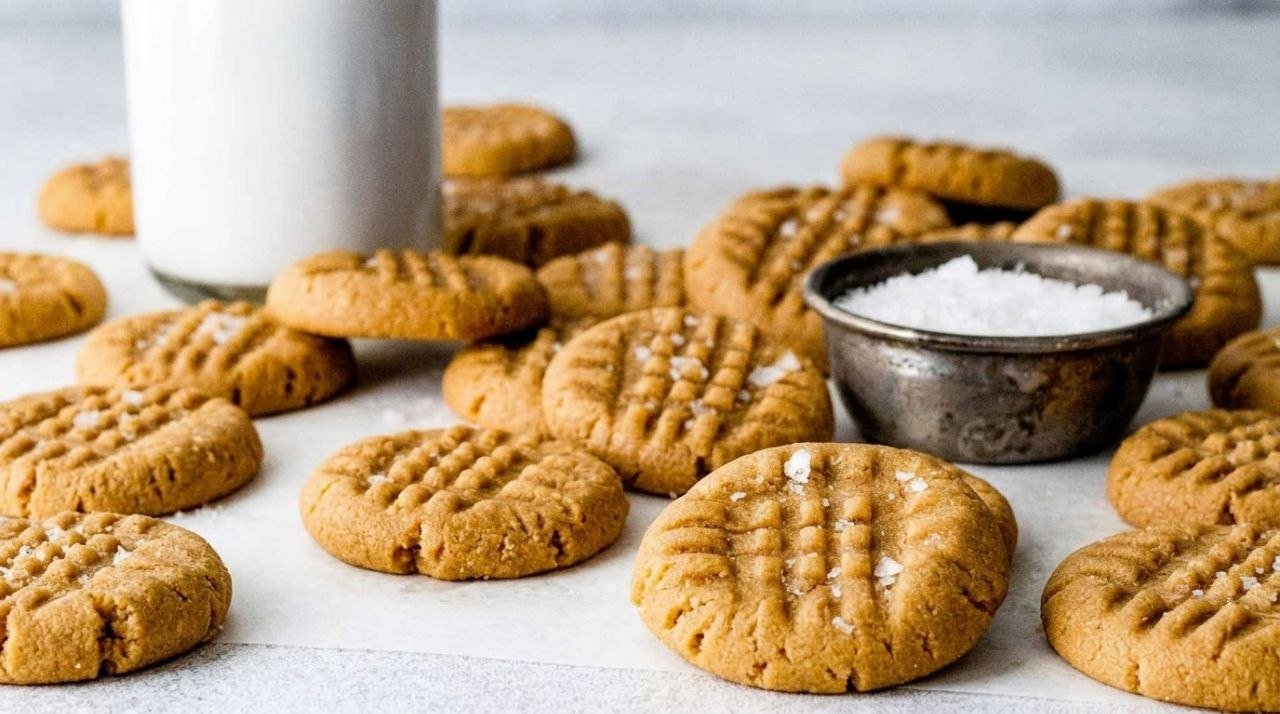
Picture opening your pantry, grabbing a jar of peanut butter, an egg, and a cup of sugar, and having a batch of warm, soft, deeply nutty cookies ready in under 20 minutes without ever touching a bag of flour. The edges crisp just slightly in the oven, the center stays tender and almost fudge-like, and the peanut butter flavor comes through bold and clean in every bite without anything diluting it. These cookies are one of those rare recipes where fewer ingredients actually produces a better result than a longer list would.
What makes this recipe so remarkable is that the absence of flour is not a shortcut or a compromise. It is actually what gives these cookies their distinctive dense, melt-in-your-mouth texture that flour-based peanut butter cookies almost never achieve. The dough comes together in one bowl in about two minutes, rolls into smooth balls with no sticking, and bakes into perfectly round cookies with the classic fork crosshatch pressed into the top. Whether you are gluten-free by necessity or simply craving cookies with the least possible effort, this recipe delivers a result that tastes like it came from a bakery.
Why You’ll Love This Recipe
First, the entire recipe uses only three ingredients that most households already have sitting in the pantry, which means you can go from craving to finished cookies in less time than it takes to preheat a conventional oven fully. Second, these cookies are naturally gluten-free because there is no flour in the dough at all, making them one of the easiest allergy-friendly desserts you can offer without modifying any ingredients or sourcing specialty products. Third, the peanut butter flavor is more concentrated and pronounced than in any flour-based version because nothing dilutes it, so each cookie tastes intensely nutty, rich, and satisfying in a way that feels almost indulgent. Fourth, the dough is forgiving and predictable every single time you make it, so even if baking is not your strongest skill, these cookies will come out of the oven looking round, golden, and exactly as they should.
The Science Behind Flourless Cookies
Traditional cookies rely on flour to provide structure through gluten, the protein network that forms when flour meets moisture and heat. In this recipe, the egg takes over that role entirely, because when egg proteins are heated in the oven, they coagulate and firm up around the peanut butter and sugar, creating a structure that holds the cookie together without any gluten at all. The fat content in the peanut butter, which is primarily monounsaturated fat from the peanuts, keeps the baked cookie moist and tender even after cooling, which is why the texture stays soft for days rather than turning dry or crumbly. The sugar not only adds sweetness but also draws moisture during baking through a process called hygroscopy, which helps the interior stay soft while the surface develops that light golden color and slightly firmer edge. You can read more about gluten and its role in baking on Wikipedia: Gluten.
What You Need
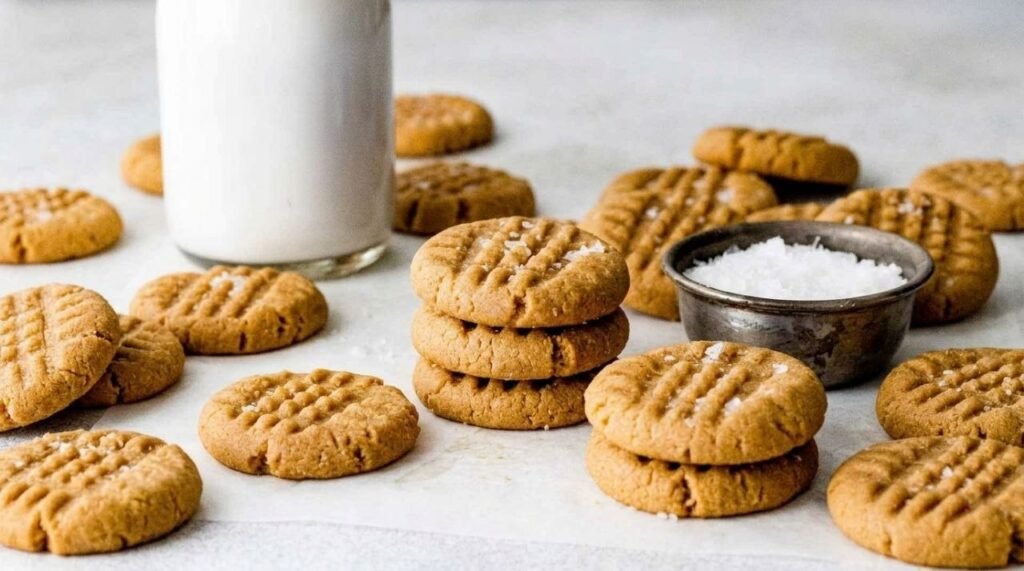
The 3 Core Ingredients:
Creamy peanut butter – 1 cup | Granulated sugar – 1 cup | Egg – 1 large, room temperature
Optional Add-Ins That Elevate the Result:
Pure vanilla extract – 1 tsp | Baking soda – 1/2 tsp for a slightly puffier texture | Flaky sea salt – for finishing | Mini chocolate chips – 1/4 cup folded into the dough
How to Make Soft Peanut Butter Cookies
Step 1 – Preheat the oven: Set the oven to 350 degrees F (175 degrees C) and line two baking sheets with parchment paper. Using parchment is important here because flourless cookies have no dry coating of flour to prevent sticking, so they will adhere firmly to an unlined or ungreased pan and break apart when you try to lift them.
Step 2 – Mix the dough: Combine the peanut butter, sugar, and egg in a large bowl and stir with a wooden spoon or spatula until the mixture comes together into a thick, uniform dough. If you are using vanilla extract or baking soda, add them at this stage and mix until fully incorporated. The dough will look quite stiff and dense, which is exactly right, because this consistency is what allows it to hold its shape in the oven without spreading too thin.
Step 3 – Portion the dough: Scoop the dough using a tablespoon or a small cookie scoop and roll each portion between your palms into a smooth, round ball about 1 1/4 inches in diameter. Keeping the portions consistent in size is important because cookies that are different sizes will bake at different rates, so the smaller ones will overbake while you wait for the larger ones to finish.
Step 4 – Press the crosshatch: Place each dough ball on the prepared baking sheet about 2 inches apart, then press down with the tines of a fork in one direction and again in the perpendicular direction to create the classic crosshatch pattern. This step does more than decorate the cookie. It also flattens the ball into a disc shape that bakes evenly, because an unflattened ball would remain rounded and the center would stay raw while the outside dried out.
Step 5 – Add the finishing touch: If you are using flaky sea salt, sprinkle a small pinch over the top of each cookie right before the pan goes into the oven. The salt crystals melt slightly during baking and create a subtle, complex contrast against the sweetness of the sugar and the richness of the peanut butter that makes each bite taste noticeably more refined.
Step 6 – Bake until just set: Bake for 9 to 11 minutes, checking at the 9-minute mark to assess the edges. The edges should look lightly golden and feel just set to a gentle touch, while the center should still appear slightly soft and underdone. Do not wait for the cookies to look fully baked in the oven, because they will continue firming up from the residual heat of the pan for several minutes after you remove them.
Step 7 – Cool on the pan: Let the cookies cool directly on the baking sheet for at least 5 full minutes before attempting to move them. Flourless cookies are significantly more fragile when warm than flour-based versions because there is no gluten network to hold them together before they cool, so moving them too early can cause cracking or crumbling at the edges even if they looked perfectly baked.
Step 8 – Transfer and serve: Once the cookies feel firm enough to lift without flexing, transfer them to a wire rack to finish cooling completely. They are excellent eaten slightly warm with a glass of cold milk, but they also improve after resting for a few hours as the sugar fully sets and the texture becomes even more tender and consistent throughout the center.
3 Mistakes That Ruin Peanut Butter Cookies
Using natural peanut butter with separated oil: Natural peanut butter that has not been thoroughly stirred contains excess oil on top and dry packed solids at the bottom, and that inconsistent fat ratio throws off the dough texture entirely. The cookies may spread too thin, crack unevenly, or bake with a greasy, oily surface. Always use well-stirred conventional peanut butter or a natural version that has been mixed completely before measuring.
Overbaking past the soft stage: These cookies look deceivingly underdone when they are actually perfectly baked, and that is the biggest trap for home bakers trying this recipe for the first time. If you bake them until the centers look golden and firm in the oven, they will be completely dry and hard by the time they cool because the heat trapped inside the cookie continues cooking the center for several minutes after the pan leaves the oven.
Moving the cookies while they are still warm: Without gluten to reinforce the structure, these cookies are more delicate than they look when they come out of the oven. Trying to lift them with a spatula before they have had at least 5 minutes to firm up on the pan will cause them to crack in the middle or break apart at the edges, ruining the clean round shape and the smooth surface you worked to create.
What to Serve with Soft Peanut Butter Cookies
These cookies pair beautifully with a cold glass of milk, hot chocolate, vanilla ice cream, or a drizzle of dark chocolate. The rich, nutty flavor of the cookie holds up perfectly against creamy or bitter accompaniments, and the contrast of textures between the soft cookie and a cold, creamy side makes each serving feel like a complete dessert experience.

Soft Peanut Butter Cookies (3 Ingredients, No Flour Needed)
Ingredients
Method
- How to Make Soft Peanut Butter Cookies
- Step 1 – Preheat the oven: Set the oven to 350 degrees F (175 degrees C) and line two baking sheets with parchment paper. Using parchment is important here because flourless cookies have no dry coating of flour to prevent sticking, so they will adhere firmly to an unlined or ungreased pan and break apart when you try to lift them.
- Step 2 – Mix the dough: Combine the peanut butter, sugar, and egg in a large bowl and stir with a wooden spoon or spatula until the mixture comes together into a thick, uniform dough. If you are using vanilla extract or baking soda, add them at this stage and mix until fully incorporated. The dough will look quite stiff and dense, which is exactly right, because this consistency is what allows it to hold its shape in the oven without spreading too thin.
- Step 3 – Portion the dough: Scoop the dough using a tablespoon or a small cookie scoop and roll each portion between your palms into a smooth, round ball about 1 1/4 inches in diameter. Keeping the portions consistent in size is important because cookies that are different sizes will bake at different rates, so the smaller ones will overbake while you wait for the larger ones to finish.
- Step 4 – Press the crosshatch: Place each dough ball on the prepared baking sheet about 2 inches apart, then press down with the tines of a fork in one direction and again in the perpendicular direction to create the classic crosshatch pattern. This step does more than decorate the cookie. It also flattens the ball into a disc shape that bakes evenly, because an unflattened ball would remain rounded and the center would stay raw while the outside dried out.
- Step 5 – Add the finishing touch: If you are using flaky sea salt, sprinkle a small pinch over the top of each cookie right before the pan goes into the oven. The salt crystals melt slightly during baking and create a subtle, complex contrast against the sweetness of the sugar and the richness of the peanut butter that makes each bite taste noticeably more refined.
- Step 6 – Bake until just set: Bake for 9 to 11 minutes, checking at the 9-minute mark to assess the edges. The edges should look lightly golden and feel just set to a gentle touch, while the center should still appear slightly soft and underdone. Do not wait for the cookies to look fully baked in the oven, because they will continue firming up from the residual heat of the pan for several minutes after you remove them.
- Step 7 – Cool on the pan: Let the cookies cool directly on the baking sheet for at least 5 full minutes before attempting to move them. Flourless cookies are significantly more fragile when warm than flour-based versions because there is no gluten network to hold them together before they cool, so moving them too early can cause cracking or crumbling at the edges even if they looked perfectly baked.
- Step 8 – Transfer and serve: Once the cookies feel firm enough to lift without flexing, transfer them to a wire rack to finish cooling completely. They are excellent eaten slightly warm with a glass of cold milk, but they also improve after resting for a few hours as the sugar fully sets and the texture becomes even more tender and consistent throughout the center.
Notes
