
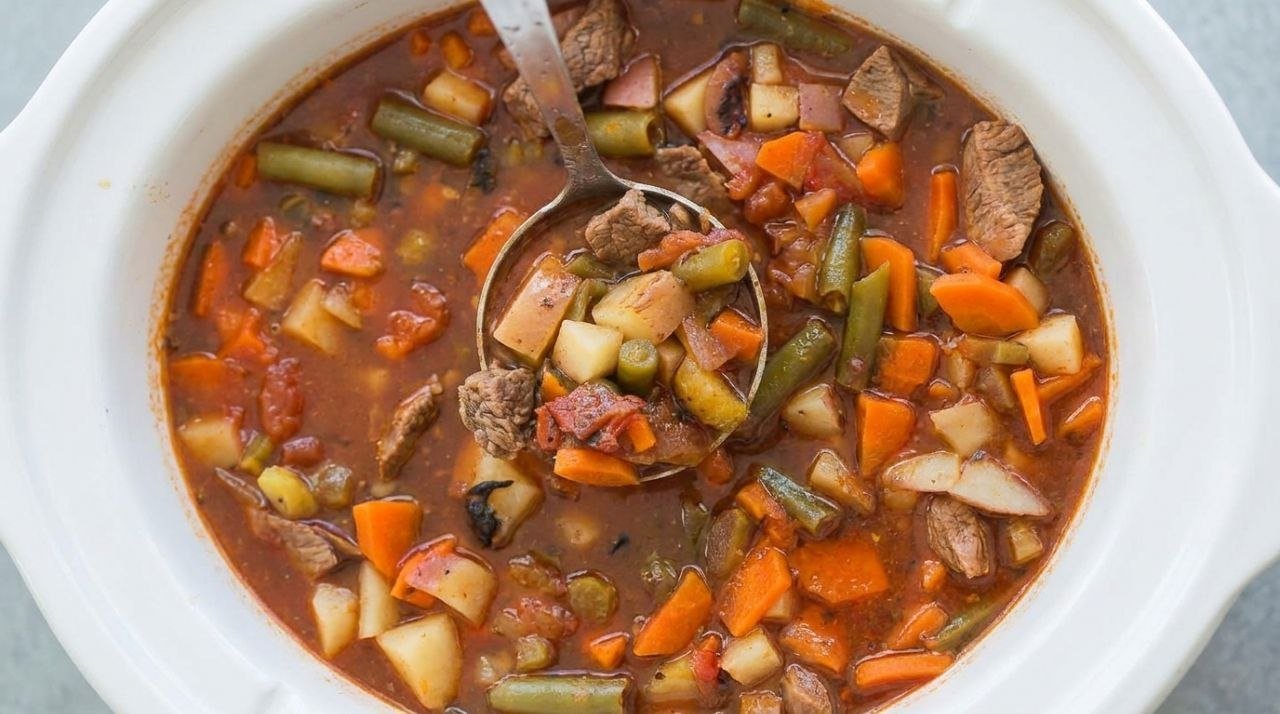
This slow cooker beef vegetable soup is exactly what the dump-and-go format was invented for — beef stew meat, potatoes, carrots, celery, green beans, tomatoes, and a deeply savory broth all go into the slow cooker in the morning with ten minutes of prep and zero technique, and eight hours later the beef is fork-tender, the vegetables are perfectly cooked, and the broth has developed a richness and depth that tastes like it spent all day on the stove being carefully tended rather than sitting in a ceramic insert doing exactly that without any supervision at all. The slow cooker’s long, gentle heat does something to beef stew meat that no other cooking method replicates in the same timeframe — it dissolves the collagen in the connective tissue of the chuck into gelatin that enriches the broth and gives it a silky, slightly thick body that no bouillon cube or store-bought stock can fake.
What makes this recipe genuinely healthy alongside being hearty is the ratio of vegetables to beef — this is a vegetable soup with beef in it rather than a beef stew with vegetables as an afterthought. Every cup of the finished soup contains more vegetables than meat by volume, which means you get a full, satisfying bowl that delivers protein, fiber, vitamins, and complex carbohydrates from the potatoes without the caloric density of a cream-based or pastry-topped dish. The broth is made entirely from beef broth, tomato paste, Worcestershire sauce, and the natural juices from the vegetables and meat — no cream, no added fat beyond what the beef contributes naturally, and no thickeners beyond the starch that releases from the potatoes during the long cook. It is comfort food that is actually good for you, which is a combination rare enough to be worth making every week through every cold month of the year.
Why Chuck Beef Makes the Best Slow Cooker Soup
Beef chuck — sold as stew meat, chuck roast cut into cubes, or beef for stew — is the single best cut for slow cooker soup because its high collagen content is a feature rather than a flaw in this cooking environment. Collagen is the structural protein found in connective tissue throughout muscles that see heavy use, and chuck comes from the shoulder of the animal — one of the most heavily worked muscle groups. At the low, sustained temperatures of a slow cooker set to LOW for 8 hours, collagen undergoes a gradual conversion into gelatin that takes several hours of continuous moist heat to complete. The gelatin dissolves into the broth and transforms it from a thin, watery liquid into a rich, glossy, full-bodied soup that coats the mouth and tastes far more intensely beefy than the amount of meat in the pot would suggest. Leaner cuts like round or sirloin have less collagen and produce a thinner, less rich broth that tastes flat by comparison regardless of how much seasoning is added.
The Vegetable Layering Order That Matters
The order in which vegetables go into the slow cooker determines whether they are perfectly cooked or mushy and falling apart by the end of the eight-hour cook. Dense root vegetables — carrots, potatoes, turnips, parsnips — go on the bottom and sides of the slow cooker, directly against the heat source, because they need the most cooking time and can withstand eight hours of slow heat without losing their structure completely. The beef goes in the middle layer surrounded by the root vegetables. Softer vegetables — green beans, corn kernels, frozen peas, zucchini — go on top or are added in the final hour of cooking because they cook faster and will be completely broken down and textureless if they spend the full eight hours in the slow cooker. Following this layering principle produces a finished soup where every component is cooked to the correct doneness simultaneously rather than some components being perfect while others are either underdone or disintegrated.
What Goes In
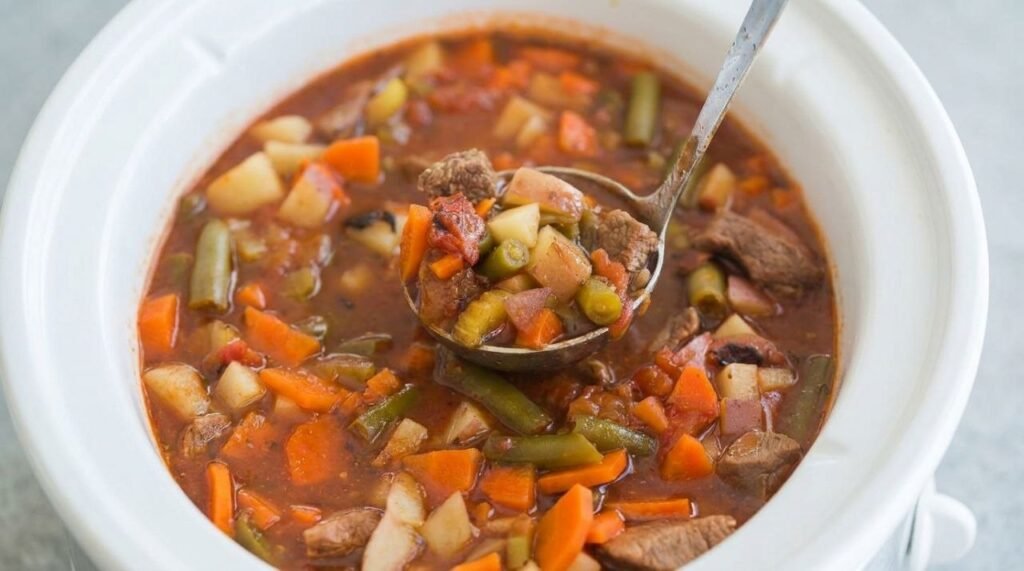
Everything goes in the slow cooker at once — real dump-and-go convenience.
2 lbs beef stew meat (chuck), cut into 1.5 inch cubes
3 medium Yukon gold potatoes, cut into 1-inch chunks
3 large carrots, sliced into half-inch rounds
3 stalks celery, sliced
1 medium yellow onion, diced
3 cloves garlic, minced
1 (14.5 oz) can diced tomatoes, with juice
2 tablespoons tomato paste
4 cups low-sodium beef broth
1 tablespoon Worcestershire sauce
1 cup frozen green beans
1 cup frozen corn kernels
1 teaspoon dried thyme
1 teaspoon smoked paprika
1 teaspoon salt
1/2 teaspoon black pepper
2 bay leaves
Fresh parsley, for serving
Easy Variations for Any Week
Add a cup of dry red wine — cabernet sauvignon or merlot — along with the broth for a richer, more complex broth with a deeper color and an earthy undertone that makes the soup taste closer to a classic French beef stew without any additional technique or ingredients beyond the wine itself.
Add a cup of dry small pasta — elbow macaroni, ditalini, or small shells — in the final 30 minutes of cooking for a beef and vegetable pasta soup that is heartier and more filling and stretches the recipe to feed two additional people from the same pot.
Substitute sweet potatoes for regular potatoes for a slightly sweeter, more nutritionally dense base vegetable that holds its shape well through the long cook and adds a beautiful orange color to the finished soup that makes it look as vibrant as it tastes.
Add a parmesan rind to the slow cooker at the start of cooking and remove it before serving — the rind releases proteins and fats into the broth during the long cook that add a savory, umami depth that is difficult to identify specifically but makes the finished soup taste significantly more complex and restaurant-quality.
How to Make Slow Cooker Beef Vegetable Soup
Step 1 – Optional beef sear: If time allows, pat the beef cubes dry with paper towels and season with salt and pepper. Heat a tablespoon of oil in a large skillet over high heat and sear the beef in batches for 2 minutes per side until deeply browned on at least two surfaces. Transfer to the slow cooker insert. If skipping the sear, season the raw beef with salt and pepper and add directly to the slow cooker.
Step 2 – Layer the vegetables: Place the potato chunks, carrot rounds, and celery slices around and under the beef in the slow cooker — these dense vegetables go on the bottom and sides where the heat is most direct. Add the diced onion and minced garlic over the beef. Pour in the diced tomatoes with their juice, the tomato paste, beef broth, and Worcestershire sauce. Add the dried thyme, smoked paprika, salt, pepper, and bay leaves. Do not add the frozen green beans or corn yet — these go in later.
Step 3 – Set and cook: Place the lid on the slow cooker and cook on LOW for 8 to 9 hours or on HIGH for 4 to 5 hours. Do not lift the lid during cooking — each lid removal extends the cooking time by 20 to 30 minutes as the temperature inside drops significantly. The soup is ready when the beef is completely fork-tender and falls apart without resistance when pressed with a spoon, and the potatoes and carrots are fully soft when pierced.
Step 4 – Add the frozen vegetables: In the final 30 minutes of cooking, remove the lid and stir in the frozen green beans and frozen corn kernels. Replace the lid and continue cooking on HIGH for the remaining 30 minutes until the green beans are tender but still hold their shape and the corn is heated through. This timing prevents the softer vegetables from overcooking into mush during the main cook and ensures they are perfectly done at the moment of serving.
Step 5 – Finish and serve: Remove and discard the bay leaves. Taste the broth and adjust salt and pepper — the broth concentrates during the long cook and may need less additional salt than expected, or may need a small additional amount depending on the sodium level of the broth used. Ladle the soup into deep bowls, making sure each bowl gets a generous portion of beef, potatoes, and vegetables alongside the broth. Garnish with chopped fresh parsley and serve with crusty bread or dinner rolls for soaking up the broth.
3 Mistakes That Ruin Slow Cooker Beef Soup
Using too lean a cut of beef: Beef labeled “extra lean stew meat” or cut from round or sirloin produces a soup where the meat is dry, stringy, and slightly tough rather than falling-apart tender after the long slow cook. Lean beef lacks the collagen and intramuscular fat that slow cooking converts into gelatin and richness — without those components the meat simply dehydrates over eight hours rather than breaking down into tender, flavorful pieces. Always use chuck or stew meat specifically labeled for slow cooking, and do not trim the fat from the pieces before adding them to the slow cooker. The fat renders during cooking and contributes flavor to the broth; if there is too much visible fat for your preference, skim the surface of the soup at the end of cooking before serving.
Adding all vegetables at the start including soft ones: Green beans, peas, zucchini, spinach, and corn cannot survive eight hours in a slow cooker without turning completely soft and textureless. These vegetables are done in twenty to forty minutes at slow cooker temperatures and will be completely disintegrated if present for the full cook. Adding them in the final thirty minutes produces vegetables that are properly cooked with some remaining texture and color rather than a green mush blended invisibly into the broth. The extra step of opening the slow cooker at the seven-and-a-half-hour mark to add soft vegetables takes thirty seconds and produces a dramatically better finished soup.
Cooking on HIGH the entire time to save time: HIGH setting on most slow cookers reaches approximately 300 degrees F, while LOW reaches approximately 200 degrees F. The collagen-to-gelatin conversion that makes slow cooker beef soup rich and silky requires sustained time at the lower temperature — cooking on HIGH for four hours produces a soup where the beef is cooked through but still slightly chewy because the conversion is incomplete, and the broth is thinner and less complex because the gelatin has not fully released. If you must use HIGH, plan for at least four to five hours and accept that the result will be slightly inferior in texture and broth depth to the eight-hour LOW version.
What to Serve with Beef Vegetable Soup
This soup is a complete meal in a bowl — protein, starch, and multiple vegetables all present in every serving — which means accompaniments should focus on texture and contrast rather than adding more substance to an already complete plate. Crusty bread or a warm dinner roll is the single most natural and universally loved pairing, providing something to tear and dip into the rich broth between spoonfuls. A simple side salad with a sharp vinaigrette dressing cuts through the richness of the beef broth and refreshes the palate between bites of the hearty soup. For dessert, our No Bake Chocolate Eclair Cake is ideal when made the night before — it requires no oven work the day of serving and its cool, creamy, chocolatey character provides a complete contrast to the hot, savory, vegetable-forward soup that preceded it.

Easy Slow Cooker Beef Vegetable Soup
Ingredients
Equipment
Method
- How to Make Slow Cooker Beef Vegetable Soup
- Step 1 – Optional beef sear: If time allows, pat the beef cubes dry with paper towels and season with salt and pepper. Heat a tablespoon of oil in a large skillet over high heat and sear the beef in batches for 2 minutes per side until deeply browned on at least two surfaces. Transfer to the slow cooker insert. If skipping the sear, season the raw beef with salt and pepper and add directly to the slow cooker.
- Step 2 – Layer the vegetables: Place the potato chunks, carrot rounds, and celery slices around and under the beef in the slow cooker — these dense vegetables go on the bottom and sides where the heat is most direct. Add the diced onion and minced garlic over the beef. Pour in the diced tomatoes with their juice, the tomato paste, beef broth, and Worcestershire sauce. Add the dried thyme, smoked paprika, salt, pepper, and bay leaves. Do not add the frozen green beans or corn yet — these go in later.
- Step 3 – Set and cook: Place the lid on the slow cooker and cook on LOW for 8 to 9 hours or on HIGH for 4 to 5 hours. Do not lift the lid during cooking — each lid removal extends the cooking time by 20 to 30 minutes as the temperature inside drops significantly. The soup is ready when the beef is completely fork-tender and falls apart without resistance when pressed with a spoon, and the potatoes and carrots are fully soft when pierced.
- Step 4 – Add the frozen vegetables: In the final 30 minutes of cooking, remove the lid and stir in the frozen green beans and frozen corn kernels. Replace the lid and continue cooking on HIGH for the remaining 30 minutes until the green beans are tender but still hold their shape and the corn is heated through. This timing prevents the softer vegetables from overcooking into mush during the main cook and ensures they are perfectly done at the moment of serving.
- Step 5 – Finish and serve: Remove and discard the bay leaves. Taste the broth and adjust salt and pepper — the broth concentrates during the long cook and may need less additional salt than expected, or may need a small additional amount depending on the sodium level of the broth used. Ladle the soup into deep bowls, making sure each bowl gets a generous portion of beef, potatoes, and vegetables alongside the broth. Garnish with chopped fresh parsley and serve with crusty bread or dinner rolls for soaking up the broth.
Notes
