
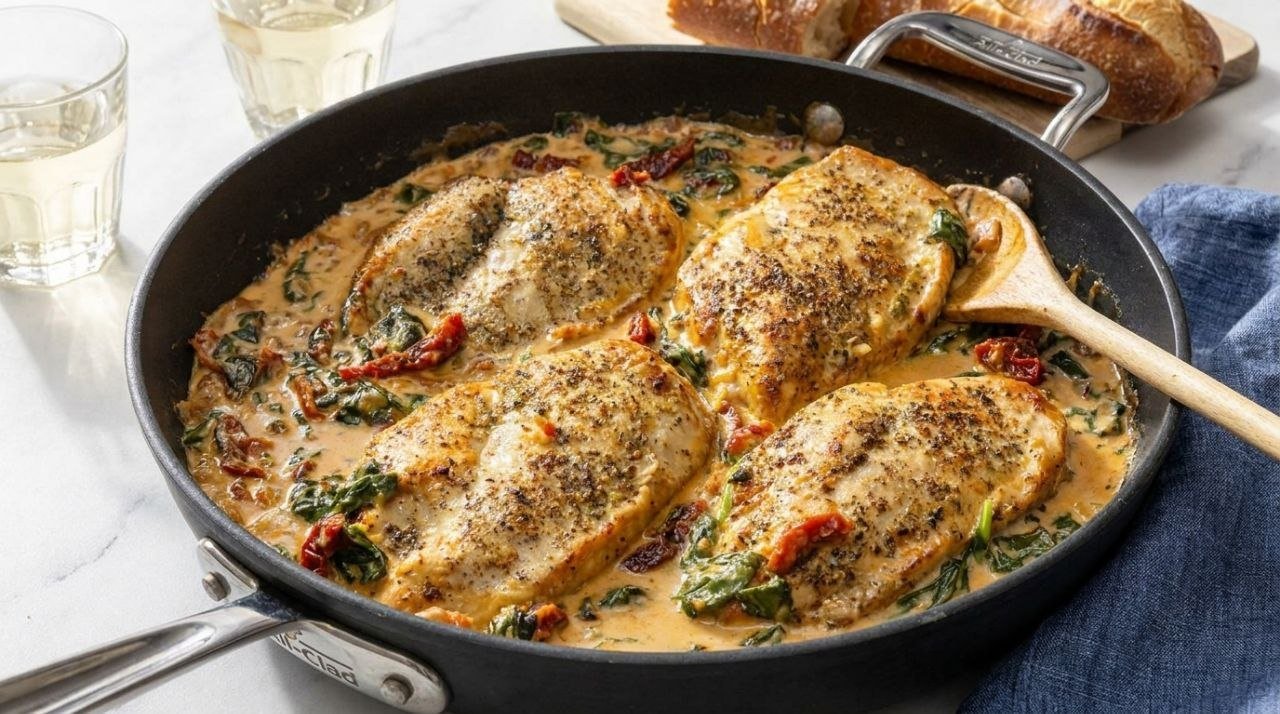
This creamy Tuscan chicken comes together in one pan in about twenty-five minutes and produces a dinner that tastes genuinely restaurant-quality — golden-seared chicken breasts sitting in a thick, garlicky cream sauce loaded with sun-dried tomatoes, wilted spinach, and freshly grated parmesan. The sauce clings to every surface of the chicken and is rich enough to spoon over pasta, rice, or crusty bread and make any of those bases feel like the main event in their own right. It is the kind of weeknight dinner that looks and tastes like you spent considerably more time and effort than you actually did, which is exactly what makes it worth having in regular rotation.
What makes this recipe dependable is that it is built around a single pan and a logical sequence of steps where each one builds directly on the last. The chicken is seared first to develop flavor and color, then removed while the sauce is built in the same pan using the fond left behind from the sear. That fond — the caramelized residue on the pan bottom — dissolves into the cream sauce and gives it a depth that a sauce built in a clean pan simply cannot replicate. By the time the chicken goes back into the sauce to finish cooking, every component in the pan has contributed something to the final flavor, and cleaning up requires nothing more than a single skillet and a wooden spoon.
Why One Pan Makes a Better Sauce
The logic behind one-pan cooking is not just about minimizing cleanup — it is about flavor accumulation. Every time something cooks in a pan, it leaves behind a layer of caramelized proteins, sugars, and fats that bond to the metal surface and concentrate as the moisture evaporates. When liquid is added to that hot pan afterward, those residues dissolve back into the sauce and carry all the flavor they developed during the searing stage directly into the final dish. In the case of this Tuscan chicken, the fond left by the seared chicken breasts becomes the flavored foundation of the cream sauce, which is why the sauce tastes as though it has been simmered for hours even though it takes less than ten minutes to build from scratch in the same pan. This layered approach to flavor is what separates a genuinely good pan sauce from one that tastes like cream with garlic stirred in.
The Emulsion Behind the Creaminess
The sauce in this recipe achieves its thick, glossy consistency through a culinary process called emulsification — the stable suspension of fat droplets within a water-based liquid, held together by the action of heat, agitation, and natural emulsifiers present in the cream and cheese. When heavy cream is added to the hot pan and brought to a simmer, the fat globules within it begin to break down and disperse through the liquid, and as the water content reduces through evaporation, the remaining fat and protein particles pack more tightly together and create the thick, coating consistency that defines a proper cream sauce. The parmesan added at the end contributes additional protein and fat that further stabilizes the emulsion and gives the sauce its final glossy finish and slightly grainy, savory depth that a cream sauce made without cheese simply does not have.
Sun-dried tomatoes play a more complex role in this sauce than their small quantity suggests. They have been concentrated through dehydration to a point where their natural glutamic acid content — the amino acid responsible for the savory, mouth-coating quality known as umami — is dramatically higher than in fresh tomatoes. A tablespoon of chopped sun-dried tomato contributes more depth to a cream sauce than an entire fresh tomato would, because the drying process has removed most of the water and left behind a concentrated form of every flavor compound the tomato contains. This is why the tomatoes in this recipe punch well above their weight and give the sauce a complexity that would otherwise require a much longer cooking process to develop.
What Goes In

One pan, straightforward ingredients, most of which are already in your kitchen.
For the chicken:
4 boneless skinless chicken breasts, pounded to even thickness
1 teaspoon salt
1/2 teaspoon black pepper
1 teaspoon garlic powder
1 teaspoon Italian seasoning
2 tablespoons olive oil, for searing
For the Tuscan cream sauce:
5 garlic cloves, minced
1/2 cup sun-dried tomatoes in oil, drained and roughly chopped
1 1/2 cups heavy cream
1/2 cup chicken broth
3/4 cup freshly grated parmesan
3 cups fresh baby spinach
1/2 teaspoon red pepper flakes, optional
Salt and black pepper to taste
Fresh basil, for garnish
Want to Build on It?
Add a handful of sliced mushrooms to the pan with the garlic and cook for two minutes before adding the cream for an earthier, more substantial sauce that pairs especially well with pappardelle pasta.
Stir in two tablespoons of cream cheese along with the parmesan for a thicker, richer sauce that coats the chicken more heavily and holds its consistency longer after plating.
Use chicken thighs instead of breasts for a version that is more forgiving in the pan, stays juicier at higher temperatures, and develops slightly more flavor in the sauce from the higher fat content of the thigh meat.
Add a splash of dry white wine to the pan after removing the chicken and before adding the garlic — let it reduce for one minute to cook off the alcohol, then proceed with the cream and broth for a sauce with a brighter, more complex acidity.
How to Make Creamy Tuscan Chicken
Step 1 – Season and sear the chicken: Pat the chicken breasts dry with paper towels, then season both sides evenly with salt, pepper, garlic powder, and Italian seasoning. Heat the olive oil in a large skillet over medium-high heat until shimmering. Add the chicken breasts and cook without moving them for 5 to 6 minutes on the first side until deeply golden and releasing cleanly from the pan. Flip and cook for another 4 to 5 minutes on the second side. The chicken does not need to be fully cooked through at this stage — it will finish in the sauce. Transfer to a plate and set aside.
Step 2 – Build the sauce base: Reduce the heat to medium. In the same pan with all the chicken drippings still present, add the minced garlic and sun-dried tomatoes. Cook for one to two minutes, stirring constantly and scraping up the fond from the bottom of the pan as the garlic softens and becomes fragrant. The sun-dried tomatoes will release a small amount of their oil into the pan during this stage, which adds to the flavor base of the sauce and keeps the garlic from burning in the residual heat.
Step 3 – Add the cream and broth: Pour in the heavy cream and chicken broth and stir to combine, making sure to scrape up any remaining bits from the bottom of the pan. Bring the mixture to a gentle simmer over medium heat and cook for three to four minutes, stirring occasionally, until the sauce begins to thicken slightly and coat the back of a spoon. Do not boil aggressively — a hard boil can break the emulsion and cause the cream to separate, leaving a greasy, curdled-looking sauce rather than a smooth one.
Step 4 – Add parmesan and spinach: Reduce the heat to low and stir in the grated parmesan in two additions, allowing each addition to fully melt into the sauce before adding the next. Once the cheese is incorporated and the sauce is smooth and glossy, add the fresh spinach and stir gently until wilted, which takes about one minute. Taste the sauce and adjust seasoning with salt, pepper, and red pepper flakes if using.
Step 5 – Return the chicken and finish: Nestle the seared chicken breasts back into the sauce, spooning the cream mixture over the top of each piece. Cook on low heat for five to six minutes until the chicken is cooked through to 165 degrees F at the thickest point and the sauce has thickened further around the edges of the pan. Garnish with fresh basil and serve immediately directly from the skillet over pasta, rice, or with crusty bread for the sauce.
3 Mistakes That Ruin Tuscan Chicken
Skipping the fond after searing: The brown residue left in the pan after searing the chicken is not burnt — it is concentrated, caramelized flavor that is waiting to be dissolved into the sauce. Wiping or rinsing the pan before building the sauce removes the single most important flavor contribution in the entire recipe. Scraping the fond into the sauce as the garlic and liquid go in is what gives this dish its depth, and without it the sauce tastes flat and generic no matter how many other ingredients you add.
Boiling the cream sauce too hard: Cream sauces are sensitive to high heat because the fat and water in the cream are held together in a delicate emulsion that breaks under aggressive boiling. Once it breaks, the sauce separates into a greasy liquid with white curds floating in it, and there is no reliable way to bring it back together. Always keep the heat at a gentle simmer — bubbles should break the surface slowly and steadily, not roll and foam — and the sauce will remain smooth and glossy throughout.
Adding cold parmesan to a hot sauce: Parmesan added directly from the refrigerator can seize and clump in the hot cream rather than melting smoothly, especially if the heat is too high at the moment it goes in. Grate the parmesan freshly just before using — pre-grated parmesan from a bag contains anti-caking agents that prevent it from melting properly — and add it off the heat or on the lowest setting, stirring continuously until it is fully incorporated before turning the heat back up.
What to Serve with Creamy Tuscan Chicken
The cream sauce in this recipe is rich and flavorful enough that whatever you serve underneath it becomes part of the dish rather than just a side. Pasta is the most natural choice — fettuccine, pappardelle, or rigatoni all hold the sauce well and turn the bowl into a complete meal that needs nothing else alongside it. Mashed potatoes work equally well for a more comfort-food-oriented version of the same dinner. If you want to keep the meal lighter, serve the chicken over steamed rice with the sauce spooned generously over the top, or alongside a simple green salad dressed with lemon vinaigrette that cuts through the cream. For a full dinner that starts before the chicken, our Clam Chowder Recipe makes an excellent first course — the seafood broth and cream of the soup share the same rich, warming register as the Tuscan sauce without repeating any flavors. If you are serving dessert after, our Fudgy Chocolate Brownies are the right call — dense, dark chocolate after a rich cream sauce is a classic pairing, and our Biscoff Cheesecake Bites are an equally compelling option when you want something cold and spiced to finish a warm, creamy dinner.

Easy Creamy Tuscan Chicken Skillet
Ingredients
Equipment
Method
- How to Make Creamy Tuscan Chicken
- Step 1 – Season and sear the chicken: Pat the chicken breasts dry with paper towels, then season both sides evenly with salt, pepper, garlic powder, and Italian seasoning. Heat the olive oil in a large skillet over medium-high heat until shimmering. Add the chicken breasts and cook without moving them for 5 to 6 minutes on the first side until deeply golden and releasing cleanly from the pan. Flip and cook for another 4 to 5 minutes on the second side. The chicken does not need to be fully cooked through at this stage — it will finish in the sauce. Transfer to a plate and set aside.
- Step 2 – Build the sauce base: Reduce the heat to medium. In the same pan with all the chicken drippings still present, add the minced garlic and sun-dried tomatoes. Cook for one to two minutes, stirring constantly and scraping up the fond from the bottom of the pan as the garlic softens and becomes fragrant. The sun-dried tomatoes will release a small amount of their oil into the pan during this stage, which adds to the flavor base of the sauce and keeps the garlic from burning in the residual heat.
- Step 3 – Add the cream and broth: Pour in the heavy cream and chicken broth and stir to combine, making sure to scrape up any remaining bits from the bottom of the pan. Bring the mixture to a gentle simmer over medium heat and cook for three to four minutes, stirring occasionally, until the sauce begins to thicken slightly and coat the back of a spoon. Do not boil aggressively — a hard boil can break the emulsion and cause the cream to separate, leaving a greasy, curdled-looking sauce rather than a smooth one.
- Step 4 – Add parmesan and spinach: Reduce the heat to low and stir in the grated parmesan in two additions, allowing each addition to fully melt into the sauce before adding the next. Once the cheese is incorporated and the sauce is smooth and glossy, add the fresh spinach and stir gently until wilted, which takes about one minute. Taste the sauce and adjust seasoning with salt, pepper, and red pepper flakes if using.
- Step 5 – Return the chicken and finish: Nestle the seared chicken breasts back into the sauce, spooning the cream mixture over the top of each piece. Cook on low heat for five to six minutes until the chicken is cooked through to 165 degrees F at the thickest point and the sauce has thickened further around the edges of the pan. Garnish with fresh basil and serve immediately directly from the skillet over pasta, rice, or with crusty bread for the sauce.
Notes
