
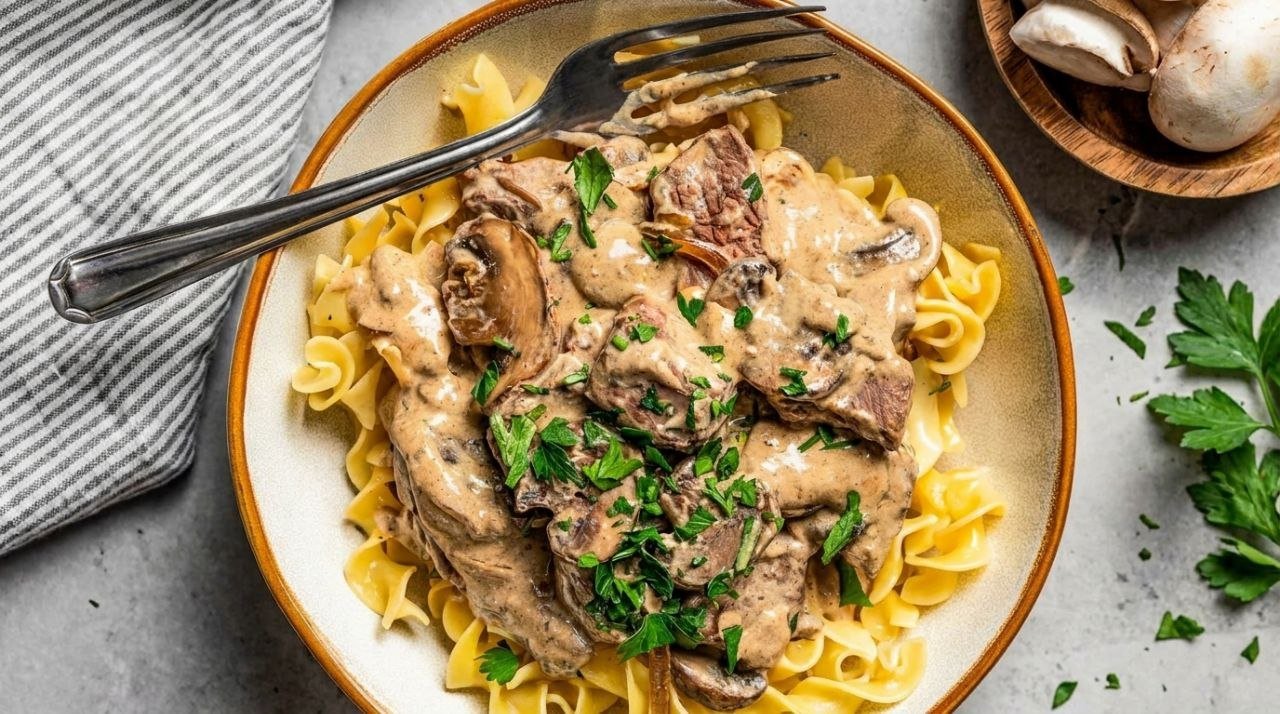
This beef stroganoff is the kind of dinner that makes a Tuesday feel like a Sunday — tender strips of beef in a sauce that is deeply savory, impossibly creamy, and rich with the flavor of caramelized mushrooms and beef broth reduced into something far more complex than the ingredient list suggests possible. Everything cooks in one pan in thirty minutes: the beef sears first, the mushrooms and onions go in next and soften in the same fat, the sauce builds directly in the pan from beef broth and a small amount of flour, and the sour cream finishes it into the silky, tangy, restaurant-quality sauce that makes stroganoff one of the most beloved comfort dinners in the world. Served over egg noodles, rice, or mashed potatoes, it is the definition of a complete, satisfying meal that requires nothing else on the plate.
What separates a genuinely great beef stroganoff from a merely acceptable one is entirely about the sauce — specifically, its texture, depth, and the balance between the richness of the beef and sour cream and the acidity and tang that keep the dish from feeling heavy. A sauce made by simply dissolving cornstarch in broth and adding sour cream is thin, flat, and one-dimensional. A sauce built properly — by browning the beef and mushrooms to develop fond on the pan, deglazing with broth to dissolve that fond into the liquid, reducing it briefly before adding sour cream off the heat — has a depth and complexity that tastes like it simmered for hours rather than fifteen minutes. The technique is what makes the difference, and none of it is complicated once you understand why each step matters.
Why the Beef Cut Determines Everything
The best beef for stroganoff is a tender, quick-cooking cut that can be sliced thin, seared rapidly over high heat, and remain tender and juicy after only a minute or two of total cooking time — because once the sour cream goes into the sauce and the beef returns to the pan, it will not be cooked further. Sirloin steak, ribeye, and beef tenderloin are the ideal choices in descending order of cost: sirloin is the most practical balance of tenderness and price, ribeye has more marbling and therefore more flavor and forgiveness, and tenderloin is the most luxurious option that produces the most delicate, buttery texture. Avoid stewing beef, round, or chuck for stroganoff — these cuts contain significant connective tissue that requires long, slow braising to become tender and will be chewy and tough after the short sear that this thirty-minute recipe calls for.
The Sour Cream Rule That Saves the Sauce
Sour cream breaks — curdles into grainy, separated clumps — when it is added to a sauce that is too hot or when it boils after being added. The dairy proteins in sour cream are sensitive to high heat and acid simultaneously, and when a very hot liquid contacts them directly they denature and contract, squeezing out the fat and producing the curdled appearance that ruins the sauce’s texture completely. The solution is to remove the pan from heat completely before adding the sour cream, and to stir it in quickly and continuously so it incorporates into the warm sauce rather than sitting in one spot and overheating. Once the sour cream is fully incorporated, the pan can return to the lowest possible heat for serving, but the sauce must never boil again — a single simmer after the sour cream is added is enough to break the sauce irreversibly.
What Goes In
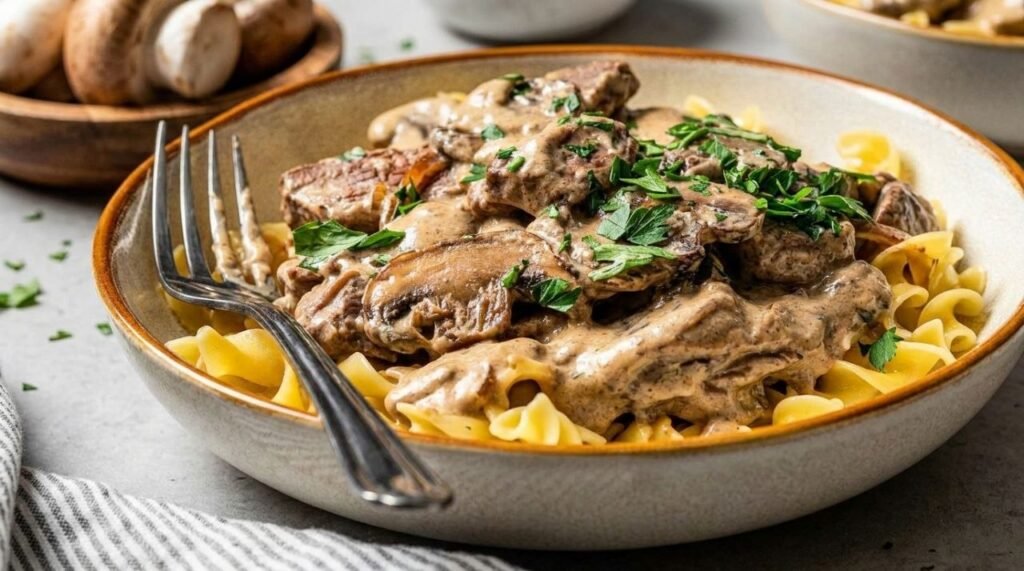
Classic ingredients, one pan, thirty minutes from start to table.
1.5 lbs sirloin steak, sliced into thin strips against the grain
8 oz cremini or button mushrooms, sliced
1 medium yellow onion, thinly sliced
3 cloves garlic, minced
2 tablespoons unsalted butter
1 tablespoon olive oil
2 tablespoons all-purpose flour
1.5 cups low-sodium beef broth
1 tablespoon Worcestershire sauce
1 teaspoon Dijon mustard
3/4 cup full-fat sour cream, room temperature
1 teaspoon salt
1/2 teaspoon black pepper
Fresh parsley, chopped, for garnish
Egg noodles, rice, or mashed potatoes for serving
Variations Worth Trying
Add a tablespoon of tomato paste to the pan alongside the garlic — cook it for one minute until it darkens slightly, then proceed with the flour and broth. The tomato paste adds umami depth and a subtle complexity to the sauce that most people cannot identify but everyone notices as making the dish taste more complete.
Use a half cup of dry white wine or dry sherry to deglaze the pan after the mushrooms are cooked, before adding the broth — allow the wine to reduce by half before adding the beef broth. The wine’s acidity lifts the fond from the pan more aggressively than broth alone and adds a brightness to the sauce that balances the richness of the sour cream.
Replace half the sour cream with cream cheese for a thicker, richer sauce that clings more heavily to the noodles and has a more pronounced tanginess — the cream cheese version is denser and more indulgent than the classic and holds its texture better when reheated the next day.
Use ground beef instead of sliced steak for a budget-friendly version — brown the ground beef, drain excess fat, and continue with the recipe exactly as written. The ground beef version is less elegant but equally delicious and feeds the same number of people at roughly half the cost.
How to Make Beef Stroganoff
Step 1 – Prep and sear the beef: Pat the beef strips completely dry with paper towels and season generously with salt and pepper. Heat the olive oil in a large skillet or Dutch oven over high heat until shimmering. Add the beef strips in a single layer — do not crowd the pan or the beef will steam rather than sear. Cook for 60 to 90 seconds per side until deeply browned, then remove to a plate immediately. The beef will be rare to medium-rare at this point; it finishes to the correct doneness when returned to the sauce at the end. Work in two batches if your pan cannot hold all the beef in a single layer without overlapping.
Step 2 – Cook the mushrooms: Reduce the heat to medium-high. Add the butter to the same pan with all the browned beef bits on the bottom — do not wipe the pan. Add the sliced mushrooms in a single layer and cook without stirring for 3 to 4 minutes until they release their moisture and that moisture fully evaporates, leaving the mushrooms browned and slightly caramelized on the bottom. Stirring too early prevents browning by trapping steam around the mushrooms. Once browned, stir once and cook for one additional minute.
Step 3 – Build the aromatic base: Add the sliced onion to the mushrooms and cook for 3 minutes until softened and translucent. Add the minced garlic and cook for one minute until fragrant. Sprinkle the flour over the mushrooms and onions and stir constantly for one full minute, coating every piece evenly in the flour and cooking out the raw starch taste. The mixture will look dry and slightly clumped — this is correct and will smooth out completely when the liquid is added.
Step 4 – Build the sauce: Pour in the beef broth gradually while stirring constantly to prevent lumps from forming. Add the Worcestershire sauce and Dijon mustard and stir to combine. Bring the sauce to a simmer over medium heat and cook for 3 to 5 minutes, stirring occasionally, until the sauce has thickened enough to coat the back of a spoon. Taste and adjust salt and pepper. Remove the pan from heat completely.
Step 5 – Finish with sour cream and serve: Spoon two to three tablespoons of the hot sauce into the sour cream in a small bowl and stir vigorously until smooth — this is the tempering step. Pour the tempered sour cream mixture back into the pan and stir quickly until fully incorporated into a smooth, glossy, uniformly cream-colored sauce. Return the seared beef strips and any accumulated juices from the plate to the pan and stir gently to coat in the sauce. Serve immediately over cooked egg noodles, rice, or mashed potatoes, garnished with chopped fresh parsley.
3 Mistakes That Ruin Beef Stroganoff
Crowding the beef in the pan: Beef strips that are stacked or overlapping in the pan cannot make direct contact with the hot pan surface and therefore cannot brown — they steam in the moisture released by the pieces around them and cook to a gray, flavorless exterior rather than a deeply caramelized, savory crust. The brown crust on properly seared beef is not just visual: it is concentrated flavor from the Maillard reaction that is the primary source of the deep, meaty taste in the finished sauce. Sear in batches with space between each piece, even if it takes an extra five minutes, and the difference in the final flavor is significant enough to justify the additional time every time.
Adding sour cream to a boiling sauce: This is the most common and most damaging mistake in stroganoff preparation. Boiling liquid causes the proteins in sour cream to seize and separate, producing a sauce that looks grainy, curdled, and unappetizing rather than smooth and glossy. Once the sauce curdles it cannot be reversed — whisking harder makes it worse, adding more liquid dilutes it without fixing the texture, and the dish must be started again. Remove the pan from heat completely, wait thirty seconds for the temperature to drop slightly, then add the tempered sour cream while stirring continuously.
Slicing the beef with the grain instead of against it: The grain of a steak refers to the direction the muscle fibers run through the meat. Slicing with the grain — parallel to those fibers — produces long, intact muscle fiber bundles in each strip that require significant chewing force to break through and feel tough and stringy regardless of how tender the cut was originally. Slicing against the grain — perpendicular to those fibers — cuts the muscle fibers into short segments that separate easily under minimal chewing pressure, producing a strip that feels tender and buttery even from a less expensive cut. Look at the surface of the raw steak, identify the direction the fibers run, and slice perpendicular to them.
What to Serve with Beef Stroganoff
Egg noodles are the classic and most natural base for stroganoff — their broad, flat surface area holds the creamy sauce generously and their slight chew provides a textural counterpoint to the tender beef. Wide ribbon pasta works equally well if egg noodles are unavailable. For a lower-carb option, mashed cauliflower absorbs the sauce as effectively as mashed potatoes and keeps the plate feeling light without changing the flavor combination at all. A simple side of steamed green beans or roasted asparagus provides the only vegetable the plate needs — both are neutral enough not to compete with the rich, complex stroganoff sauce and cook in under ten minutes alongside or just after the main dish is finished. For dessert, our No Bake Chocolate Eclair Cake is already made and waiting in the refrigerator if prepared the night before, making the entire dinner from start to dessert completely effortless on the night of serving.

Easy Creamy Beef Stroganoff
Ingredients
Equipment
Method
- How to Make Beef Stroganoff
- Step 1 – Prep and sear the beef: Pat the beef strips completely dry with paper towels and season generously with salt and pepper. Heat the olive oil in a large skillet or Dutch oven over high heat until shimmering. Add the beef strips in a single layer — do not crowd the pan or the beef will steam rather than sear. Cook for 60 to 90 seconds per side until deeply browned, then remove to a plate immediately. The beef will be rare to medium-rare at this point; it finishes to the correct doneness when returned to the sauce at the end. Work in two batches if your pan cannot hold all the beef in a single layer without overlapping.
- Step 2 – Cook the mushrooms: Reduce the heat to medium-high. Add the butter to the same pan with all the browned beef bits on the bottom — do not wipe the pan. Add the sliced mushrooms in a single layer and cook without stirring for 3 to 4 minutes until they release their moisture and that moisture fully evaporates, leaving the mushrooms browned and slightly caramelized on the bottom. Stirring too early prevents browning by trapping steam around the mushrooms. Once browned, stir once and cook for one additional minute.
- Step 3 – Build the aromatic base: Add the sliced onion to the mushrooms and cook for 3 minutes until softened and translucent. Add the minced garlic and cook for one minute until fragrant. Sprinkle the flour over the mushrooms and onions and stir constantly for one full minute, coating every piece evenly in the flour and cooking out the raw starch taste. The mixture will look dry and slightly clumped — this is correct and will smooth out completely when the liquid is added.
- Step 4 – Build the sauce: Pour in the beef broth gradually while stirring constantly to prevent lumps from forming. Add the Worcestershire sauce and Dijon mustard and stir to combine. Bring the sauce to a simmer over medium heat and cook for 3 to 5 minutes, stirring occasionally, until the sauce has thickened enough to coat the back of a spoon. Taste and adjust salt and pepper. Remove the pan from heat completely.
- Step 5 – Finish with sour cream and serve: Spoon two to three tablespoons of the hot sauce into the sour cream in a small bowl and stir vigorously until smooth — this is the tempering step. Pour the tempered sour cream mixture back into the pan and stir quickly until fully incorporated into a smooth, glossy, uniformly cream-colored sauce. Return the seared beef strips and any accumulated juices from the plate to the pan and stir gently to coat in the sauce. Serve immediately over cooked egg noodles, rice, or mashed potatoes, garnished with chopped fresh parsley.
Notes
