
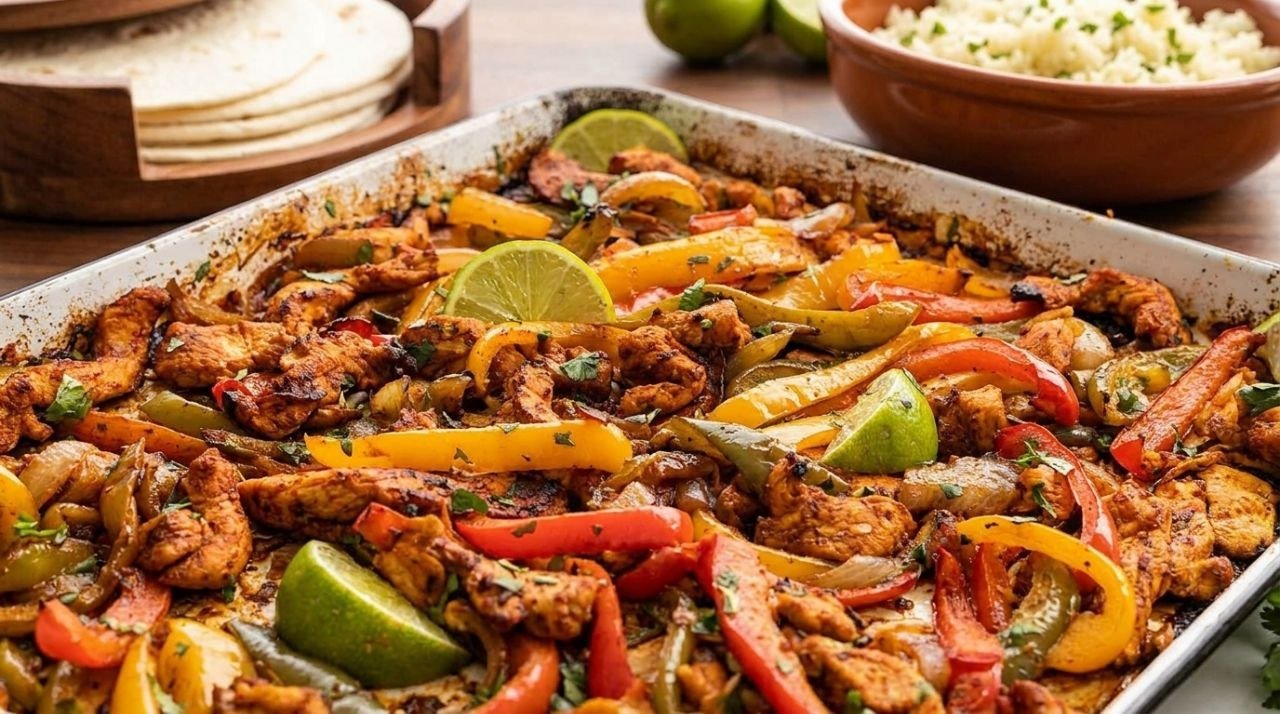
Baked Chicken Fajitas are the weeknight dinner that delivers full Tex-Mex flavor with almost no active effort — thinly sliced chicken breast, strips of red, yellow, and green bell pepper, and sliced onion all tossed together in a homemade fajita spice blend with olive oil and fresh lime juice, then spread across a single sheet pan and roasted at 425 degrees Fahrenheit until the chicken is cooked through and the vegetables have softened and caramelized at the edges. Everything goes in raw, everything comes out ready at the same time, and the entire pan goes directly to the table so people can load their own warm tortillas with whatever toppings they prefer. There is no stovetop splattering, no standing over a hot skillet shaking strips of chicken, and no pile of separate pans to wash afterward — just one pan of deeply seasoned, roasted fajita filling that tastes like considerably more work than it actually was.
What separates this version from a basic toss-and-bake recipe is the homemade spice blend and the lime. Pre-packaged fajita seasoning is convenient but heavily salted and often one-dimensional — it delivers heat and cumin but not the layered warmth that makes Tex-Mex cooking taste genuinely satisfying. Building the seasoning from scratch with smoked paprika, cumin, garlic powder, onion powder, chili powder, oregano, and a pinch of cayenne takes about ninety seconds and produces a blend that smells alive when it hits the hot pan, tastes more complex across the full cook, and lets you adjust the salt and heat level to exactly where you want it. The lime juice goes in with the marinade rather than at the end, which means it has the full bake time to tenderize the chicken and weave its acidity into the spices rather than sitting as a bright garnish on top of a finished dish that was not built around it.
Why the Oven Makes Better Fajitas Than the Stovetop
The conventional restaurant fajita is cooked in a screaming-hot cast iron skillet over direct flame, which produces fast charring and dramatic tableside sizzle — but it also requires constant attention, produces uneven cooking if the pan is crowded, and makes it nearly impossible to cook fajitas for more than two people at the same time without doing multiple batches. The oven solves all of those problems at once. A sheet pan spread in a single layer at 425 degrees gives every piece of chicken and every strip of vegetable its own direct exposure to dry, circulating heat, which means the cooking is even across the entire pan rather than concentrated at the contact point between food and skillet. The chicken cooks through gently and stays juicy rather than tightening on the outside before the center is done, and the vegetables soften and caramelize progressively over the full bake rather than charring suddenly and then steaming in their own moisture in an overcrowded pan.
The Science Behind the Fajita Spice Blend
The flavor of a fajita seasoning blend is built around cumin — the warm, earthy, slightly bitter spice that is the dominant aromatic in most Tex-Mex and Mexican cooking. Cumin contains volatile flavor compounds called terpenoids, particularly cuminaldehyde, that are fat-soluble and heat-activated, which means they bloom most intensely when they are mixed with oil and then exposed to oven heat rather than simply sprinkled dry over food. Tossing the chicken and vegetables in oil with the spice blend before baking ensures the cumin and other spices are carried into the fat coating every piece, where they are heated evenly throughout the cook and develop their deepest, most aromatic profile rather than sitting on the dry surface of the food and burning before the inside is cooked.
The lime juice in the marinade serves a structural as well as a flavor function. Citric acid partially denatures the surface proteins in the chicken breast, creating a slightly more open texture that allows the fat-dissolved spice compounds to penetrate slightly deeper into the meat rather than sitting entirely on the exterior. This is a milder version of the same process that makes overnight marinades so effective — even thirty minutes of contact time with acid and spiced oil produces chicken that tastes seasoned through rather than merely coated on the surface. The acid also brightens the final flavor of the dish at serving, providing the contrast that prevents a spice-forward filling from tasting flat or heavy inside the tortilla.
What Goes In
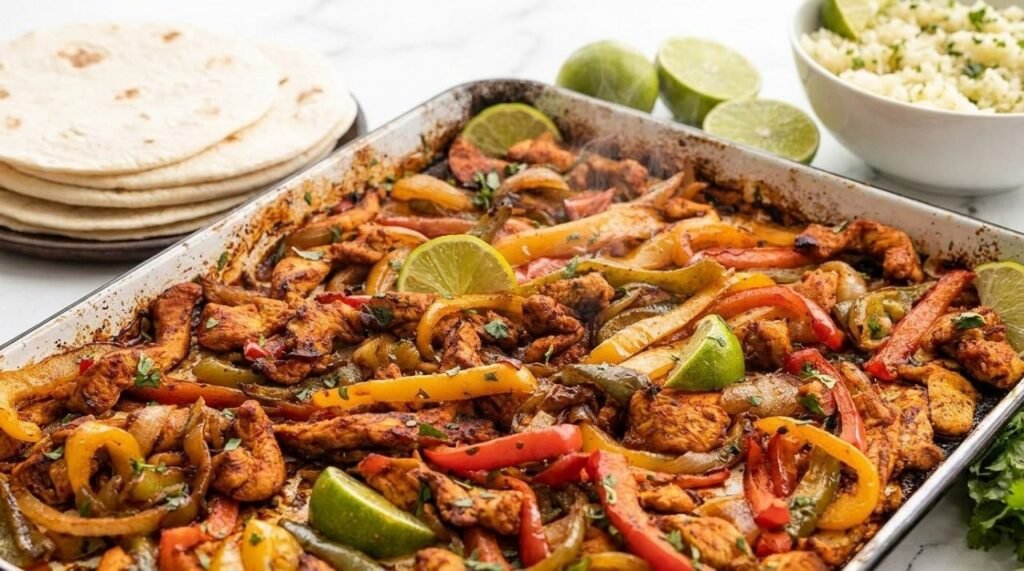
One pan, fifteen minutes of prep, thirty minutes of oven time.
1 1/2 lbs boneless skinless chicken breasts, sliced against the grain into thin strips.
3 large bell peppers, one red, one yellow, one green, thinly sliced.
1 large white onion, thinly sliced.
3 tablespoons olive oil.
Juice and zest of 1 large lime.
1 1/2 teaspoons smoked paprika.
1 1/2 teaspoons ground cumin.
1 teaspoon chili powder.
1 teaspoon garlic powder.
1/2 teaspoon onion powder.
1/2 teaspoon dried oregano.
1/4 teaspoon cayenne pepper, adjust to preference.
1 teaspoon kosher salt and 1/2 teaspoon black pepper.
8 to 10 small flour or corn tortillas, warmed for serving.
Variations Worth Trying
Use boneless skinless chicken thighs in place of breasts if you want a richer, more forgiving result — thighs have more intramuscular fat and stay juicy even if slightly overcooked, which gives you more margin for timing error and a more flavorful finished filling.
Add one thinly sliced zucchini or a cup of halved cherry tomatoes to the pan for extra vegetables that roast beautifully alongside the peppers and onions without changing the prep process at all.
Substitute orange juice for the lime juice if you want a slightly sweeter, less sharp marinade that works especially well when using honey or brown sugar in the spice blend for a caramelized variation.
Use corn tortillas in place of flour if you want a more traditional flavor that stands up better to the bold spice blend — warm them directly over a gas burner flame for ten seconds per side for the best texture and a slight char that matches the roasted filling.
How to Make Baked Chicken Fajitas
Step 1 – Mix the spice blend and marinate: In a large bowl, whisk together the olive oil, lime juice and zest, smoked paprika, cumin, chili powder, garlic powder, onion powder, oregano, cayenne, salt, and pepper until fully combined. Add the sliced chicken, peppers, and onion and toss everything together thoroughly so every piece is evenly coated in the spiced oil. If you have time, let this sit at room temperature for 20 to 30 minutes so the acid and spices begin to work into the surface of the chicken — even this short marinating window produces noticeably more flavorful results than going straight to the oven.
Step 2 – Preheat and prepare the pan: Preheat the oven to 425 degrees Fahrenheit and line a large rimmed sheet pan or 9×13-inch baking dish with foil for easier cleanup. The foil lining is optional but makes the difference between a five-minute cleanup and a twenty-minute one. If you want maximum caramelization on the vegetables, skip the foil and use a bare metal sheet pan — direct contact with the hot metal produces more browning at the edges of the peppers and onions than foil does.
Step 3 – Spread and bake: Spread the marinated chicken and vegetables across the prepared pan in a single layer, taking care not to pile or overlap pieces — crowding the pan causes the ingredients to steam in their released moisture rather than roast in dry heat, which eliminates the caramelization and produces a pallid, wet result instead of the lightly charred edges that make oven fajitas taste like they were cooked over actual heat. Bake at 425 degrees for 20 to 25 minutes, stirring once at the halfway point to redistribute the juices and expose new surfaces to direct heat.
Step 4 – Check for doneness and rest briefly: The chicken is done when it reads 165 degrees Fahrenheit on an instant-read thermometer and shows no pink at the thickest point when a strip is cut open. The peppers should be tender with slightly caramelized edges, and the onions should be translucent and soft throughout. Remove the pan from the oven and let it rest for 3 to 4 minutes before serving — this brief rest allows the juices released during cooking to redistribute back into the chicken rather than running out immediately when the tortilla is filled, keeping the filling moist rather than dry.
Step 5 – Warm the tortillas and serve: While the fajita filling rests, warm the tortillas in a dry skillet over medium heat for about fifteen seconds per side, or wrap them in a damp paper towel and microwave for thirty seconds. Bring the pan to the table and let everyone fill their own tortillas with chicken, peppers, and onions, then top with sour cream, shredded cheese, guacamole, salsa, pickled jalapeños, and fresh cilantro according to preference. The communal serving format is part of what makes this recipe work so well for family dinners — the cooking is done entirely in the kitchen, and the table becomes the assembly station.
3 Mistakes That Ruin Baked Chicken Fajitas
Overcrowding the pan: The single most common reason oven fajitas disappoint is spreading everything too thickly on one pan. When the pieces are piled two or three deep, the oven heat cannot reach the bottom layers and the trapped moisture from the vegetables and chicken turns the filling into a braise rather than a roast. Use the largest pan you have, and if necessary use two pans side by side rather than squeezing everything onto one crowded surface.
Slicing the chicken too thick: Strips thicker than half an inch take significantly longer to cook through than the thinner strips, which means the vegetables overcook and lose their texture while the chicken finishes. Aim for strips about a quarter to a third of an inch thick — thin enough to cook in the same time as the peppers and onions, but not so thin they dry out before the vegetables are done.
Skipping the stir at the halfway point: The juices that pool at the bottom of the pan during the first half of baking are the most concentrated source of spiced, lime-infused flavor in the entire recipe. Stirring halfway through recoats every piece in that reduced liquid and exposes the surfaces that were facing down — the ones with the most direct heat exposure and the most caramelization — to air and renewed oven heat, which finishes the browning more evenly and produces a more uniformly flavorful filling.
What to Serve With Baked Chicken Fajitas
These fajitas are a complete dinner on their own once they are loaded into warm tortillas with toppings, but they pair especially well with cilantro lime rice, refried or black beans, corn salad, or a simple avocado and tomato salad if you want to round out the plate. For a full Tex-Mex dinner spread, serve them alongside our Buffalo Chicken Wraps as a second chicken option for guests who want less spice, and finish with our No Bake Chocolate Lasagna for a dessert that requires as little active effort as the main course.

Easy Baked Chicken Fajitas
Ingredients
Equipment
Method
- How to Make Baked Chicken Fajitas
- Step 1 – Mix the spice blend and marinate: In a large bowl, whisk together the olive oil, lime juice and zest, smoked paprika, cumin, chili powder, garlic powder, onion powder, oregano, cayenne, salt, and pepper until fully combined. Add the sliced chicken, peppers, and onion and toss everything together thoroughly so every piece is evenly coated in the spiced oil. If you have time, let this sit at room temperature for 20 to 30 minutes so the acid and spices begin to work into the surface of the chicken — even this short marinating window produces noticeably more flavorful results than going straight to the oven.
- Step 2 – Preheat and prepare the pan: Preheat the oven to 425 degrees Fahrenheit and line a large rimmed sheet pan or 9×13-inch baking dish with foil for easier cleanup. The foil lining is optional but makes the difference between a five-minute cleanup and a twenty-minute one. If you want maximum caramelization on the vegetables, skip the foil and use a bare metal sheet pan — direct contact with the hot metal produces more browning at the edges of the peppers and onions than foil does.
- Step 3 – Spread and bake: Spread the marinated chicken and vegetables across the prepared pan in a single layer, taking care not to pile or overlap pieces — crowding the pan causes the ingredients to steam in their released moisture rather than roast in dry heat, which eliminates the caramelization and produces a pallid, wet result instead of the lightly charred edges that make oven fajitas taste like they were cooked over actual heat. Bake at 425 degrees for 20 to 25 minutes, stirring once at the halfway point to redistribute the juices and expose new surfaces to direct heat.
- Step 4 – Check for doneness and rest briefly: The chicken is done when it reads 165 degrees Fahrenheit on an instant-read thermometer and shows no pink at the thickest point when a strip is cut open. The peppers should be tender with slightly caramelized edges, and the onions should be translucent and soft throughout. Remove the pan from the oven and let it rest for 3 to 4 minutes before serving — this brief rest allows the juices released during cooking to redistribute back into the chicken rather than running out immediately when the tortilla is filled, keeping the filling moist rather than dry.
- Step 5 – Warm the tortillas and serve: While the fajita filling rests, warm the tortillas in a dry skillet over medium heat for about fifteen seconds per side, or wrap them in a damp paper towel and microwave for thirty seconds. Bring the pan to the table and let everyone fill their own tortillas with chicken, peppers, and onions, then top with sour cream, shredded cheese, guacamole, salsa, pickled jalapeños, and fresh cilantro according to preference. The communal serving format is part of what makes this recipe work so well for family dinners — the cooking is done entirely in the kitchen, and the table becomes the assembly station.
Notes
