
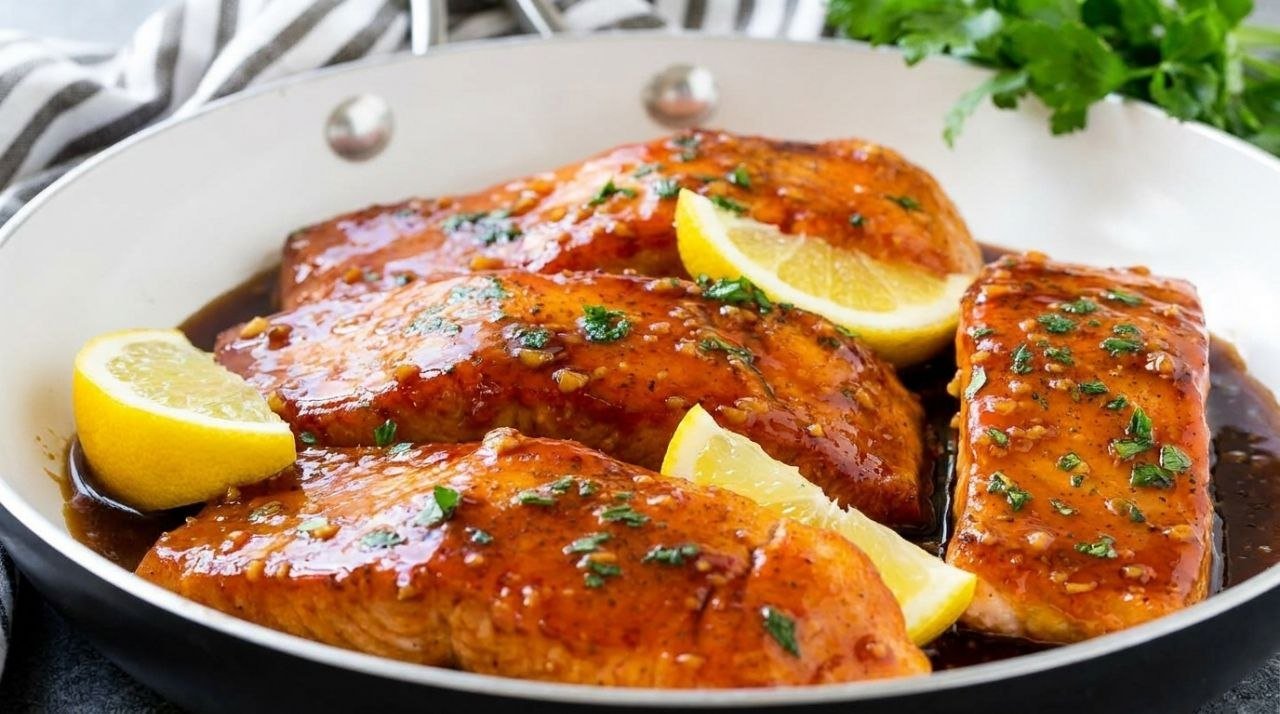
Four ingredients, one pan, twenty minutes from start to finish — this honey garlic salmon is the kind of weeknight dinner that looks like you spent far more effort than you actually did. The salmon fillets come out of the pan with a deep, caramelized glaze that is sweet from the honey, savory from the soy sauce, and sharp from the garlic, with a golden crust on the outside and a center that stays tender and just barely flaky. It is the kind of dish that makes people ask for the recipe at the table, and the kind that surprises you every time with how much flavor four simple ingredients can deliver.
What separates this recipe from the dozens of honey garlic salmon versions you will find online is the method. Most recipes either bake the salmon from the start and miss out on the crust, or sear it without finishing the glaze properly, which leaves the sauce thin and watery instead of thick and sticky. This version uses a two-stage approach — a hard sear first to build the crust and lock in the moisture, followed by a brief glaze reduction in the same pan — that gives you the best of both techniques in a single skillet and a single round of cleanup.
Why This Recipe Works Every Time
Salmon is one of the most forgiving proteins you can cook on a weeknight, but it still has a narrow window between perfectly done and overdone. This recipe accounts for that by using high heat for a short time rather than low heat for a long time, which produces a crust that seals the exterior surface quickly while leaving the interior soft and moist. The honey in the glaze does two important things: it caramelizes under heat to create that sticky, lacquered surface that makes the salmon look as good as it tastes, and it balances the sharp bite of the raw garlic into something rounder and more complex once it hits the hot pan. The soy sauce brings saltiness and depth that amplifies both the salmon’s natural richness and the sweetness of the honey, so even though the ingredient list is minimal, the flavor profile feels layered and complete.
The Fat Behind the Flavor
Salmon owes most of its nutritional reputation to a specific class of polyunsaturated fats known as omega-3 fatty acids — particularly EPA and DHA, two long-chain forms that the human body cannot produce on its own and must obtain through diet. These fats are stored throughout the flesh of fatty fish like salmon, which is why salmon has that distinctively rich, almost buttery texture that leaner fish like tilapia or cod simply cannot replicate. When you cook salmon over high heat in a skillet, the fat closest to the surface renders and bastes the exterior of the fillet from within, contributing to the crust and keeping the flesh moist even if the cooking time extends slightly past the ideal point. This self-basting quality is part of what makes salmon so reliable in a hot pan compared to leaner proteins, which dry out quickly the moment they are slightly overcooked.
The caramelization of the honey glaze happens through a chemical process called caramelization — the thermal decomposition of sugar molecules when exposed to heat above a certain threshold. In the case of honey, which is primarily fructose and glucose rather than pure sucrose, this process begins at a lower temperature than table sugar, which means the glaze starts to deepen in color and develop those complex, slightly bitter, toffee-like undertones very quickly in a hot pan. This is why you need to watch the glaze carefully in the final stage: the difference between a perfectly caramelized honey glaze and a burnt one is often less than sixty seconds over high heat.
What Goes In
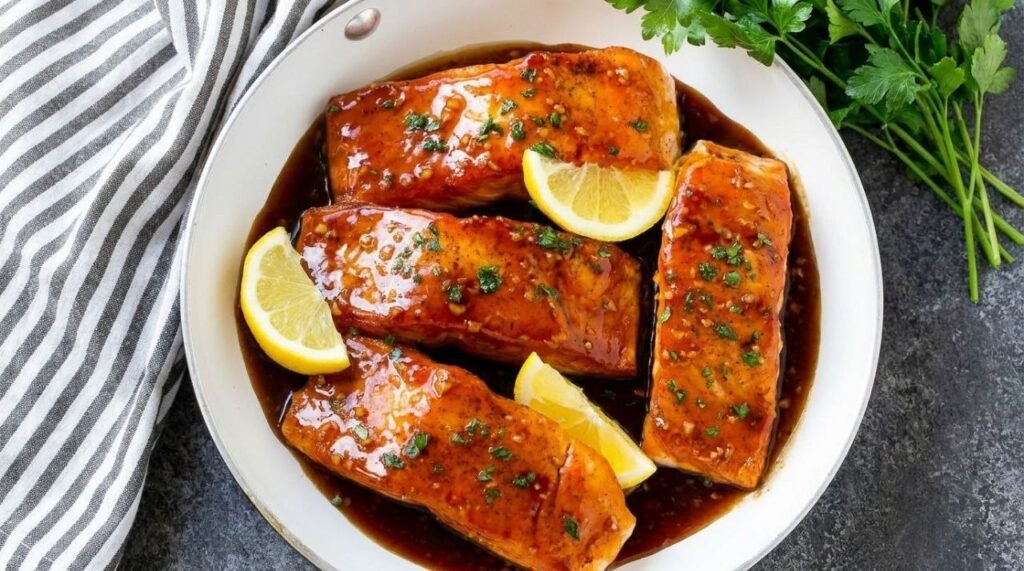
Four ingredients for the glaze, plus the salmon itself.
4 salmon fillets, skin-on, about 6 oz each
3 tablespoons honey
3 tablespoons soy sauce
5 garlic cloves, minced finely
1 tablespoon olive oil, for searing
1/2 teaspoon black pepper
Fresh parsley or sliced green onions, for garnish
Want to Build on It?
Add a teaspoon of fresh grated ginger to the glaze for a sharper, more aromatic version that works especially well over rice.
Stir in a teaspoon of sriracha or red pepper flakes if you want heat in the glaze without changing its consistency.
Add a squeeze of fresh lemon juice to the glaze just before it goes over the salmon to brighten the sweetness and cut through the richness.
Use tamari instead of soy sauce if you need a gluten-free version — the flavor is nearly identical and the glaze behaves exactly the same in the pan.
How to Make Honey Garlic Salmon
Step 1 – Prep the salmon: Remove the salmon fillets from the refrigerator about ten minutes before cooking and let them sit at room temperature. Pat each fillet thoroughly dry on all sides with paper towels, then season lightly with black pepper. Do not add salt at this stage — the soy sauce in the glaze will provide all the saltiness the dish needs, and pre-salting can draw additional moisture to the surface and interfere with the sear.
Step 2 – Mix the glaze: In a small bowl, whisk together the honey, soy sauce, and minced garlic until fully combined. The mixture will look thin at this stage — it thickens significantly once it hits the heat of the pan and the water content evaporates, leaving behind a concentrated, glossy sauce. Keep the bowl near the stove so you can pour it in quickly without losing heat from the pan.
Step 3 – Sear the salmon: Heat the olive oil in a large skillet over medium-high heat until it shimmers. Place the salmon fillets skin-side up in the pan and press gently to ensure full contact with the surface. Let them cook completely undisturbed for three minutes — do not move them, do not press them, do not check underneath. After three minutes, flip each fillet carefully with a spatula so they are now skin-side down, and cook for another two minutes.
Step 4 – Add the glaze: Reduce the heat to medium and pour the honey garlic mixture directly over the salmon fillets. The glaze will bubble and steam immediately as it hits the hot pan. Use a spoon to baste the tops of the fillets as the sauce cooks, tilting the pan slightly if needed to pool the liquid. Cook for two to three minutes, basting continuously, until the glaze has thickened to a sticky, syrupy consistency and is visibly coating the salmon with a deep amber color.
Step 5 – Serve immediately: Transfer the salmon fillets to plates and spoon any remaining glaze from the pan over the top. Garnish with fresh parsley or sliced green onions and serve while the glaze is still warm and fluid. Honey garlic salmon does not hold well — the glaze sets and loses its glossy texture as it cools, so this is a dish to serve and eat right away rather than let sit.
3 Mistakes That Ruin Honey Garlic Salmon
Not drying the salmon before searing: Wet salmon cannot form a proper crust. The surface moisture turns to steam in the hot pan, which drops the skillet temperature and leaves the flesh pale and soft instead of golden and lightly crisped. Drying the fillets with paper towels takes ten seconds and makes a visible difference in the final result.
Adding the glaze over high heat: Honey burns fast — much faster than most people expect. Adding the glaze to a pan that is still on high heat almost always results in a bitter, dark residue rather than a sweet, amber coating. Reduce the heat to medium before the glaze goes in and keep basting constantly so it does not sit in one spot long enough to scorch.
Overcooking the salmon: Salmon continues to cook from residual heat after it leaves the pan. If the center looks fully opaque and firm when you pull it off the heat, it will be dry and chalky by the time it reaches the plate. Pull the salmon when the center is still slightly translucent and a deep pink — it will finish cooking in the thirty seconds it takes to plate it and arrive at the table at exactly the right texture.
What to Serve with Honey Garlic Salmon
This salmon is rich, sweet, and deeply savory, so it pairs best with sides that are either neutral enough to absorb the glaze or bright enough to cut through it. Steamed jasmine rice is the most natural pairing — it soaks up every drop of the honey garlic sauce and turns each spoonful into something complete. Roasted broccoli or sauteed spinach works well on the same plate to add a green element without competing with the glaze. If you are building a fuller dinner, start with a bowl of our Clam Chowder Recipe — Thick, Creamy New England Classic as a first course, which contrasts beautifully with the sweet and savory glaze of the salmon. For a high-protein dinner that covers both land and sea, serve the salmon alongside our Easy Baked Lemon Garlic Chicken Thighs for a table that gives guests a choice, or follow it with our Easy Lemon Bars as dessert — the bright citrus finish is a natural complement to the richness of the glazed salmon.

Easy Honey Garlic Salmon Skillet
Ingredients
Equipment
Method
- How to Make Honey Garlic Salmon
- Step 1 – Prep the salmon: Remove the salmon fillets from the refrigerator about ten minutes before cooking and let them sit at room temperature. Pat each fillet thoroughly dry on all sides with paper towels, then season lightly with black pepper. Do not add salt at this stage — the soy sauce in the glaze will provide all the saltiness the dish needs, and pre-salting can draw additional moisture to the surface and interfere with the sear.
- Step 2 – Mix the glaze: In a small bowl, whisk together the honey, soy sauce, and minced garlic until fully combined. The mixture will look thin at this stage — it thickens significantly once it hits the heat of the pan and the water content evaporates, leaving behind a concentrated, glossy sauce. Keep the bowl near the stove so you can pour it in quickly without losing heat from the pan.
- Step 3 – Sear the salmon: Heat the olive oil in a large skillet over medium-high heat until it shimmers. Place the salmon fillets skin-side up in the pan and press gently to ensure full contact with the surface. Let them cook completely undisturbed for three minutes — do not move them, do not press them, do not check underneath. After three minutes, flip each fillet carefully with a spatula so they are now skin-side down, and cook for another two minutes.
- Step 4 – Add the glaze: Reduce the heat to medium and pour the honey garlic mixture directly over the salmon fillets. The glaze will bubble and steam immediately as it hits the hot pan. Use a spoon to baste the tops of the fillets as the sauce cooks, tilting the pan slightly if needed to pool the liquid. Cook for two to three minutes, basting continuously, until the glaze has thickened to a sticky, syrupy consistency and is visibly coating the salmon with a deep amber color.
- Step 5 – Serve immediately: Transfer the salmon fillets to plates and spoon any remaining glaze from the pan over the top. Garnish with fresh parsley or sliced green onions and serve while the glaze is still warm and fluid. Honey garlic salmon does not hold well — the glaze sets and loses its glossy texture as it cools, so this is a dish to serve and eat right away rather than let sit.
Notes
