
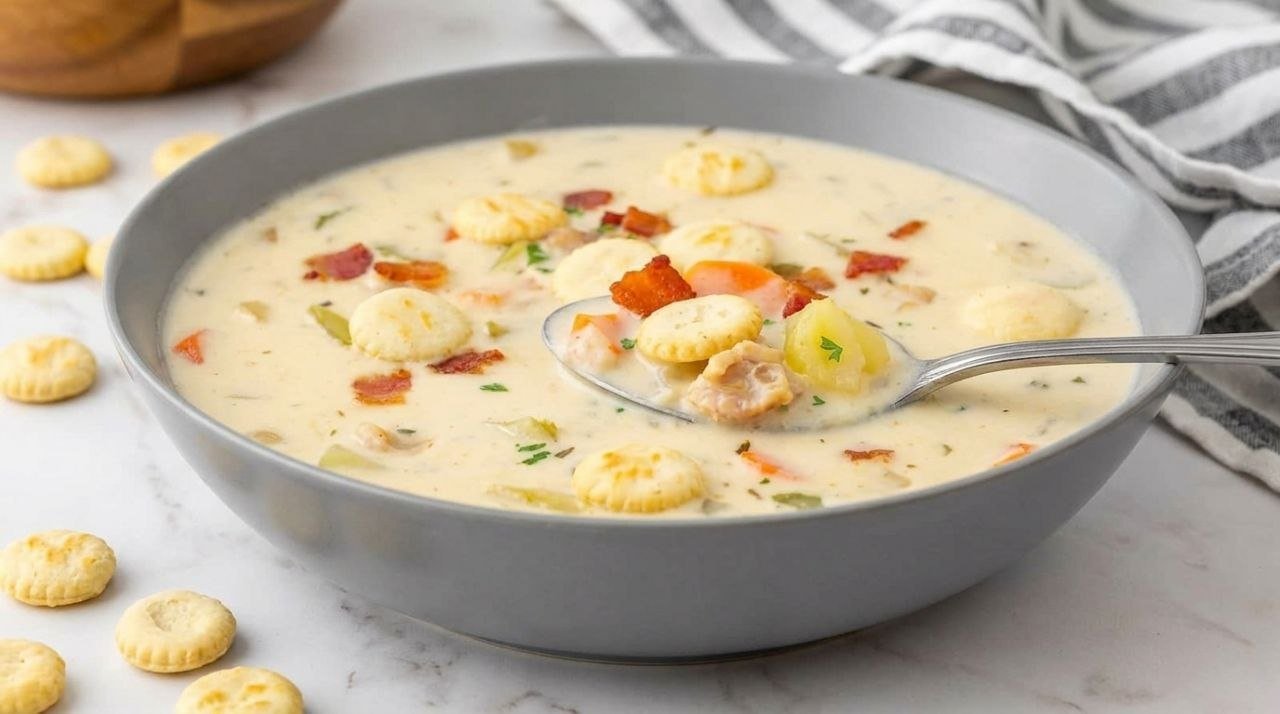
This New England Clam Chowder is everything a great chowder should be — thick, rich, deeply creamy, and absolutely loaded with tender clams and hearty potatoes. It is the kind of soup that warms you from the inside out on a cold evening, and it comes together in under an hour using canned clams and simple pantry staples that you almost certainly already have at home. This is not a watered-down version — it is the real thing, the thick and luxurious style that made New England clam chowder one of the most beloved soups in American cooking.
The secret to the best homemade clam chowder is building layers of flavor from the very beginning — starting with crispy bacon, cooking the vegetables low and slow in butter, making a proper roux to thicken the broth, and finishing with half-and-half instead of plain milk for that signature creamy richness. Every step matters and every step is simple. This recipe delivers restaurant-quality results with weeknight-level effort.
Why You’ll Love This Recipe
This clam chowder checks every box — it is thick enough to coat a spoon, creamy enough to feel indulgent, and flavorful enough that you will find yourself going back for a second bowl before the first one is finished. It uses canned clams which means no live shellfish to handle, no long steaming process, and no special equipment — just a single pot and about 45 minutes from start to finish. The recipe scales perfectly for a crowd, reheats beautifully the next day with the flavor even more developed overnight, and works equally well served in a classic bowl, a sourdough bread bowl, or alongside oyster crackers for the full New England experience.
New England vs Manhattan Clam Chowder
There are two main styles of clam chowder and they could not be more different. New England Clam Chowder — the style in this recipe — uses a cream or milk base thickened with a flour roux, giving it that signature white, thick, rich texture. It originated in the coastal towns of Massachusetts, Rhode Island, and Maine and remains the most widely loved version across the United States. Manhattan Clam Chowder, by contrast, uses a tomato-based broth that is thinner, brothier, and more acidic — closer to a seafood stew than a creamy soup. New Englanders famously rejected the Manhattan style so strongly that a bill was introduced in the Maine state legislature in 1939 to make adding tomatoes to clam chowder illegal. This recipe is firmly, proudly New England.
What You Need

The Clams and Broth:
Canned Chopped Clams — 4 cans (6.5 oz each), drain and reserve all the juice | Bottled Clam Juice — 2 cups | Low-Sodium Chicken Broth — 1 cup
The Base:
Thick-Cut Bacon — 6 strips, diced small | Unsalted Butter — 4 tablespoons | Yellow Onion — 1 large, diced small | Celery — 3 ribs, diced small | Garlic — 3 cloves, minced | All-Purpose Flour — 1/2 cup
The Creamy Finish:
Yukon Gold Potatoes — 1.5 lbs, peeled and cut into 1/2-inch cubes | Half-and-Half — 2 cups | Heavy Cream — 1 cup | Bay Leaves — 2 | Fresh Thyme — 1/2 teaspoon | Salt and White Pepper — to taste | Fresh Chives or Parsley — for garnish | Oyster Crackers — for serving
How to Make Clam Chowder
Step 1 — Drain the clams and reserve the juice: Open all 4 cans of clams and strain them through a fine mesh strainer set over a measuring cup or bowl. Press gently to extract all the liquid. Set the clam meat aside and combine the reserved juice with the bottled clam juice — you should have around 3 to 3½ cups of clam liquid total. This liquid is the flavor foundation of the entire soup.
Step 2 — Render the bacon: Place a large heavy-bottomed pot or Dutch oven over medium heat. Add the diced bacon and cook, stirring occasionally, for 6–8 minutes until the fat has fully rendered and the bacon pieces are crispy and golden brown. Use a slotted spoon to transfer the bacon to a paper towel-lined plate. Leave 2 tablespoons of bacon fat in the pot and discard the rest.
Step 3 — Cook the vegetables: Add the butter to the bacon fat in the pot and melt over medium heat. Add the diced onion and celery and cook, stirring occasionally, for 6–7 minutes until completely soft and translucent — do not rush this step, properly softened vegetables give the chowder its sweet, rounded base flavor. Add the minced garlic and cook for 1 more minute, stirring constantly, until fragrant.
Step 4 — Make the roux: Sprinkle the flour over the softened vegetables and stir constantly for 1–2 minutes until the raw flour smell disappears and the mixture turns a very pale golden color. This roux is what gives the chowder its thick, creamy body — cooking out the raw flour taste at this stage is essential for a clean-flavored final soup.
Step 5 — Add the broth and potatoes: Gradually pour in the reserved clam juice and chicken broth, whisking constantly as you add the liquid to prevent lumps from forming. Add the cubed potatoes, bay leaves, and thyme. Bring the soup to a gentle boil over medium-high heat, then immediately reduce to a simmer. Cook uncovered for 12–15 minutes, stirring occasionally, until the potatoes are completely fork-tender and the broth has thickened slightly.
Step 6 — Add the cream and clams: Reduce heat to low. Remove the bay leaves. Pour in the half-and-half and heavy cream in a slow, steady stream, stirring gently. Add the reserved clam meat and half of the crispy bacon. Stir to combine and heat through for 4–5 minutes, keeping the heat at a very gentle simmer — never a boil. Taste and adjust seasoning with salt and white pepper.
Step 7 — Serve: Ladle the chowder into warm bowls. Top each bowl with the remaining crispy bacon, fresh chives or parsley, and a crack of black pepper. Serve immediately with oyster crackers on the side or pour into a hollowed sourdough bread bowl for the full New England experience.
3 Mistakes That Ruin Clam Chowder
Boiling the soup after adding cream: This is the single most common reason homemade clam chowder fails. Once the dairy goes in, the heat must stay at a gentle simmer. A full rolling boil causes the cream to break and the proteins to separate, creating a grainy, curdled texture that cannot be rescued. Keep the heat low and patient from the moment the cream is added until the bowl is on the table.
Overcooking the clams: Canned clams are already fully cooked — they need only to be warmed through, not cooked again. Adding them too early or simmering them for more than 5 minutes turns them tough, rubbery, and unpleasant. Always add the clam meat in the final step, after the cream, and give them only enough time to heat through before serving.
Skipping the roux or using too little flour: The roux — butter, vegetables, and flour cooked together before the liquid is added — is what gives New England clam chowder its thick, velvety body. Skipping it or using too little flour results in a thin, watery broth that lacks the richness and coating texture that defines this dish. Cook the flour with the vegetables for a full 1–2 minutes until the raw smell is gone before adding any liquid.
What to Serve with Clam Chowder
The most classic accompaniment is Oyster Crackers — small, light, and perfectly crunchy, they float on the surface and soften gradually as you eat, adding a subtle salt and texture contrast to the rich soup. For a heartier meal, serve the chowder in a Sourdough Bread Bowl — the tangy chew of sourdough is an ideal match for the creamy, briny chowder and the bread absorbs all the soup left at the bottom of the bowl. A simple Green Salad with Lemon Vinaigrette on the side cuts through the richness perfectly, and Crispy Garlic Butter Baguette slices work beautifully for dipping and scooping.

Clam Chowder Recipe (Thick, Creamy New England Classic)
Ingredients
Method
- Step 1 — Drain the clams and reserve the juice: Open all 4 cans of clams and strain them through a fine mesh strainer set over a measuring cup or bowl. Press gently to extract all the liquid. Set the clam meat aside and combine the reserved juice with the bottled clam juice — you should have around 3 to 3½ cups of clam liquid total. This liquid is the flavor foundation of the entire soup.
- Step 2 — Render the bacon: Place a large heavy-bottomed pot or Dutch oven over medium heat. Add the diced bacon and cook, stirring occasionally, for 6–8 minutes until the fat has fully rendered and the bacon pieces are crispy and golden brown. Use a slotted spoon to transfer the bacon to a paper towel-lined plate. Leave 2 tablespoons of bacon fat in the pot and discard the rest.
- Step 3 — Cook the vegetables: Add the butter to the bacon fat in the pot and melt over medium heat. Add the diced onion and celery and cook, stirring occasionally, for 6–7 minutes until completely soft and translucent — do not rush this step, properly softened vegetables give the chowder its sweet, rounded base flavor. Add the minced garlic and cook for 1 more minute, stirring constantly, until fragrant.
- Step 4 — Make the roux: Sprinkle the flour over the softened vegetables and stir constantly for 1–2 minutes until the raw flour smell disappears and the mixture turns a very pale golden color. This roux is what gives the chowder its thick, creamy body — cooking out the raw flour taste at this stage is essential for a clean-flavored final soup.
- Step 5 — Add the broth and potatoes: Gradually pour in the reserved clam juice and chicken broth, whisking constantly as you add the liquid to prevent lumps from forming. Add the cubed potatoes, bay leaves, and thyme. Bring the soup to a gentle boil over medium-high heat, then immediately reduce to a simmer. Cook uncovered for 12–15 minutes, stirring occasionally, until the potatoes are completely fork-tender and the broth has thickened slightly.
- Step 6 — Add the cream and clams: Reduce heat to low. Remove the bay leaves. Pour in the half-and-half and heavy cream in a slow, steady stream, stirring gently. Add the reserved clam meat and half of the crispy bacon. Stir to combine and heat through for 4–5 minutes, keeping the heat at a very gentle simmer — never a boil. Taste and adjust seasoning with salt and white pepper.
- Step 7 — Serve: Ladle the chowder into warm bowls. Top each bowl with the remaining crispy bacon, fresh chives or parsley, and a crack of black pepper. Serve immediately with oyster crackers on the side or pour into a hollowed sourdough bread bowl for the full New England experience.
Notes
