
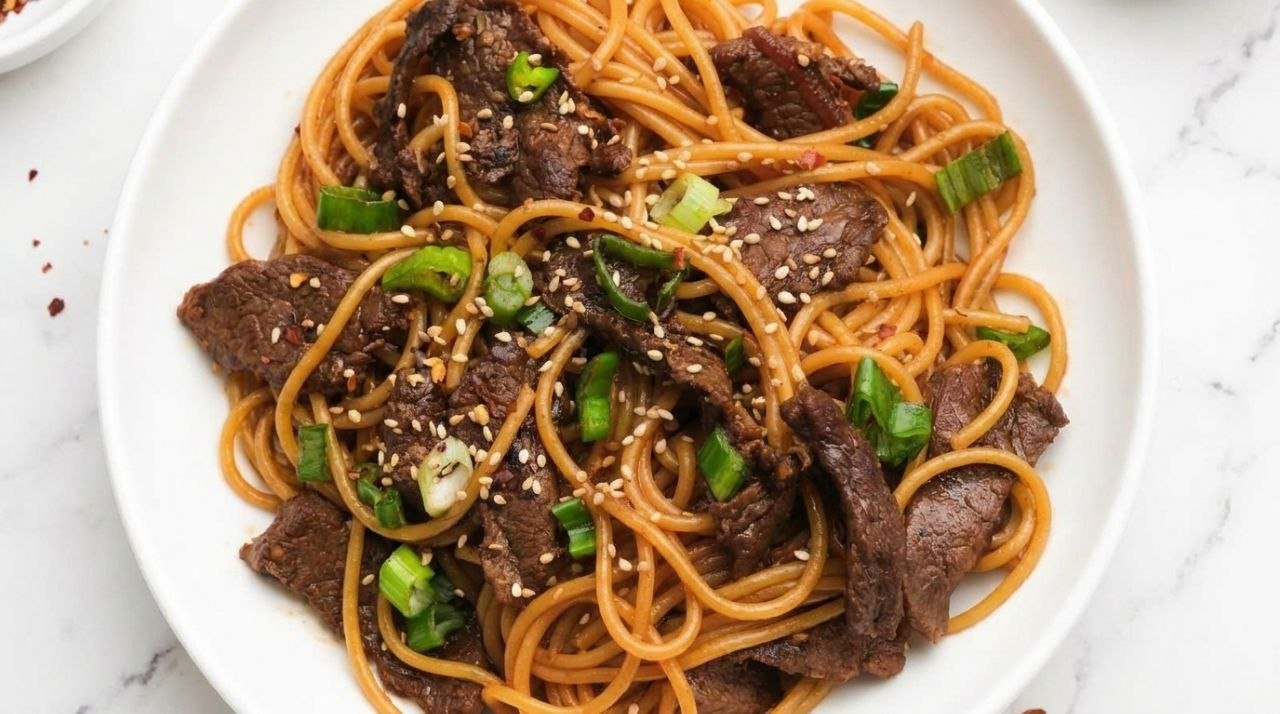
Mongolian Beef Noodle Bowls take everything compelling about classic Mongolian beef — the deeply savory soy and brown sugar glaze, the tender sliced beef, the fragrant ginger and garlic — and give it a more satisfying weeknight form by building it directly over a bowl of slippery, sauce-coated noodles. The finished bowl is glossy, sticky, and bold, with beef that has been coated in cornstarch and seared until the edges caramelize into something between a crust and a glaze, a sauce that reduces around the noodles until it clings to every strand, and scallions and sesame on top that bring enough freshness and crunch to keep every bite from feeling too heavy. It is the kind of dinner that produces an empty pot and a request for more before the table has been cleared.
What makes this version better than a simple Mongolian beef recipe served over plain white rice is the way the noodles are treated as a component of the sauce rather than a neutral base underneath it. The cooked noodles are added directly to the skillet with the beef and tossed in the residual sauce so they absorb the soy, ginger, and brown sugar glaze rather than sitting below it. That single change transforms the bowl from a dish with a sauced protein on top of plain starch into one where every element — the beef, the noodles, and the sauce — tastes like the same cohesive thing. The noodles become the vehicle for the Mongolian sauce rather than a backdrop for it, and the difference in flavor intensity between the two approaches is immediately noticeable in the first bite.
Why Mongolian Beef Noodle Bowls Work Every Time
This recipe works because the sauce is designed to do three jobs simultaneously: glaze the beef, coat the noodles, and reduce into something thick and glossy without becoming either too salty or too sweet. The brown sugar provides the caramelization and sweetness that makes the sauce cling to the beef, the soy sauce provides the deep umami backbone that makes the whole bowl taste savory and complete, and the cornstarch in the beef coating thickens the sauce further as it comes off the meat during tossing. By the time the noodles are folded in, the sauce has already been enriched by the beef drippings, ginger, garlic, and the starch residue from the cornstarch coating — which means the noodles absorb a sauce with real depth rather than a thin liquid that pools at the bottom of the bowl.
The Science Behind Mongolian Beef Noodle Bowls
The glossy, caramelized crust on the beef slices is the result of two processes happening at the same time. The first is the Maillard reaction, which creates the complex savory, roasted flavor on the beef surface when proteins and natural sugars in the meat are exposed to the high heat of the searing pan. The second is actual sugar caramelization from the brown sugar in the sauce — when the sauce hits the hot skillet with the beef, the sucrose breaks down into glucose and fructose molecules that darken rapidly and bond to the surface of each slice, creating the sticky, lacquered coating that makes Mongolian beef visually and texturally distinctive. The two reactions reinforce each other: the browned beef surface gives the sugar a rough, porous texture to grip, and the caramelized sugar seals in the browned flavors that would otherwise disperse into the sauce liquid.
The sauce thickens during cooking because of starch gelatinization — the cornstarch used to coat the beef before searing does not fully stay on the meat surface. Some of it transfers into the hot oil and sauce as the beef sears, and when that starch absorbs the heat and moisture of the liquid, its granules swell, rupture, and release long-chain starch molecules that entangle with each other and with the fat in the pan, creating a viscous, glossy sauce that coats noodles and beef evenly rather than running off. This is why Mongolian beef sauce looks and behaves more like a glaze than a thin broth — the cornstarch from the beef coating is essentially doing the same job as a cornstarch slurry added separately, but more gradually and with better distribution throughout the sauce.
What Goes In
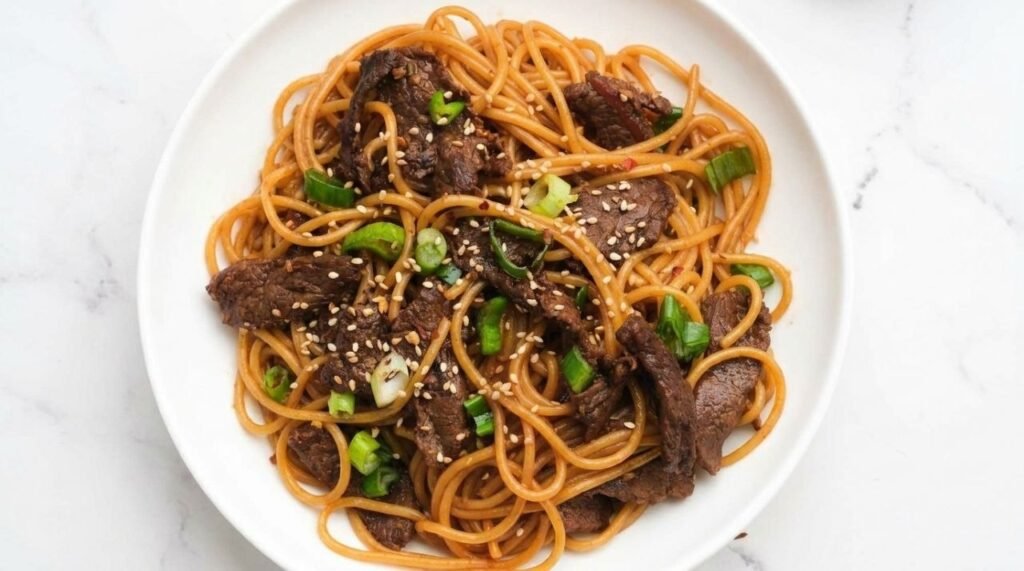
Bold pantry staples and one hot skillet are all that stand between you and this bowl.
1 1/2 lbs flank steak or flap steak, sliced very thin against the grain.
8 oz lo mein noodles or spaghetti, cooked just under al dente and drained.
3 tablespoons cornstarch, for coating the beef.
2 tablespoons neutral oil, for searing.
For the Mongolian sauce:
1/2 cup low-sodium soy sauce.
1/3 cup brown sugar, packed.
1/4 cup water.
1 tablespoon sesame oil.
5 cloves garlic, finely minced.
1 tablespoon fresh ginger, grated.
1/2 teaspoon red pepper flakes, or more to taste.
4 scallions, thinly sliced, white and green parts separated.
Toasted sesame seeds, for garnish.
Want to Mix It Up?
Use rice noodles instead of lo mein if you want a gluten-sensitive version with a slightly different chew. Rice noodles are more delicate and absorb the sauce quickly, so add them right before serving and toss fast to avoid over-softening.
Add thinly sliced bell peppers or broccoli florets to the skillet after the beef is seared if you want vegetables in the bowl without using a separate pan. Both cook quickly in the residual heat and sauce and add freshness and color that balance the richness of the glaze.
Replace the flank steak with ground beef if you want a faster, more budget-friendly version. Ground beef does not need to be sliced and cooks in about the same time, and the cornstarch can be stirred directly into the sauce instead of coating the meat. The texture is different but the flavor profile is nearly identical.
Add a tablespoon of hoisin sauce to the Mongolian sauce if you want a deeper, slightly sweeter, more complex glaze. Hoisin adds fermented plum and spice notes that give the sauce a more layered flavor without requiring any additional ingredients or technique changes.
How to Make Mongolian Beef Noodle Bowls
Step 1 – Prep and coat the beef: Slice the partially frozen beef as thin as possible, cutting against the grain at a slight angle to shorten the muscle fibers and maximize tenderness. Place the slices in a bowl, add the cornstarch, and toss until every piece is evenly coated in a thin, dry layer. The cornstarch coating is not optional — it creates the slightly rough surface texture that helps the sauce grip the beef, thickens the glaze as the beef sears, and produces the characteristic caramelized edge that defines Mongolian beef. Let the coated slices sit for 5 minutes while the pan heats.
Step 2 – Mix the sauce: Whisk together the soy sauce, brown sugar, water, sesame oil, garlic, ginger, and red pepper flakes in a bowl until the sugar fully dissolves. The sauce should look dark, glossy, and uniformly combined before it goes into the hot pan — undissolved sugar can scorch immediately when it hits the heat, so mix it thoroughly beforehand and keep the bowl close to the stove.
Step 3 – Sear the beef in batches: Heat the neutral oil in a large wok or wide skillet over high heat until it just begins to smoke. Add the beef in a single layer — never more than will fit without crowding — and let it sear undisturbed for 60 to 90 seconds until the underside is deeply browned and caramelized. Flip and sear for another 30 seconds. Remove to a plate and repeat with the remaining beef. Cooking in batches is not negotiable here: overcrowding drops the pan temperature, causes the beef to steam instead of sear, and prevents the Maillard reaction from occurring on the surface of the meat.
Step 4 – Build the sauce in the skillet: Reduce the heat to medium and add the white parts of the scallions to the skillet. Cook briefly until softened, then pour in the Mongolian sauce. It will bubble aggressively — let it simmer for 2 to 3 minutes until it reduces slightly, thickens, and turns glossier. Return all the seared beef to the skillet and toss it in the sauce, letting every slice get coated. Add the drained noodles directly to the skillet and toss everything together so the noodles absorb the sauce rather than sitting below it.
Step 5 – Finish and serve: Divide the noodles and beef between bowls, spooning any remaining sauce from the skillet over the top. Scatter the green parts of the scallions and the toasted sesame seeds over each bowl immediately before serving. The scallion greens should be added at the last moment so they stay bright green and slightly crisp rather than wilting into the hot sauce, and the sesame seeds should be toasted rather than raw because the difference in flavor between the two is not subtle.
3 Mistakes That Ruin Mongolian Beef Noodle Bowls
Crowding the pan during searing: Too much beef in the skillet at once drops the surface temperature of the pan because the cold meat absorbs the heat faster than the skillet can replenish it. The result is gray, steamed beef that has released its juices into the pan without browning — and a sauce that tastes thin and boiled rather than caramelized and glossy. Sear in batches with enough space between slices that steam can escape rather than accumulate, and accept that two or three smaller batches will produce a dramatically better finished bowl than one large crowded one.
Slicing the beef too thick or with the grain: Thick slices of flank steak cooked over high heat for the brief time this recipe uses will come out chewy at best and tough at worst, because the long muscle fibers running through flank steak need either very thin slicing or very long cooking to become tender. Cutting against the grain at a near-horizontal angle produces short cross-sections of those muscle fibers rather than long unbroken ones, which is what makes the beef feel tender in the mouth even from a fast sear. Freezing the beef partially before slicing is the most reliable way to achieve the thin, even cuts this recipe depends on.
Overcooking the noodles before adding them to the skillet: Noodles that are already fully al dente will become overcooked and mushy after being tossed in a hot skillet with hot sauce for even a minute or two. Cook the noodles one to two minutes less than the package instructs, drain them, and toss them immediately with a small drizzle of oil to prevent sticking. They will finish cooking in the skillet and reach the correct texture at exactly the moment the sauce has coated them and the dish is ready to serve.
What to Serve With Mongolian Beef Noodle Bowls
Mongolian Beef Noodle Bowls are a complete, self-contained dinner, but they benefit from a light side that adds crunch or freshness to the rich, sweet-savory glaze. A simple cucumber salad with rice vinegar and sesame oil works well, as does steamed edamame with flaky salt. For a full Tex-Asian dinner evening, follow the bowls with our No Bake Mango Cheesecake, whose tropical sweetness and cool dairy base provide exactly the kind of refreshing contrast the bold, salty-sweet glaze leaves you wanting. If you are planning a weeknight lineup and want a lighter dinner before this one, our Air Fryer Chicken Bites serve well as a starter or a separate lighter meal earlier in the week that shares the same fast, high-heat cooking philosophy.

Easy Mongolian Beef Noodle Bowls
Ingredients
Method
- How to Make Mongolian Beef Noodle Bowls
- Step 1 – Prep and coat the beef: Slice the partially frozen beef as thin as possible, cutting against the grain at a slight angle to shorten the muscle fibers and maximize tenderness. Place the slices in a bowl, add the cornstarch, and toss until every piece is evenly coated in a thin, dry layer. The cornstarch coating is not optional — it creates the slightly rough surface texture that helps the sauce grip the beef, thickens the glaze as the beef sears, and produces the characteristic caramelized edge that defines Mongolian beef. Let the coated slices sit for 5 minutes while the pan heats.
- Step 2 – Mix the sauce: Whisk together the soy sauce, brown sugar, water, sesame oil, garlic, ginger, and red pepper flakes in a bowl until the sugar fully dissolves. The sauce should look dark, glossy, and uniformly combined before it goes into the hot pan — undissolved sugar can scorch immediately when it hits the heat, so mix it thoroughly beforehand and keep the bowl close to the stove.
- Step 3 – Sear the beef in batches: Heat the neutral oil in a large wok or wide skillet over high heat until it just begins to smoke. Add the beef in a single layer — never more than will fit without crowding — and let it sear undisturbed for 60 to 90 seconds until the underside is deeply browned and caramelized. Flip and sear for another 30 seconds. Remove to a plate and repeat with the remaining beef. Cooking in batches is not negotiable here: overcrowding drops the pan temperature, causes the beef to steam instead of sear, and prevents the Maillard reaction from occurring on the surface of the meat.
- Step 4 – Build the sauce in the skillet: Reduce the heat to medium and add the white parts of the scallions to the skillet. Cook briefly until softened, then pour in the Mongolian sauce. It will bubble aggressively — let it simmer for 2 to 3 minutes until it reduces slightly, thickens, and turns glossier. Return all the seared beef to the skillet and toss it in the sauce, letting every slice get coated. Add the drained noodles directly to the skillet and toss everything together so the noodles absorb the sauce rather than sitting below it.
- Step 5 – Finish and serve: Divide the noodles and beef between bowls, spooning any remaining sauce from the skillet over the top. Scatter the green parts of the scallions and the toasted sesame seeds over each bowl immediately before serving. The scallion greens should be added at the last moment so they stay bright green and slightly crisp rather than wilting into the hot sauce, and the sesame seeds should be toasted rather than raw because the difference in flavor between the two is not subtle.
Notes
