
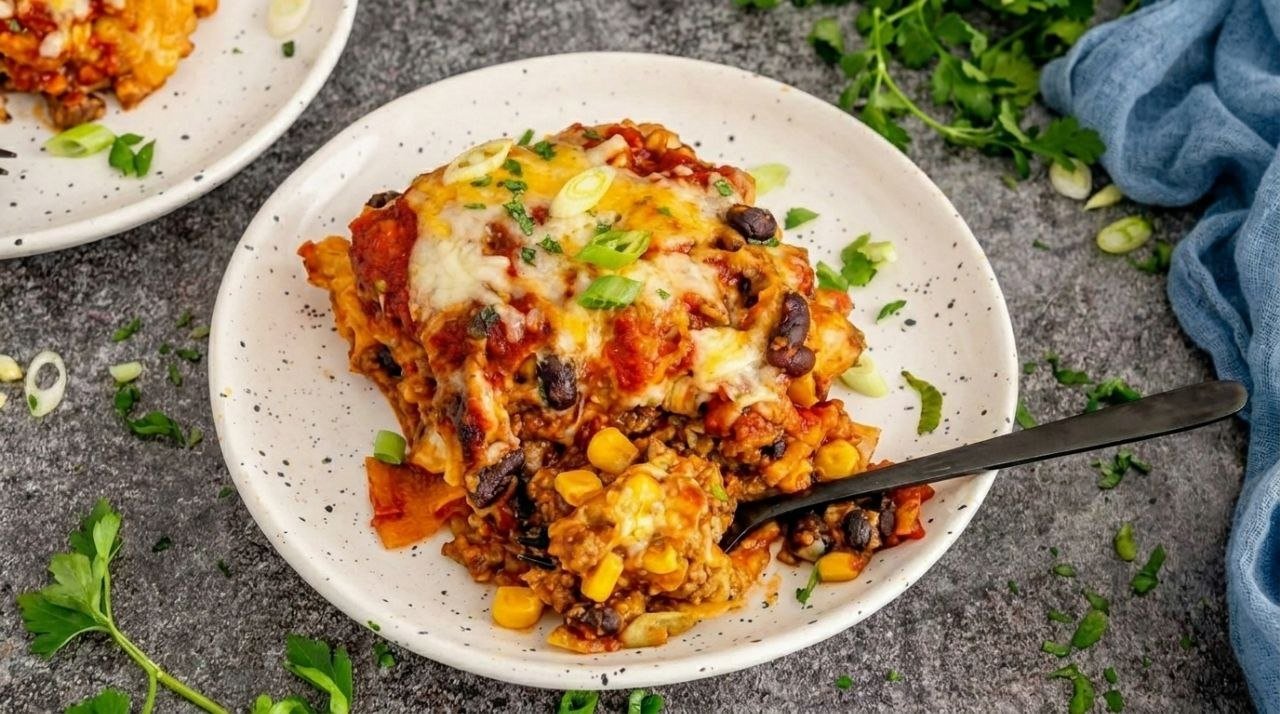
Beef Enchilada Casserole delivers every flavor of a traditional enchilada dinner — spiced ground beef, smoky red sauce, melted cheese, and soft tortillas — without the tedious process of rolling and filling individual enchiladas one by one. Instead, the components are layered directly into a baking dish, which produces a casserole with defined strata of tortilla, beef, sauce, and cheese that bake together into a sliceable, cohesive dinner that feeds a family of five with enough left over for lunch the next day. The top emerges from the oven with a deeply browned, bubbling cheese crust, the middle layers are soft and saucy, and the bottom stays just firm enough to hold a clean slice, which makes this one of those rare casseroles that is as satisfying to serve as it is to eat.
What makes this version better than many enchilada casseroles is the treatment of the tortillas before they are layered. A common problem with this style of dish is that flour tortillas turn gummy and shapeless after baking in a wet sauce, while corn tortillas can turn stiff and tough if they are layered cold and dry. In this version, the corn tortillas are briefly passed through the warm enchilada sauce before being laid into the dish, which softens them just enough to become pliable and fully integrated with the sauce rather than sitting as a dry, resistant layer. That tortilla-warming step is the difference between a casserole with distinct, satisfying layers and one where the tortillas become an afterthought — a gummy structural element that tastes only of flour rather than contributing flavor and texture to every bite.
Why Beef Enchilada Casserole Works Every Time
This recipe works because it treats the casserole format as an asset rather than a shortcut. Traditional rolled enchiladas are delicious but time-consuming, and the tight rolling process often means the inside of each enchilada is underseasoned because the sauce only contacts the exterior. In this layered format, every component — the beef, the sauce, the cheese, and the tortillas — is in direct contact with every other component at every level of the dish, which means the flavors meld together during baking rather than staying separate. The sauce soaks into the tortillas from above and below, the beef and cheese form a continuous middle layer, and the oven heat drives everything together into a single cohesive dish that tastes more integrated and deeply flavored than the sum of its parts suggests it should be.
The Science Behind Beef Enchilada Casserole
The deep flavor of the ground beef in this casserole depends on Maillard reaction browning achieved during the initial searing step. When ground beef is spread across a hot skillet without immediate stirring, the meat surface in contact with the hot metal reaches the temperatures above 280 degrees Fahrenheit needed for non-enzymatic browning. This creates hundreds of complex aromatic compounds that taste savory, roasted, and rich — flavors that do not exist in the raw or gently cooked meat and that no amount of seasoning alone can replicate. If the beef is stirred constantly from the moment it hits the pan or cooked over insufficient heat, it steams in its own released water and never develops that layer of flavor, which is why properly seared ground beef always tastes more complex than the same beef cooked gently.
The melted cheese crust on top of the casserole behaves differently from cheese melted inside the layers because it is exposed to dry oven heat from above rather than insulated within wet filling. As the shredded cheese heats, its proteins unwind and its fat disperses into a molten layer — this is cheese melting through protein network breakdown. At the surface of the casserole, some of that moisture evaporates quickly under the oven heat, which concentrates the remaining fat and protein into a browned, slightly blistered crust that has more flavor than the pale melted cheese underneath the layers. That browned top is not just visual appeal — it represents additional Maillard compounds that develop in the cheese proteins and contribute a toasty, nutty layer to the overall flavor of the finished casserole.
What Goes In
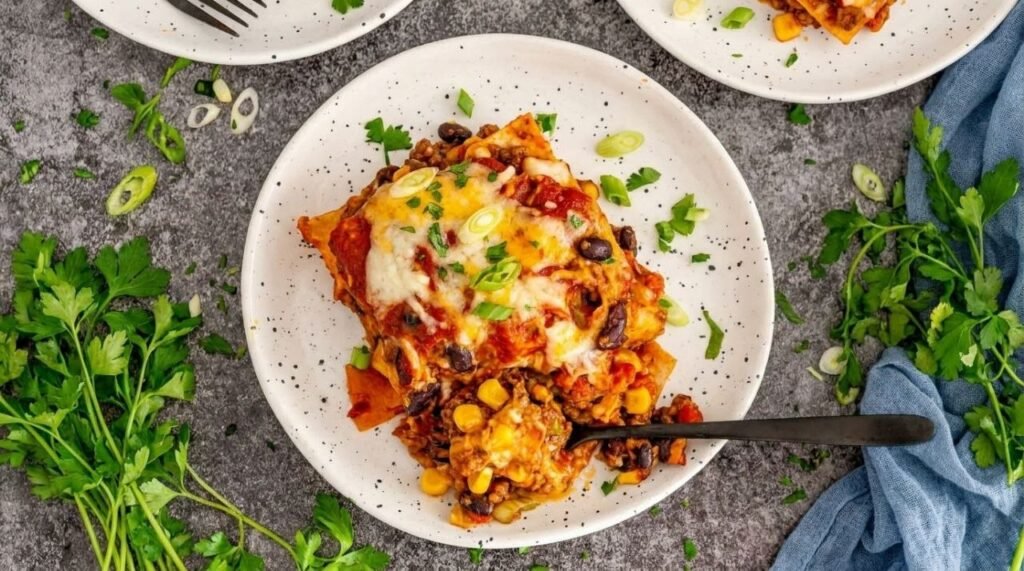
Simple Tex-Mex pantry staples and one baking dish produce a dinner that easily feeds the whole family.
1 1/2 lbs ground beef, 80/20 fat ratio.
12 small corn tortillas.
2 cans (10 oz each) red enchilada sauce.
2 cups shredded Mexican cheese blend.
1 medium yellow onion, finely diced.
3 cloves garlic, minced.
1 can (15 oz) black beans, drained and rinsed.
1 teaspoon ground cumin.
1 teaspoon chili powder.
1/2 teaspoon smoked paprika.
1 teaspoon kosher salt, plus more to taste.
Fresh cilantro, sour cream, and sliced jalapeño for garnish.
Want to Mix It Up?
Use shredded rotisserie chicken instead of ground beef if you want a lighter version that comes together even faster. The chicken does not need to be cooked from raw, so you can skip the browning step entirely — just shred the chicken, toss it with the spices and a few spoonfuls of enchilada sauce, and layer it directly into the dish.
Add a layer of cream cheese between the beef and the second tortilla layer if you want a richer, creamier interior. Cream cheese softens into the filling during baking and gives the casserole a tangy, dense creaminess that makes each bite feel more substantial without adding more meat or cheese to the top.
Swap the red enchilada sauce for green enchilada sauce if you want a brighter, more acidic flavor profile with a little more heat. Green sauce made from tomatillos has a fresh, slightly citrusy quality that changes the entire character of the casserole and pairs especially well with chicken instead of beef.
Add one cup of frozen corn kernels to the beef mixture if you want a sweeter, more textured filling. The corn does not need to be thawed before mixing in, and it contributes a pleasant sweetness that balances the spices and makes the casserole feel more complete as a standalone dinner.
How to Make Beef Enchilada Casserole
Step 1 – Brown the beef and build the filling: Heat a large skillet over medium-high heat and add the ground beef. Spread it across the pan and let it sit without stirring for 2 full minutes so a crust forms on the bottom before you break it apart. Once browned, push the meat to the edges, add the diced onion to the center, and cook until softened, about 3 minutes. Add the garlic, cumin, chili powder, and smoked paprika and stir everything together, letting the spices cook in the beef fat for 60 seconds until fragrant. Stir in the drained black beans and season with salt. Add half a cup of the enchilada sauce directly to the beef mixture and stir to combine — this step keeps the filling moist during baking and prevents it from drying out in the oven.
Step 2 – Warm the tortillas in the sauce: Pour the remaining enchilada sauce into a shallow skillet or saucepan and warm it over low heat. Pass each corn tortilla through the warm sauce, letting it soak for about 10 seconds per side, and stack the sauce-coated tortillas on a plate. This brief contact with warm sauce makes the tortillas pliable enough to layer without cracking and infuses them with the smoky, chile flavor of the sauce from the inside out rather than leaving them as bland structural filler.
Step 3 – Layer the casserole: Spread a thin layer of enchilada sauce across the bottom of a 9×13 baking dish to prevent sticking and give the bottom tortillas something to absorb. Lay a single layer of sauce-coated tortillas over the base, cutting them as needed to fill the gaps. Spread half of the beef mixture evenly over the tortillas, then scatter one-third of the shredded cheese over the beef. Repeat the layers — tortillas, remaining beef, another third of the cheese — and finish with a final layer of tortillas followed by the last of the enchilada sauce poured evenly over the top.
Step 4 – Add the cheese and bake: Scatter the remaining shredded cheese in an even layer over the top of the casserole, covering all the sauce so the cheese can brown and blister rather than drying out as an exposed layer. Bake in a preheated 375 degree Fahrenheit oven, uncovered, for 25 to 30 minutes until the sauce is bubbling at the edges and the cheese on top is deeply golden with some browned spots. The bubbling edges tell you the internal temperature is high enough for the layers to have melded and the tortillas to have fully softened.
Step 5 – Rest and serve: Remove the casserole from the oven and let it rest uncovered for 8 to 10 minutes. Slice it into portions with a sharp knife or spatula and serve with sour cream, fresh cilantro, and sliced jalapeño on top. The garnishes are not optional decoration here — the cool, tangy sour cream contrasts the heat of the filling, the cilantro adds a fresh herbal note that cuts through the richness of the cheese, and the jalapeño gives the dish the same finishing punch a traditional enchilada plate would have.
3 Mistakes That Ruin Beef Enchilada Casserole
Skipping the tortilla warming step: Cold, dry corn tortillas layered directly into a wet casserole absorb the sauce unevenly and often remain tough or gummy in the areas where they did not get enough direct sauce contact. The brief pass through warm sauce ensures every tortilla is evenly coated before it goes into the dish, which means every layer softens and integrates at the same rate during baking rather than leaving some areas still stiff and others dissolved into mush.
Using flour tortillas instead of corn: Flour tortillas have a higher gluten content than corn tortillas and absorb liquid far more aggressively during the baking time the recipe requires. By the time a flour-tortilla casserole is fully baked, those layers have typically become a dense, doughy mass that holds no distinct texture and dominates every bite rather than playing the supporting structural role the recipe depends on. Corn tortillas are more porous and less elastic, which allows them to soften into the sauce without absorbing it completely.
Cutting the casserole immediately out of the oven: A casserole cut while still at full oven temperature does not hold its layers — the molten cheese flows off the cut edges, the sauce pours out of the middle, and the tortilla layers slide against each other because they have not had time to re-firm after the heat of the oven relaxed their structure. The 8 to 10 minute rest is the step between a messy plate and a clean, defined slice, and skipping it undoes the visual and textural work of the entire recipe.
What to Serve With Beef Enchilada Casserole
Beef Enchilada Casserole is substantial enough to be the centerpiece of a Tex-Mex spread without needing a heavy side, and it benefits most from sides that add freshness and contrast to its rich, saucy depth. A simple green salad with lime dressing, a bowl of guacamole and tortilla chips, or a scoop of seasoned rice alongside each portion all work naturally with the flavor direction of the casserole. For a complete weeknight menu, start the meal with our Air Fryer Chicken Bites as a quick appetizer seasoned with smoked paprika, and finish with our No Bake Mango Cheesecake for a cool, tropical dessert that provides exactly the kind of bright, creamy contrast the richness of the casserole leaves you wanting.

Easy Beef Enchilada Casserole
Ingredients
Method
- How to Make Beef Enchilada Casserole
- Step 1 – Brown the beef and build the filling: Heat a large skillet over medium-high heat and add the ground beef. Spread it across the pan and let it sit without stirring for 2 full minutes so a crust forms on the bottom before you break it apart. Once browned, push the meat to the edges, add the diced onion to the center, and cook until softened, about 3 minutes. Add the garlic, cumin, chili powder, and smoked paprika and stir everything together, letting the spices cook in the beef fat for 60 seconds until fragrant. Stir in the drained black beans and season with salt. Add half a cup of the enchilada sauce directly to the beef mixture and stir to combine — this step keeps the filling moist during baking and prevents it from drying out in the oven.
- Step 2 – Warm the tortillas in the sauce: Pour the remaining enchilada sauce into a shallow skillet or saucepan and warm it over low heat. Pass each corn tortilla through the warm sauce, letting it soak for about 10 seconds per side, and stack the sauce-coated tortillas on a plate. This brief contact with warm sauce makes the tortillas pliable enough to layer without cracking and infuses them with the smoky, chile flavor of the sauce from the inside out rather than leaving them as bland structural filler.
- Step 3 – Layer the casserole: Spread a thin layer of enchilada sauce across the bottom of a 9×13 baking dish to prevent sticking and give the bottom tortillas something to absorb. Lay a single layer of sauce-coated tortillas over the base, cutting them as needed to fill the gaps. Spread half of the beef mixture evenly over the tortillas, then scatter one-third of the shredded cheese over the beef. Repeat the layers — tortillas, remaining beef, another third of the cheese — and finish with a final layer of tortillas followed by the last of the enchilada sauce poured evenly over the top.
- Step 4 – Add the cheese and bake: Scatter the remaining shredded cheese in an even layer over the top of the casserole, covering all the sauce so the cheese can brown and blister rather than drying out as an exposed layer. Bake in a preheated 375 degree Fahrenheit oven, uncovered, for 25 to 30 minutes until the sauce is bubbling at the edges and the cheese on top is deeply golden with some browned spots. The bubbling edges tell you the internal temperature is high enough for the layers to have melded and the tortillas to have fully softened.
- Step 5 – Rest and serve: Remove the casserole from the oven and let it rest uncovered for 8 to 10 minutes. Slice it into portions with a sharp knife or spatula and serve with sour cream, fresh cilantro, and sliced jalapeño on top. The garnishes are not optional decoration here — the cool, tangy sour cream contrasts the heat of the filling, the cilantro adds a fresh herbal note that cuts through the richness of the cheese, and the jalapeño gives the dish the same finishing punch a traditional enchilada plate would have.
Notes
