
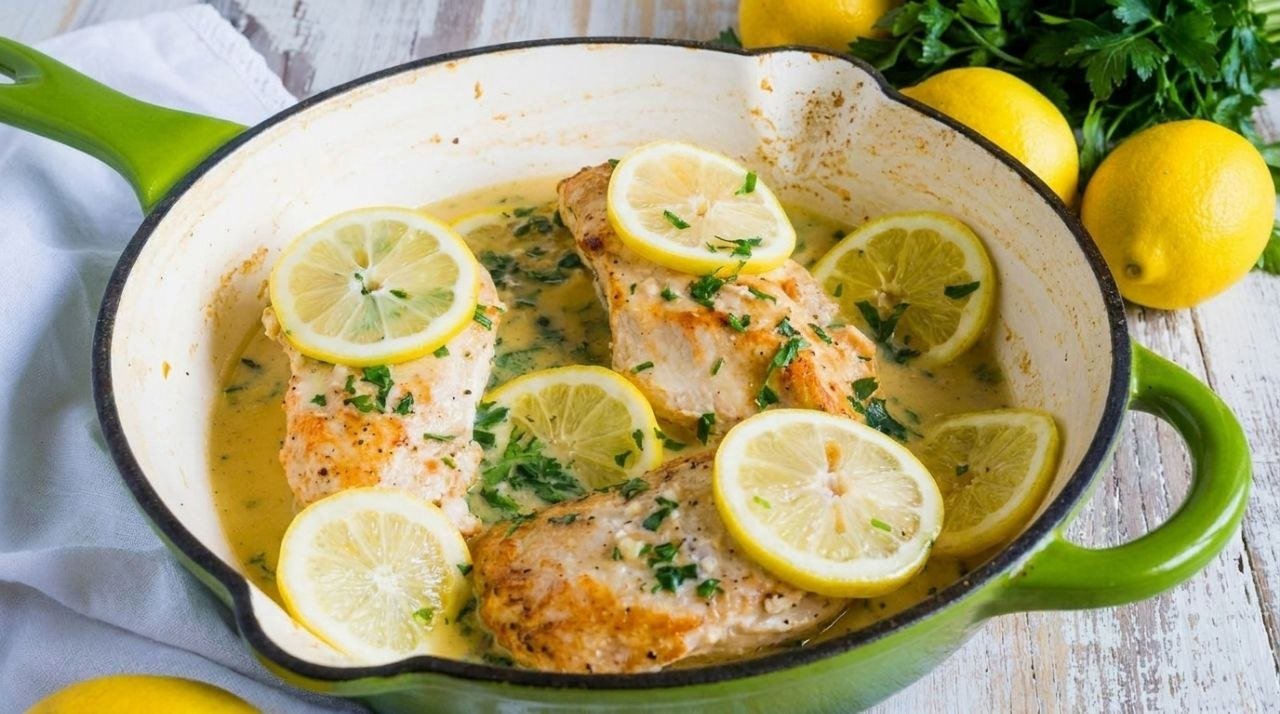
Creamy Lemon Chicken is exactly the kind of one-pan dinner that earns its place in a permanent weeknight rotation because it delivers everything people want from comfort food without the heaviness that usually comes with a cream-based skillet. The chicken is seared until golden at the edges, then finished in a silky lemon cream sauce that is rich enough to feel satisfying but sharp and fresh enough that the whole dish still tastes light on the palate. It comes together in about thirty minutes, uses pantry-friendly ingredients, and creates the kind of glossy, restaurant-style sauce that makes rice, mashed potatoes, or pasta feel essential rather than optional.
What makes this version better than most creamy chicken skillets is the way the lemon is built into the dish in two separate forms and at two separate times. The zest is rubbed into the chicken before cooking so the fragrant citrus oils hit the meat directly and bloom in the hot fat during the sear, while the juice is stirred into the sauce later, after the pan has calmed down, so its acidity stays bright and clean instead of becoming harsh or dull from aggressive boiling. That split-lemon method is what keeps the sauce from tasting like plain cream with acid dumped into it at the end — it tastes layered, intentional, and properly balanced from the first bite to the last.
Why Creamy Lemon Chicken Works Every Time
The technical strength of this recipe is that every stage of the cooking process contributes directly to the final sauce rather than happening in isolation. The chicken is seared first, which creates browned flavor compounds on the surface of the meat and leaves behind a concentrated layer of fond in the skillet. That fond dissolves into the broth once the pan is deglazed, and the broth then becomes the savory backbone of the lemon cream sauce rather than just a thinning liquid. By the time the cream goes in, the skillet already contains browned chicken drippings, softened garlic, concentrated stock, and citrus oils from the zest, so the sauce tastes complete before the dairy even enters the pan. That is why this dish feels deeper and more restaurant-like than versions where cream is simply poured around chicken at the end and simmered until thick.
The Science Behind Creamy Lemon Chicken
The deep flavor of the chicken comes from the Maillard reaction, which is the chemical browning process that happens when proteins and natural sugars on the surface of the chicken are exposed to sufficiently high heat in a relatively dry environment. This reaction creates hundreds of new aromatic compounds that taste roasted, savory, and complex in a way that plain simmered chicken never can. It also produces the browned residue on the bottom of the pan — the fond — which is not burnt matter to be avoided but concentrated flavor to be dissolved into the sauce. That is why drying the chicken before searing matters so much: surface moisture prevents the pan from getting hot enough for browning because the energy is first spent evaporating water instead of driving the Maillard reaction.
The smoothness of the lemon cream sauce depends on controlled acidity and stable emulsion. Cream contains fat dispersed in water, and lemon juice introduces acid that can destabilize that structure if the sauce is boiled too hard or the acid is added at the wrong moment. By reducing the savory base first, lowering the heat, and only then stirring in the cream followed by the lemon juice, the sauce stays glossy and unified instead of breaking into visible fat and protein solids. The parmesan added near the end also helps by contributing proteins and a little starch that reinforce the body of the sauce, which is why the final texture clings to the chicken in a thin velvet-like layer rather than running thinly across the plate.
What Goes In
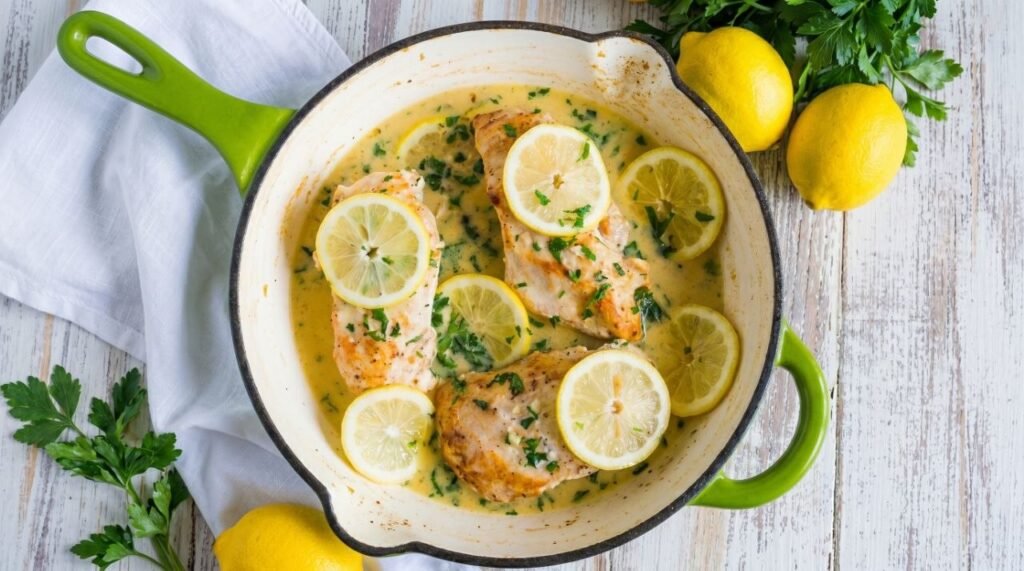
One skillet and a short ingredient list are all this dinner needs.
1 1/2 lbs boneless skinless chicken breasts or thighs.
1 tablespoon olive oil.
1 tablespoon unsalted butter.
3 cloves garlic, finely minced.
Zest and juice of 2 fresh lemons.
1 cup chicken broth.
3/4 cup heavy cream.
1/4 cup finely grated parmesan cheese.
1 teaspoon kosher salt, plus more to taste.
1/2 teaspoon black pepper.
1 tablespoon chopped fresh parsley, for garnish.
Want to Mix It Up?
Use chicken thighs instead of breasts if you want a richer, more forgiving result. Thighs contain more intramuscular fat than breasts, which means they stay juicy even if the sauce reduces a little longer than planned, and their deeper flavor stands up especially well to lemon and garlic.
Add a few tablespoons of capers near the end if you want a sharper, brinier finish that pushes the dish in a more Mediterranean direction. The capers reinforce the acidity of the lemon and cut through the cream with a salty edge that makes the sauce taste even brighter.
Stir in a handful of baby spinach at the end if you want the dish to include its own built-in green vegetable. The spinach wilts in less than a minute in the residual heat of the sauce and adds color, softness, and a subtle earthy note without changing the core flavor profile.
Replace the parmesan with pecorino romano if you want a saltier, sharper cheese flavor. Pecorino melts into the sauce similarly, but its sheep’s milk base gives the finished skillet a bolder finish that works particularly well if the chicken is being served over plain pasta.
How to Make Creamy Lemon Chicken
Step 1 – Prep and season the chicken: Pat the chicken completely dry with paper towels, then lightly pound it to an even thickness if needed. Season both sides with salt, black pepper, and the fresh lemon zest, pressing the zest gently into the surface so it adheres. Drying the chicken is essential because surface moisture prevents proper browning, and the lemon zest needs direct contact with the hot fat later in the pan so its aromatic oils can bloom rather than just sitting on the surface of the meat.
Step 2 – Sear the chicken: Heat the olive oil and butter together in a large skillet over medium-high heat until the butter foams and the fat looks hot and fluid. Add the chicken and cook undisturbed until the underside is deeply golden, then flip and cook the second side until nearly cooked through. Do not crowd the skillet — if the chicken pieces sit too close together they steam instead of sear, and you lose the browned crust and flavorful fond that the sauce depends on. Remove the chicken to a plate and let it rest while you build the sauce.
Step 3 – Build the savory base: Lower the heat slightly and add the minced garlic to the same skillet. Cook for about 30 seconds, stirring constantly, just until fragrant — garlic burns quickly at this stage because the pan is already hot from searing. Pour in the chicken broth and use a wooden spoon to scrape up every browned bit from the bottom of the pan. Let the broth simmer for several minutes so it reduces slightly and concentrates the fond, garlic, and chicken drippings into a more flavorful base before any dairy goes in.
Step 4 – Make the lemon cream sauce: Reduce the heat to low and stir in the heavy cream and parmesan cheese. Let the sauce simmer gently, never aggressively, until it thickens enough to lightly coat the back of a spoon. Once it has thickened, stir in the fresh lemon juice a little at a time, tasting as you go. Adding the juice at this stage keeps the acidity bright and prevents the cream from splitting under hard heat. The sauce should taste rich first and lemony second, not sour and thin.
Step 5 – Finish the skillet: Return the chicken and any accumulated juices from the plate back to the skillet and spoon the sauce over the top. Simmer gently for 2 to 3 minutes until the chicken is fully cooked and the flavors have melded. Finish with chopped parsley and serve immediately while the sauce is glossy and warm. Rice, mashed potatoes, pasta, or crusty bread all work well here because the sauce is too good to leave behind in the pan.
3 Mistakes That Ruin Creamy Lemon Chicken
Adding the lemon juice too early: Lemon juice boiled aggressively with cream and broth loses its fresh citrus quality and pushes the sauce toward a sharper, slightly flat acidity rather than a bright one. In more extreme cases, the acid can destabilize the dairy and make the sauce look grainy. Always build the savory base first, add the cream next, let it settle into a smooth sauce, and then stir in the lemon juice once the heat is low and controlled.
Using wet chicken straight from the package: Moisture on the outside of the chicken prevents browning because the pan must first evaporate that water before the surface temperature can rise high enough for the Maillard reaction to begin. Instead of a golden crust, you get pale chicken that releases liquid into the pan and weakens the fond. Pat the chicken very dry before seasoning it, and give the skillet time to heat properly before the meat goes in.
Boiling the sauce after the cream goes in: High heat is useful for reducing broth, but once cream enters the skillet it becomes the enemy of smooth texture. A hard boil can cause the fat and proteins in the cream to separate, leaving an oily surface and a grainy mouthfeel. Keep the heat low, let the sauce reduce gently, and use time rather than aggression to achieve thickness. That slower finish is what produces the silky restaurant-style texture the dish is supposed to have.
What to Serve With Creamy Lemon Chicken
Creamy Lemon Chicken pairs best with sides that can either absorb the sauce or contrast its richness with freshness and texture. Our Air Fryer Garlic Parmesan Zucchini is an especially good match because the crisped edges and savory parmesan crust give the plate a textural contrast that balances the smooth sauce beautifully. If you want a starch to make the dinner feel more complete, a side of mashed potatoes or buttered pasta works naturally, and for dessert our No Bake Mango Cheesecake provides a cool, fruit-forward finish that complements the citrus notes in the chicken without repeating them too directly.

Easy Creamy Lemon Chicken
Ingredients
Method
- How to Make Creamy Lemon Chicken
- Step 1 – Prep and season the chicken: Pat the chicken completely dry with paper towels, then lightly pound it to an even thickness if needed. Season both sides with salt, black pepper, and the fresh lemon zest, pressing the zest gently into the surface so it adheres. Drying the chicken is essential because surface moisture prevents proper browning, and the lemon zest needs direct contact with the hot fat later in the pan so its aromatic oils can bloom rather than just sitting on the surface of the meat.
- Step 2 – Sear the chicken: Heat the olive oil and butter together in a large skillet over medium-high heat until the butter foams and the fat looks hot and fluid. Add the chicken and cook undisturbed until the underside is deeply golden, then flip and cook the second side until nearly cooked through. Do not crowd the skillet — if the chicken pieces sit too close together they steam instead of sear, and you lose the browned crust and flavorful fond that the sauce depends on. Remove the chicken to a plate and let it rest while you build the sauce.
- Step 3 – Build the savory base: Lower the heat slightly and add the minced garlic to the same skillet. Cook for about 30 seconds, stirring constantly, just until fragrant — garlic burns quickly at this stage because the pan is already hot from searing. Pour in the chicken broth and use a wooden spoon to scrape up every browned bit from the bottom of the pan. Let the broth simmer for several minutes so it reduces slightly and concentrates the fond, garlic, and chicken drippings into a more flavorful base before any dairy goes in.
- Step 4 – Make the lemon cream sauce: Reduce the heat to low and stir in the heavy cream and parmesan cheese. Let the sauce simmer gently, never aggressively, until it thickens enough to lightly coat the back of a spoon. Once it has thickened, stir in the fresh lemon juice a little at a time, tasting as you go. Adding the juice at this stage keeps the acidity bright and prevents the cream from splitting under hard heat. The sauce should taste rich first and lemony second, not sour and thin.
- Step 5 – Finish the skillet: Return the chicken and any accumulated juices from the plate back to the skillet and spoon the sauce over the top. Simmer gently for 2 to 3 minutes until the chicken is fully cooked and the flavors have melded. Finish with chopped parsley and serve immediately while the sauce is glossy and warm. Rice, mashed potatoes, pasta, or crusty bread all work well here because the sauce is too good to leave behind in the pan.
Notes
