
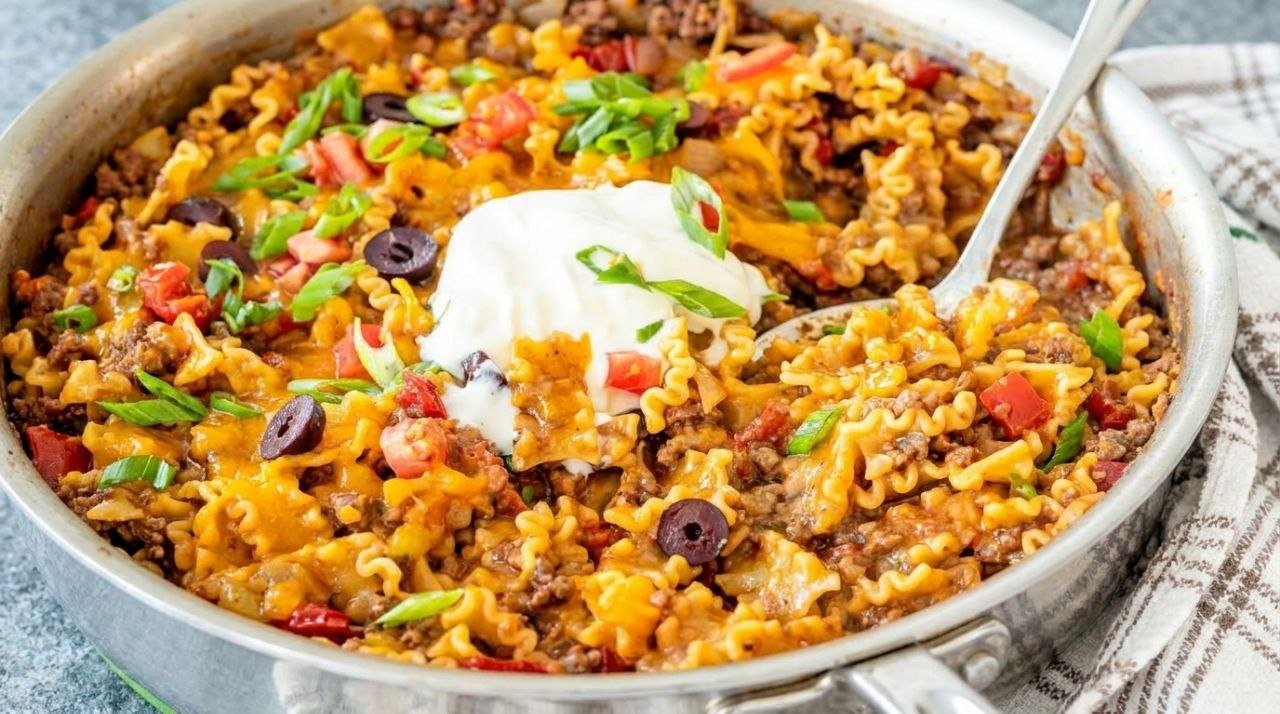
Beef Taco Pasta Skillet is the answer to every weeknight that needs dinner on the table fast without sacrificing the kind of flavor that makes people ask for seconds — seasoned ground beef, diced tomatoes, taco spices, broth, and short pasta all simmered together in one pan until the noodles are tender and the sauce is thick, glossy, and deeply savory. A splash of cream and a blanket of melted cheese finish the skillet into something that tastes like tacos and mac and cheese arrived at the same destination from opposite directions, which is exactly why it works for everyone at the table. Everything is done in about twenty-five minutes from the moment the pan goes on the heat, and the only thing that needs washing at the end is the one skillet you cooked it in.
What makes this recipe better than a simple pasta-and-beef dinner is the technique of cooking the pasta directly in the seasoned cooking liquid rather than boiling it separately in plain water. As the noodles cook, they release starch into the broth and tomato base, which thickens the liquid into a creamy, clingy sauce that coats every piece of pasta instead of sitting in a thin pool at the bottom of the pan. Every bite tastes fully seasoned because the noodles absorbed the spices as they cooked rather than being stirred into a sauce after the fact. That one structural decision — pasta in the pan, not pasta in a pot — is what separates a good skillet dinner from a great one.
Why One-Pan Pasta Works
When pasta cooks in seasoned broth instead of plain boiling water, it absorbs the surrounding flavor directly into the starch structure of the noodle rather than arriving at the table as a neutral vehicle for a sauce applied afterward. The starch the pasta releases simultaneously thickens the liquid into a sauce with real body — one that clings to the noodles rather than running to the bottom of the bowl. This is not a shortcut that compromises quality; it is a technique that actively improves the cohesion and flavor of the finished dish by making the pasta and the sauce the same thing rather than two components assembled at the end.
The Flavor Logic of Taco Seasoning
Taco seasoning is built around cumin, the earthy, warm spice that defines Tex-Mex cooking and gives the skillet its most recognizable note. Cumin contains fat-soluble flavor compounds called terpenoids that bloom most intensely when heated in fat rather than simmered in liquid alone. Cooking the seasoning briefly with the browned beef and onion before adding the broth is what activates those compounds and makes the finished skillet taste rounder, deeper, and more complex than a recipe where the spices go directly into the liquid and never see fat or direct heat. The chili powder, paprika, garlic, and onion powder in the blend fill in warmth, sweetness, and savory depth around the cumin, while the tomatoes contribute acidity that keeps the seasoning tasting bright and prevents the cream from making the dish feel heavy.
The cream goes in at the very end, off the heat or with the flame reduced to low, because high heat causes the fat and water in cream and sour cream to separate rather than emulsify. Added gently to the thickened, starch-rich pasta liquid, it incorporates smoothly and gives the sauce its silky, glossy finish without breaking or turning greasy. The melted cheese completes that emulsification — the fat, protein, and calcium in the cheese help bind everything into a stable sauce that stays creamy from the moment the skillet hits the table to the last bowl scraped clean.
What Goes In

One skillet, eleven pantry ingredients, twenty-five minutes.
1 pound ground beef, 80/20 preferred.
1 small yellow onion, diced.
3 cloves garlic, minced.
2 tablespoons taco seasoning, store-bought or homemade.
1 can diced tomatoes with green chiles, 14.5 oz, undrained.
2 cups beef broth.
8 oz short pasta — rotini, shells, or penne.
1/2 cup heavy cream or full-fat sour cream.
1 1/2 cups shredded cheddar or Mexican blend cheese.
Kosher salt and black pepper, to taste.
Chopped cilantro or sliced green onions for garnish.
Variations Worth Trying
Use ground turkey or ground chicken in place of beef for a lighter version — add a drizzle of olive oil at the start because lean poultry releases less fat and the pan needs it to brown properly and carry the seasoning.
Stir in a can of drained black beans or a cup of frozen corn after the pasta is cooked and the cream is added. Both ingredients give the skillet more texture, more substance, and a slightly sweeter Tex-Mex flavor that works especially well for a larger family dinner.
Use cream cheese instead of heavy cream if you want a thicker, tangier sauce that pulls the skillet closer to a baked dip than a pasta dinner. Add it in small spoonfuls and stir continuously so it melts evenly without clumping in the pan.
Swap cheddar for pepper jack cheese for more heat and a stretchier, more pronounced melt. Smoked gouda is another excellent option that adds a subtle smokiness that complements the taco seasoning without competing with it.
How to Make Beef Taco Pasta Skillet
Step 1 — Brown the beef and soften the aromatics: Heat a large deep skillet over medium-high heat. Add the ground beef in a single layer without breaking it up and let it cook undisturbed for two minutes until the bottom is genuinely browned, then break it apart and continue cooking until no pink remains. Add the diced onion and cook for another 2 to 3 minutes until softened and translucent. Drain excess fat if the pan has more than about a tablespoon’s worth — a small amount of beef fat left in the pan helps carry the seasoning and builds the sauce, but too much makes the finished dish greasy. Add the garlic and taco seasoning, stir to combine, and cook for 30 seconds until fragrant. This brief blooming of the spices in fat is what gives the seasoning its full depth rather than a raw, dusty note.
Step 2 — Add the liquid and pasta: Pour in the undrained diced tomatoes and beef broth and stir to combine, scraping up any browned bits from the bottom of the pan — those bits are concentrated flavor and dissolving them into the sauce is what makes the broth taste like it has been simmering for hours rather than minutes. Add the dry pasta and press it down so it is as submerged in the liquid as possible. Bring the mixture to a boil over high heat, then reduce to a steady medium simmer.
Step 3 — Simmer until the pasta is tender: Cover the skillet and cook for 10 to 12 minutes, lifting the lid to stir once or twice so the pasta cooks evenly and nothing sticks to the bottom. The liquid should reduce significantly as the pasta absorbs it, and by the time the noodles are al dente — tender but with just a slight bite — the sauce should look thick and glossy with very little free liquid remaining. If the pan looks dry before the pasta is fully cooked, add broth in small increments, about a quarter cup at a time. If there is too much liquid when the pasta is done, cook uncovered for another minute or two with the heat slightly raised.
Step 4 — Add the cream and melt the cheese: Remove the skillet from the heat or reduce to the lowest setting. Stir in the heavy cream or sour cream until the sauce looks smooth and creamy with no separation. Scatter the shredded cheese evenly over the surface, then cover the pan for 1 to 2 minutes so the residual heat melts the cheese without requiring any additional flame. Stir once to fold the cheese into the pasta if you prefer a fully mixed result, or leave it as a soft melted layer on top for a more dramatic presentation.
Step 5 — Season, garnish, and serve: Taste the skillet for salt and pepper and adjust as needed — the seasoning level depends on how salty the taco seasoning and broth you used are, so always taste before adding more. Top with chopped cilantro or sliced green onions, and serve immediately directly from the pan while the sauce is at its creamiest. Optional toppings include a spoonful of sour cream, diced avocado, sliced jalapeños, a squeeze of lime, or crushed tortilla chips for crunch.
3 Mistakes That Ruin Taco Pasta Skillet
Skipping the browning step: Ground beef that steams in its own moisture rather than browning on a hot surface turns gray and produces no Maillard reaction flavor. The skillet will taste flat and rely entirely on the seasoning rather than having a meaty, savory foundation. Brown the meat properly before adding anything else, and do not stir too soon.
Adding too much liquid: More broth does not mean a better sauce — it means the pasta will finish cooking before the liquid has reduced, leaving a thin, watery result that dilutes the seasoning and produces a soupy bowl rather than a creamy skillet. Stick to the recipe quantities, and only add extra liquid if the pasta is underdone and the pan is genuinely dry.
Adding dairy over high heat: Cream and sour cream both break and separate if they hit a very hot pan — the fat rises to the surface and the sauce becomes greasy and curdled instead of smooth. Always remove the skillet from the heat or reduce to the lowest setting before stirring in the cream, and add it slowly while stirring continuously so it incorporates evenly rather than shocking the sauce.
What to Serve With Beef Taco Pasta Skillet
This skillet is filling enough to serve as a standalone dinner, but a simple side salad with lime vinaigrette, tortilla chips and salsa, or sliced avocado adds freshness and contrast that rounds out the plate well. For a full Tex-Mex dinner night, pair it with our Baked Chicken Fajitas as a second main so guests have both a pasta and a tortilla option, or follow the skillet with our Strawberry Pretzel Salad for a sweet, cold, no-bake dessert that requires zero effort after the dinner pan is cleared.

Easy Beef Taco Pasta Skillet
Ingredients
Equipment
Method
- How to Make Beef Taco Pasta Skillet
- Step 1 — Brown the beef and soften the aromatics: Heat a large deep skillet over medium-high heat. Add the ground beef in a single layer without breaking it up and let it cook undisturbed for two minutes until the bottom is genuinely browned, then break it apart and continue cooking until no pink remains. Add the diced onion and cook for another 2 to 3 minutes until softened and translucent. Drain excess fat if the pan has more than about a tablespoon’s worth — a small amount of beef fat left in the pan helps carry the seasoning and builds the sauce, but too much makes the finished dish greasy. Add the garlic and taco seasoning, stir to combine, and cook for 30 seconds until fragrant. This brief blooming of the spices in fat is what gives the seasoning its full depth rather than a raw, dusty note.
- Step 2 — Add the liquid and pasta: Pour in the undrained diced tomatoes and beef broth and stir to combine, scraping up any browned bits from the bottom of the pan — those bits are concentrated flavor and dissolving them into the sauce is what makes the broth taste like it has been simmering for hours rather than minutes. Add the dry pasta and press it down so it is as submerged in the liquid as possible. Bring the mixture to a boil over high heat, then reduce to a steady medium simmer.
- Step 3 — Simmer until the pasta is tender: Cover the skillet and cook for 10 to 12 minutes, lifting the lid to stir once or twice so the pasta cooks evenly and nothing sticks to the bottom. The liquid should reduce significantly as the pasta absorbs it, and by the time the noodles are al dente — tender but with just a slight bite — the sauce should look thick and glossy with very little free liquid remaining. If the pan looks dry before the pasta is fully cooked, add broth in small increments, about a quarter cup at a time. If there is too much liquid when the pasta is done, cook uncovered for another minute or two with the heat slightly raised.
- Step 4 — Add the cream and melt the cheese: Remove the skillet from the heat or reduce to the lowest setting. Stir in the heavy cream or sour cream until the sauce looks smooth and creamy with no separation. Scatter the shredded cheese evenly over the surface, then cover the pan for 1 to 2 minutes so the residual heat melts the cheese without requiring any additional flame. Stir once to fold the cheese into the pasta if you prefer a fully mixed result, or leave it as a soft melted layer on top for a more dramatic presentation.
- Step 5 — Season, garnish, and serve: Taste the skillet for salt and pepper and adjust as needed — the seasoning level depends on how salty the taco seasoning and broth you used are, so always taste before adding more. Top with chopped cilantro or sliced green onions, and serve immediately directly from the pan while the sauce is at its creamiest. Optional toppings include a spoonful of sour cream, diced avocado, sliced jalapeños, a squeeze of lime, or crushed tortilla chips for crunch.
Notes
