
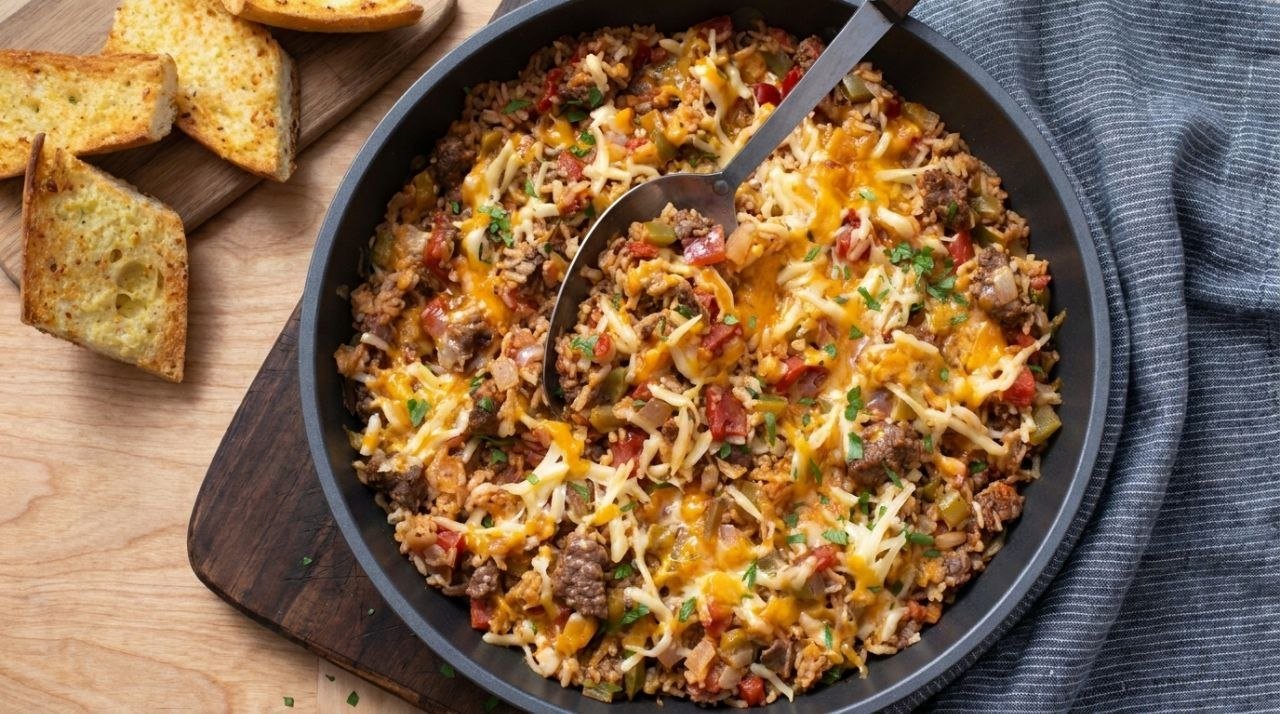
This skillet ground beef and rice is the dinner that every busy weeknight was built for — browned ground beef, aromatics, long-grain white rice, and beef broth all cooked together in a single skillet in twenty minutes from raw ingredients to a finished, flavor-packed plate with one pan to wash at the end. The rice cooks directly in the seasoned broth alongside the beef, absorbing every bit of the garlic, onion, smoked paprika, and Worcestershire sauce flavor from the surrounding liquid as it swells and becomes tender — producing rice that tastes like it was cooked in a rich stock rather than plain water, in a format that requires zero separate pots and zero coordination between multiple cooking timelines. This is the recipe that gets made on the nights when there is nothing planned and everything in the refrigerator is a half-used ingredient — ground beef, an onion, garlic, a box of rice — and dinner needs to be on the table in under half an hour.
What makes the one-pan rice method work so reliably is the ratio of liquid to rice and the tight-fitting lid — the same principles that govern pilaf-style cooking, where raw rice is toasted briefly in fat before liquid is added and then absorbed completely by the grains as they cook covered over low heat. Toasting the rice for sixty to ninety seconds in the residual beef fat before the broth goes in develops a nutty, slightly roasted flavor in the outer starch layer of each grain and coats each grain in fat, which helps keep the grains separate and fluffy rather than sticky and clumped when the finished dish is fluffed and served. The result is rice that is individual, tender, and deeply seasoned throughout — nothing like the plain white rice cooked separately in water that so many ground beef dishes are served over.
Why Rice Cooked in Broth Tastes Better
Plain white rice cooked in water is a neutral starch carrier — it absorbs water and swells, producing grains that taste of nothing beyond the mild flavor of the grain itself. Rice cooked in seasoned beef broth absorbs every flavor compound dissolved in that liquid — the glutamates responsible for savory umami depth, the aromatics from the cooked onion and garlic, the smoked paprika, the Worcestershire sauce — as the starch granules swell and gelatinize during cooking. The starch gelatinization process that transforms raw rice into cooked rice requires the starch granules to absorb liquid and swell to several times their original size — and whatever flavor compounds are dissolved in that liquid are permanently incorporated into the interior of each grain as it swells, not merely coating the outside surface. This is why rice cooked in broth tastes seasoned all the way through rather than only on the surface, and why the one-pan method that cooks the rice in the same liquid as the seasoned beef produces a far more integrated and flavorful result than beef and rice cooked separately and combined at the end.
The Beef-to-Rice Ratio That Makes It Work
The correct ratio for this recipe is one cup of long-grain white rice to two cups of beef broth — the standard two-to-one liquid-to-rice ratio that reliably produces fully cooked, non-mushy rice when the pan is kept covered and the heat is maintained at a low simmer throughout the cooking time. The ground beef in the pan does not affect this ratio because it does not release sufficient additional moisture during the covered cooking phase to change the effective liquid-to-rice balance — the beef was already browned and its surface moisture driven off before the rice and broth were added. The only variable that changes this ratio’s reliability is the specific skillet used: a very thin pan with a poorly fitting lid loses more steam than a heavy skillet with a tight lid, which can leave the rice slightly undercooked at the center if the full two cups of broth evaporate before the rice is tender. If the broth is absorbed but the rice is still slightly firm, add a quarter cup of additional hot water, replace the lid, and cook for three additional minutes.
What Goes In

Pantry staples, one skillet, dinner in twenty minutes.
1 lb ground beef (80/20)
1 cup long-grain white rice, uncooked
2 cups low-sodium beef broth
1 medium yellow onion, diced
4 cloves garlic, minced
1 can (14.5 oz) diced tomatoes, drained
1 tablespoon Worcestershire sauce
1 teaspoon smoked paprika
1 teaspoon garlic powder
1 teaspoon onion powder
1 teaspoon cumin
1 teaspoon salt
1/2 teaspoon black pepper
1 cup shredded cheddar cheese, for topping
Fresh parsley or green onions, chopped, for garnish
Variations Worth Trying
Add a can of black beans or kidney beans — drained and rinsed — along with the broth for a heartier, higher-protein version that stretches the recipe to feed six people without increasing the beef quantity or the cost per serving significantly.
Stir in a cup of frozen corn kernels directly into the pan along with the broth and rice — the corn thaws and cooks through during the fifteen-minute covered cooking phase and adds sweetness, color, and texture that makes the finished dish more visually vibrant and more complete as a one-pan meal.
Add a tablespoon of tomato paste to the pan with the garlic and cook for sixty seconds before the broth goes in — the brief cooking of the tomato paste in the residual fat deepens its flavor from raw and slightly sharp to rich, concentrated, and jammy in a way that adds significant savory depth to the broth and the finished rice.
Finish with a dollop of sour cream and sliced pickled jalapeños on each serving for a Tex-Mex version that requires zero additional cooking — the cool sour cream and spicy jalapeños provide the contrast that makes the rich, savory beef and rice filling taste bright and exciting rather than uniformly heavy.
How to Make Skillet Ground Beef and Rice
Step 1 – Brown the beef: Heat a large, deep skillet with a tight-fitting lid over medium-high heat. Add the ground beef and cook, breaking it into small, crumbled pieces with a wooden spoon or spatula, for 5 to 6 minutes until fully browned with no pink remaining. Do not drain all the fat — leave approximately one tablespoon of beef fat in the pan to cook the aromatics and toast the rice. If the beef is very lean (90/10 or leaner), add a tablespoon of olive oil before cooking the aromatics to ensure sufficient fat remains in the pan. Season the browned beef with half the salt and pepper while it cooks.
Step 2 – Cook the aromatics: Add the diced onion to the pan with the browned beef and cook over medium heat for 3 to 4 minutes, stirring occasionally, until the onion is softened and translucent. Add the minced garlic, smoked paprika, garlic powder, onion powder, cumin, and remaining salt and pepper and stir continuously for 60 seconds until the garlic is fragrant and the dried spices are evenly distributed and beginning to bloom in the residual fat — the pan should smell deeply aromatic at this point. Add the Worcestershire sauce and stir to coat everything evenly.
Step 3 – Toast the rice: Add the uncooked rice directly to the pan and stir to coat every grain in the beef fat, spices, and aromatics. Cook, stirring constantly, for 60 to 90 seconds until the rice grains turn from translucent to opaque white and begin to smell faintly nutty — this brief toasting step is the pilaf technique that develops flavor in the rice starch and coats each grain in fat to prevent sticking during the covered cooking phase. Do not skip or shorten this step; the sixty seconds of toasting contributes significantly to the flavor and texture of the finished rice.
Step 4 – Add broth and tomatoes, then cook covered: Pour in the beef broth and add the drained diced tomatoes. Stir everything together to distribute the tomatoes, beef, and rice evenly throughout the pan. Bring to a boil over medium-high heat, stirring once to ensure nothing is stuck to the bottom. The moment the liquid reaches a full boil, reduce the heat to low, place the lid tightly on the pan, and cook undisturbed for exactly 15 minutes. Do not lift the lid, stir, or adjust the heat during this period.
Step 5 – Rest, fluff, top, and serve: After 15 minutes, remove the pan from the heat and let it rest covered for 5 minutes — this off-heat resting period allows the residual steam in the pan to finish cooking the top layer of rice that was furthest from the heat source, producing uniformly cooked grains throughout the pan rather than slightly underdone rice at the surface. Remove the lid, fluff the rice gently with a fork using light lifting motions rather than stirring, which would break the grains. Scatter the shredded cheddar over the top, replace the lid for two minutes to allow the cheese to melt, then garnish with chopped parsley or green onions and serve directly from the skillet.
3 Mistakes That Ruin Skillet Rice
Using too much liquid or the wrong rice variety: Long-grain white rice absorbs two cups of liquid per one cup of uncooked rice — this ratio is calibrated for long-grain varieties specifically. Medium-grain or short-grain rice absorbs less liquid and becomes sticky and clumped at the two-to-one ratio; brown rice requires more liquid and significantly more cooking time — up to forty-five minutes — and will be severely undercooked at fifteen minutes regardless of liquid quantity. Use long-grain white rice exclusively for this recipe unless adjusting both the liquid ratio and the cooking time accordingly for the alternative variety being used.
Cooking over too high a heat after the lid goes on: Once the lid is on and the heat is reduced to low, the goal is a gentle, steady simmer — visible steam emerging from the sides of the lid is the correct indicator of proper heat level. A heat setting that is too high causes the liquid to boil aggressively, which forces steam out of the pan faster than the rice can absorb it and produces a dry, undercooked pan at the twelve-minute mark with the rice still firm at the center. If visible aggressive boiling steam is escaping the pan after the lid goes on, reduce the heat further until only gentle wisps of steam are visible — the rice will cook through on its own steam without requiring the liquid to be actively boiling beneath it.
Skipping the five-minute off-heat rest: The rice layer at the surface of the pan — furthest from the direct heat source — is always slightly less cooked than the rice at the bottom of the pan at the moment the timer sounds. The five-minute covered rest with the heat off uses the residual steam trapped in the covered pan to finish cooking this surface layer without any additional direct heat, producing uniformly cooked rice throughout the depth of the pan. Serving immediately after the fifteen-minute cook without the rest produces a pan where the bottom rice is perfectly cooked and the top inch is still slightly firm — a two-tier texture problem that the five-minute rest eliminates at no cost in time or effort.
What to Serve with Skillet Ground Beef and Rice
Skillet ground beef and rice is a self-contained protein, starch, and vegetable meal that needs nothing beyond a simple side salad or a few slices of warm crusty bread to become a fully rounded dinner for four. A green salad with a sharp vinaigrette provides the acidic contrast that cuts through the richness of the beef and cheese topping and refreshes the palate between bites of the hearty skillet. For a family dinner with a crowd-pleasing dessert that requires no effort on the night of the meal, follow this skillet with our Churro Cheesecake Bars — made the day before, cut into squares, ready to serve straight from the refrigerator without any plating or presentation effort whatsoever.

Easy Skillet Ground Beef and Rice
Ingredients
Equipment
Method
- How to Make Skillet Ground Beef and Rice
- Step 1 – Brown the beef: Heat a large, deep skillet with a tight-fitting lid over medium-high heat. Add the ground beef and cook, breaking it into small, crumbled pieces with a wooden spoon or spatula, for 5 to 6 minutes until fully browned with no pink remaining. Do not drain all the fat — leave approximately one tablespoon of beef fat in the pan to cook the aromatics and toast the rice. If the beef is very lean (90/10 or leaner), add a tablespoon of olive oil before cooking the aromatics to ensure sufficient fat remains in the pan. Season the browned beef with half the salt and pepper while it cooks.
- Step 2 – Cook the aromatics: Add the diced onion to the pan with the browned beef and cook over medium heat for 3 to 4 minutes, stirring occasionally, until the onion is softened and translucent. Add the minced garlic, smoked paprika, garlic powder, onion powder, cumin, and remaining salt and pepper and stir continuously for 60 seconds until the garlic is fragrant and the dried spices are evenly distributed and beginning to bloom in the residual fat — the pan should smell deeply aromatic at this point. Add the Worcestershire sauce and stir to coat everything evenly.
- Step 3 – Toast the rice: Add the uncooked rice directly to the pan and stir to coat every grain in the beef fat, spices, and aromatics. Cook, stirring constantly, for 60 to 90 seconds until the rice grains turn from translucent to opaque white and begin to smell faintly nutty — this brief toasting step is the pilaf technique that develops flavor in the rice starch and coats each grain in fat to prevent sticking during the covered cooking phase. Do not skip or shorten this step; the sixty seconds of toasting contributes significantly to the flavor and texture of the finished rice.
- Step 4 – Add broth and tomatoes, then cook covered: Pour in the beef broth and add the drained diced tomatoes. Stir everything together to distribute the tomatoes, beef, and rice evenly throughout the pan. Bring to a boil over medium-high heat, stirring once to ensure nothing is stuck to the bottom. The moment the liquid reaches a full boil, reduce the heat to low, place the lid tightly on the pan, and cook undisturbed for exactly 15 minutes. Do not lift the lid, stir, or adjust the heat during this period.
- Step 5 – Rest, fluff, top, and serve: After 15 minutes, remove the pan from the heat and let it rest covered for 5 minutes — this off-heat resting period allows the residual steam in the pan to finish cooking the top layer of rice that was furthest from the heat source, producing uniformly cooked grains throughout the pan rather than slightly underdone rice at the surface. Remove the lid, fluff the rice gently with a fork using light lifting motions rather than stirring, which would break the grains. Scatter the shredded cheddar over the top, replace the lid for two minutes to allow the cheese to melt, then garnish with chopped parsley or green onions and serve directly from the skillet.
Notes
