
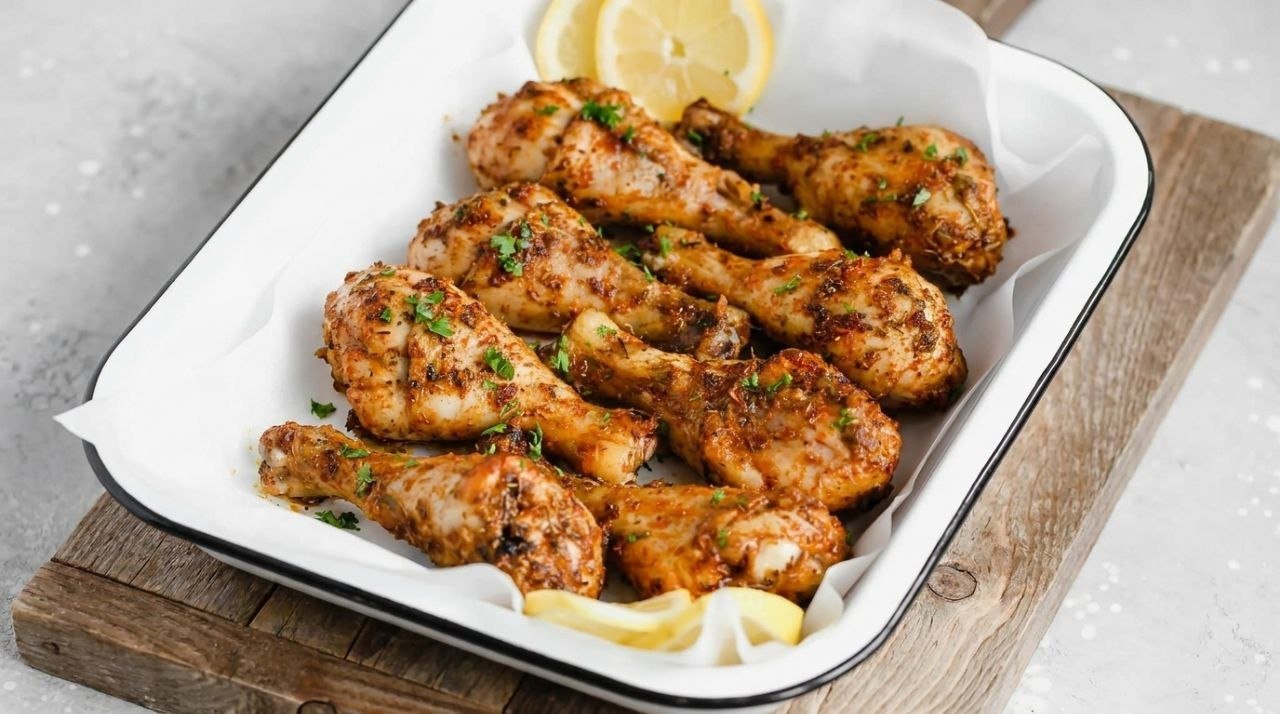
These lemon herb roasted chicken legs are the weeknight dinner that requires almost no effort and delivers results that look and taste like you spent the afternoon cooking — skin that crackles and shatters under the fork, meat so juicy it releases a pool of deeply savory, herb-scented pan juices the moment the bone is pulled, and a lemon-garlic-herb crust that perfumes the kitchen from the moment the pan goes into the oven until the moment the plates hit the table. Chicken legs are the most forgiving cut on the bird: the dark meat and bone structure protect the interior from drying out even at the high oven temperature required to render the fat in the skin and achieve the crackling crust that makes oven-roasted chicken worth making. Forty minutes at high heat, one pan to wash, and dinner is done.
What makes this recipe better than a basic seasoned chicken leg is the wet herb paste — a mixture of olive oil, lemon zest, fresh garlic, fresh rosemary and thyme, smoked paprika, salt, and pepper that is rubbed under the skin directly onto the meat as well as over the skin surface. Seasoning only the exterior of the chicken produces flavor only on the crust; the meat beneath the skin tastes of nothing but chicken. Pushing the herb paste under the skin — separating the skin from the meat with your fingers and spreading the paste directly on the muscle — puts the lemon, garlic, and herb flavor in direct contact with the meat throughout the entire cooking time, so every bite of the finished chicken is herb-scented and flavorful from the surface to the bone rather than only at the crackling exterior.
The Science of Crispy Chicken Skin
Perfectly crispy chicken skin is the product of two simultaneous processes: the Maillard reaction that browns the skin surface and creates hundreds of complex flavor compounds, and the rendering of the subcutaneous fat layer beneath the skin that collapses as the fat melts out and allows the skin to make direct, unobstructed contact with the hot oven air. A chicken leg placed in the oven with wet or un-dried skin fails at the second process first — the surface moisture must evaporate entirely before the skin temperature can rise above 212 degrees F, and during that evaporation period the skin is essentially steaming rather than crisping. Patting the skin completely dry with paper towels before applying the herb paste, and leaving the seasoned legs uncovered in the refrigerator for at least thirty minutes before roasting — or overnight for best results — allows surface moisture to evaporate passively before the oven is even preheated, so when the legs go into the 425-degree F oven the skin is already dry enough to begin rendering and browning immediately rather than spending the first ten minutes evaporating residual moisture.
Why Lemon Zest Beats Lemon Juice in Roasted Chicken
Lemon juice brushed on chicken before roasting acidifies the skin surface and inhibits the Maillard browning reaction — the lower pH environment on the skin surface slows the chemical process responsible for developing the golden-brown color and roasted flavor that is the entire goal of high-heat roasting. Lemon zest contains none of the juice’s acid but all of the peel’s volatile aromatic oils — the limonene, citral, and linalool compounds in lemon zest that produce the bright, floral, intensely citrusy aroma that smells like pure lemon without any sourness. These aromatic oils survive the oven heat better than the acidity of the juice because they are fat-soluble and are carried and protected by the olive oil in the herb paste throughout the roasting process, perfuming the chicken skin and the meat beneath it with genuine lemon character without the browning-inhibiting acidity of the juice. A squeeze of fresh lemon juice served at the table after the chicken is cooked adds brightness and acidity at the moment of eating without interfering with the roasting process.
What Goes In
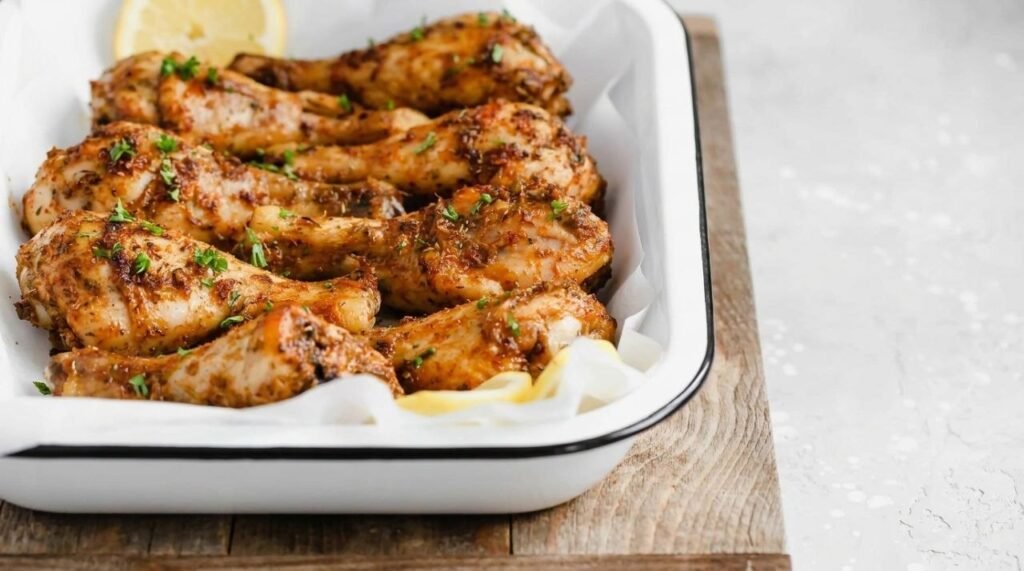
Simple pantry and fridge ingredients — extraordinary oven results.
4 to 6 chicken leg quarters, patted completely dry
3 tablespoons extra virgin olive oil
1 tablespoon fresh lemon zest (approximately 1 large lemon)
5 cloves garlic, minced or pressed
1 tablespoon fresh rosemary, finely chopped
1 tablespoon fresh thyme leaves
1 teaspoon smoked paprika
1.5 teaspoons kosher salt
1/2 teaspoon black pepper
1/2 teaspoon onion powder
Fresh lemon wedges, for serving
Fresh parsley, chopped, for garnish
Variations Worth Trying
Add a teaspoon of Dijon mustard to the herb paste for a French-inspired version — mustard acts as an emulsifier that helps the olive oil and lemon zest bind into a more cohesive paste that adheres to the skin more effectively, while its flavor mellows completely during roasting to a subtle background savoriness that is unidentifiable as mustard in the finished dish.
Use dried herbs at half the quantity of fresh when fresh rosemary and thyme are unavailable — one and a half teaspoons dried rosemary and one and a half teaspoons dried thyme, crumbled between your fingers before mixing into the paste to release their volatile oils, produce a very acceptable result with the pantry staples most home cooks always have on hand.
Scatter halved baby potatoes and whole garlic cloves around the chicken on the wire rack’s baking sheet — they roast in the chicken fat and herb-scented juices that drip from the elevated legs throughout the cooking time, producing an effortless side dish that is already done when the chicken is done and tastes like it was made with far more deliberate effort than simply placing it under the rack.
Finish with a drizzle of herb-infused honey over the roasted legs immediately after they come out of the oven — warm two tablespoons of honey with a sprig of fresh rosemary for thirty seconds in the microwave and brush over the crackling skin just before serving for a sweet-savory glaze that pairs beautifully with the lemon and herb crust.
How to Make Lemon Herb Roasted Chicken Legs
Step 1 – Make the herb paste and prep the chicken: Preheat the oven to 425 degrees F and position the rack in the upper-middle position. In a small bowl, combine the olive oil, lemon zest, minced garlic, chopped rosemary, thyme, smoked paprika, salt, pepper, and onion powder and stir into a thick, uniform paste. Pat each chicken leg completely dry on all surfaces with paper towels — this step is non-negotiable for crispy skin. Using your fingers, gently separate the skin from the meat on each leg by sliding your fingers under the skin at the thigh end and carefully lifting it without tearing. Push a generous portion of the herb paste directly under the skin onto the meat surface and spread it as evenly as possible. Rub the remaining paste over the entire exterior skin surface of each leg.
Step 2 – Arrange and rest: Set a wire rack inside a rimmed baking sheet. Arrange the seasoned chicken legs skin-side up on the wire rack with at least an inch of space between each leg — crowding the rack traps steam between the legs and prevents the skin on the sides from crisping. If time allows, leave the seasoned legs uncovered at room temperature for twenty to thirty minutes before roasting — this brief rest allows the surface moisture from the herb paste to begin evaporating and gives the salt time to begin drawing moisture from the skin, both of which improve the final crispiness. Do not skip the room temperature rest if you seasoned the chicken directly from the refrigerator.
Step 3 – Roast to golden and crispy: Place the baking sheet on the upper-middle oven rack and roast at 425 degrees F for 35 to 40 minutes without opening the oven or disturbing the legs — every time the oven is opened, significant heat is lost and the temperature recovery time extends the actual cooking duration. At 35 minutes, check the skin color: it should be deep golden brown with some darker caramelized spots at the edges where the garlic in the paste has crisped. The skin should visibly glisten from the rendered fat beneath and feel firm and dry to a gentle tap rather than soft and yielding. If the skin is not yet deeply golden, continue for five additional minutes.
Step 4 – Check doneness and rest: Insert an instant-read thermometer into the thickest part of the thigh, away from the bone — the internal temperature must reach 165 degrees F for food safety, though dark meat chicken legs are significantly more forgiving than breast meat and remain juicy and tender even at 175 to 180 degrees F, which is actually the ideal temperature for dark meat as it allows the collagen in the thigh meat to fully convert to gelatin and produce the characteristic richness and juiciness of well-cooked dark meat chicken. Remove from the oven and rest on the rack for five minutes before serving — resting allows the juices to redistribute from the center of the meat outward, so they stay in the meat when cut rather than running onto the plate.
Step 5 – Serve: Transfer the rested chicken legs to a serving platter. Scatter chopped fresh parsley generously over the top and arrange fresh lemon wedges around the platter for squeezing at the table. Serve immediately — the crackling skin is at its best within ten minutes of coming out of the oven and softens gradually as the steam from the interior meat works its way outward through the skin over time.
3 Mistakes That Ruin Roasted Chicken Legs
Not drying the skin before seasoning: Wet skin on a chicken leg going into the oven will steam rather than roast for the first ten to fifteen minutes of cooking — the surface moisture must evaporate before the skin temperature can rise above 212 degrees F and begin the fat-rendering and Maillard browning processes that produce crispy skin. A paper towel pat that takes twenty seconds before seasoning is the single highest-impact preparation step in the recipe. Legs that go into the oven wet can roast for the full forty minutes and still emerge with pale, flabby skin because the moisture prevented the skin from crisping during the window when oven temperature and cooking time were correctly aligned.
Roasting at too low a temperature: Chicken legs roasted at 350 degrees F rather than 425 degrees F cook through safely and produce juicy meat, but the lower temperature is insufficient to render the subcutaneous fat layer and brown the skin surface during the cooking time available before the interior reaches 165 degrees F. The result is cooked chicken with soft, pale, slightly rubbery skin — safe to eat but none of the crackling, deeply golden, aromatic crust that makes oven-roasted chicken legs worth making. High heat — 400 to 425 degrees F — is the non-negotiable requirement for crispy roasted chicken skin, and the dark meat of chicken legs handles this temperature without drying out in the way breast meat would.
Covering the pan during roasting: Covering the baking pan with foil — often done to prevent spattering or perceived over-browning — traps the steam released by the cooking chicken in the enclosed space above the legs and creates a humid oven environment that is the exact opposite of what crispy skin requires. Covered chicken roasts in its own steam and emerges with soft, pale, braised-texture skin regardless of the oven temperature or the cooking time. Always roast uncovered, always use a rimmed baking sheet rather than a covered casserole dish, and always use a wire rack inside that sheet for maximum air circulation around the legs.
What to Serve with Lemon Herb Roasted Chicken Legs
The herb-scented pan juices that accumulate beneath the wire rack during roasting are too good to discard — pour them into a small saucepan, add a splash of chicken broth, and simmer for two minutes for an instant pan sauce that costs nothing extra and makes the plate feel complete without a separate sauce recipe. Roasted or mashed potatoes are the most natural starch accompaniment, absorbing the pan juices and lemon herb flavors on the plate in the way pasta does with a cream sauce. Steamed or roasted green beans, broccolini, or asparagus complete the plate with minimal extra preparation time. For a full family dinner, follow these legs with our Churro Cheesecake Bars for dessert — made the day before, requiring zero effort on the night of the meal, and universally popular with every age at the table.

Easy Lemon Herb Roasted Chicken Legs
Ingredients
Equipment
Method
- How to Make Lemon Herb Roasted Chicken Legs
- Step 1 – Make the herb paste and prep the chicken: Preheat the oven to 425 degrees F and position the rack in the upper-middle position. In a small bowl, combine the olive oil, lemon zest, minced garlic, chopped rosemary, thyme, smoked paprika, salt, pepper, and onion powder and stir into a thick, uniform paste. Pat each chicken leg completely dry on all surfaces with paper towels — this step is non-negotiable for crispy skin. Using your fingers, gently separate the skin from the meat on each leg by sliding your fingers under the skin at the thigh end and carefully lifting it without tearing. Push a generous portion of the herb paste directly under the skin onto the meat surface and spread it as evenly as possible. Rub the remaining paste over the entire exterior skin surface of each leg.
- Step 2 – Arrange and rest: Set a wire rack inside a rimmed baking sheet. Arrange the seasoned chicken legs skin-side up on the wire rack with at least an inch of space between each leg — crowding the rack traps steam between the legs and prevents the skin on the sides from crisping. If time allows, leave the seasoned legs uncovered at room temperature for twenty to thirty minutes before roasting — this brief rest allows the surface moisture from the herb paste to begin evaporating and gives the salt time to begin drawing moisture from the skin, both of which improve the final crispiness. Do not skip the room temperature rest if you seasoned the chicken directly from the refrigerator.
- Step 3 – Roast to golden and crispy: Place the baking sheet on the upper-middle oven rack and roast at 425 degrees F for 35 to 40 minutes without opening the oven or disturbing the legs — every time the oven is opened, significant heat is lost and the temperature recovery time extends the actual cooking duration. At 35 minutes, check the skin color: it should be deep golden brown with some darker caramelized spots at the edges where the garlic in the paste has crisped. The skin should visibly glisten from the rendered fat beneath and feel firm and dry to a gentle tap rather than soft and yielding. If the skin is not yet deeply golden, continue for five additional minutes.
- Step 4 – Check doneness and rest: Insert an instant-read thermometer into the thickest part of the thigh, away from the bone — the internal temperature must reach 165 degrees F for food safety, though dark meat chicken legs are significantly more forgiving than breast meat and remain juicy and tender even at 175 to 180 degrees F, which is actually the ideal temperature for dark meat as it allows the collagen in the thigh meat to fully convert to gelatin and produce the characteristic richness and juiciness of well-cooked dark meat chicken. Remove from the oven and rest on the rack for five minutes before serving — resting allows the juices to redistribute from the center of the meat outward, so they stay in the meat when cut rather than running onto the plate.
- Step 5 – Serve: Transfer the rested chicken legs to a serving platter. Scatter chopped fresh parsley generously over the top and arrange fresh lemon wedges around the platter for squeezing at the table. Serve immediately — the crackling skin is at its best within ten minutes of coming out of the oven and softens gradually as the steam from the interior meat works its way outward through the skin over time.
Notes
