
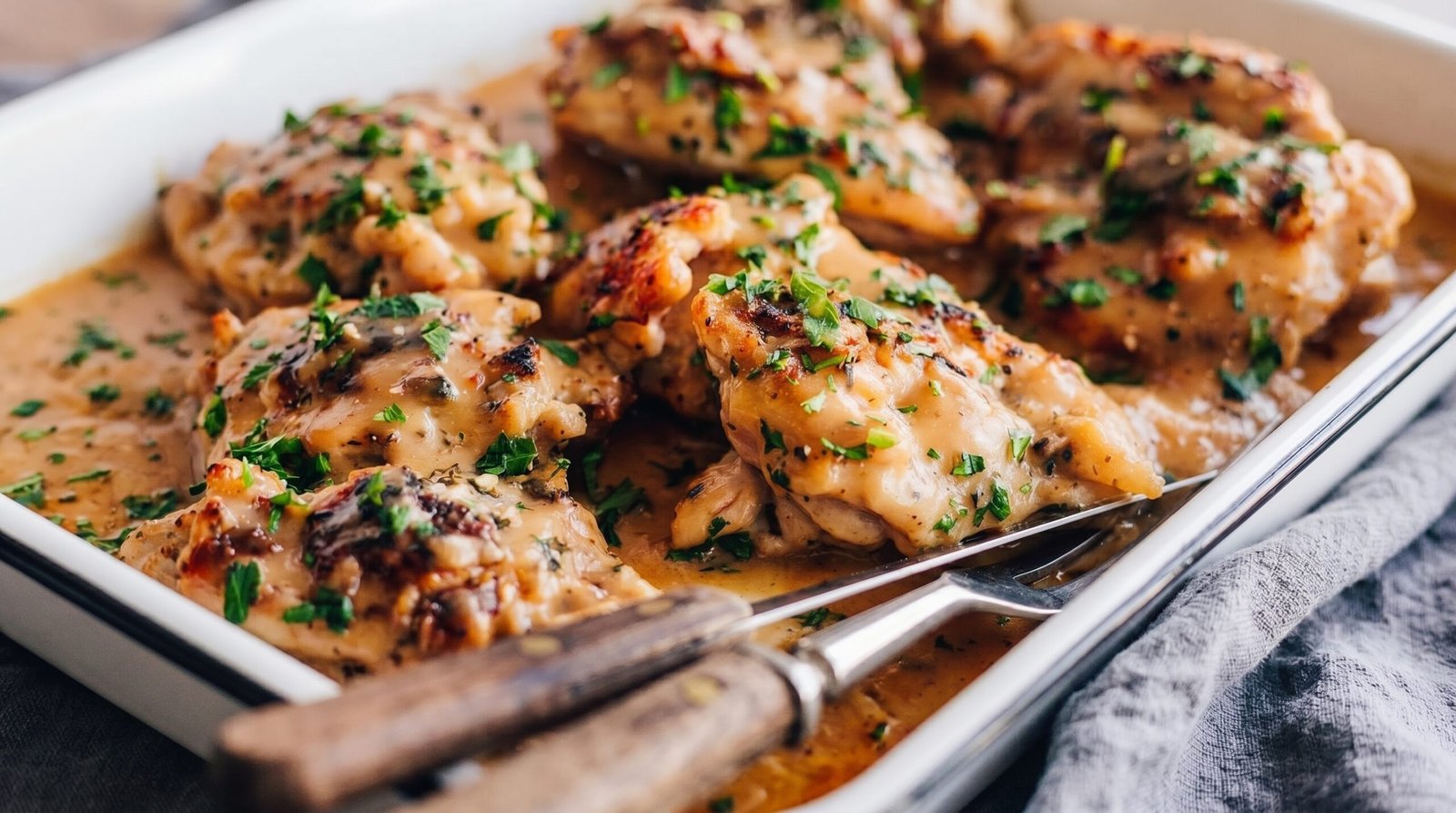
These honey mustard baked chicken thighs deliver exactly what the name promises — skin that caramelizes into a deeply golden, sticky glaze in the oven, meat that stays completely juicy because bone-in thighs are essentially impossible to dry out, and a sauce that takes four ingredients and thirty seconds to whisk together before the chicken goes in. The honey mustard glaze coats the thighs before baking and thickens in the oven heat into something between a lacquer and a sauce — clinging to the skin, pooling slightly around the edges of each thigh, and developing caramelized edges where the sugars in the honey make contact with the hot pan. Total hands-on time is under ten minutes. The oven does everything else.
The reason this recipe works consistently — every single time, regardless of oven, pan, or chicken size — is that bone-in, skin-on chicken thighs have enough fat in and around the meat to stay moist through the full thirty-five minutes of oven time required for the glaze to properly caramelize. A glaze with this sugar content needs high heat and extended time to develop the sticky, lacquered surface that makes these thighs look and taste like they came from a restaurant kitchen. Chicken breast cannot survive that combination of heat and time without drying out. Chicken thighs thrive in it, emerging from the oven juicier than when they went in because the rendering fat has basted the meat from the inside throughout the entire bake.
Why Honey and Mustard Work So Well Together
Honey and mustard is one of the oldest and most reliable flavor pairings in Western cooking, and the reason is straightforward: honey is almost pure sweetness with no acidity, no bitterness, and no savory character of its own, while mustard is simultaneously sharp, tangy, slightly bitter, and intensely savory. Each ingredient supplies exactly what the other lacks. The result of combining them is a sauce that hits every major flavor note — sweet, acidic, bitter, savory — in a single condiment that tastes far more complex than its two primary components would suggest. Add a small amount of garlic for depth and a touch of olive oil to help the glaze adhere to the chicken skin and spread evenly, and you have a four-ingredient sauce that would take a professional kitchen multiple components and reductions to approximate from scratch.
The Caramelization That Builds the Glaze
The sticky, lacquered surface on these chicken thighs is not the honey mustard sauce itself — it is the result of what happens to the sugars in that sauce when they spend thirty-five minutes in a 425-degree oven. Honey is approximately 80 percent sugar by weight, and those sugars begin caramelizing at temperatures above 320 degrees F, breaking down into hundreds of new flavor compounds that are darker, more complex, and more intensely sweet than the original sugar molecules. At 425 degrees F, that process happens rapidly and visibly — the glaze transforms from a golden liquid into a deeply amber, almost mahogany coating that adheres to the skin like a lacquer and develops slightly charred, intensely sweet edges where the thinnest parts of the glaze make direct contact with the hot pan surface.
The mustard in the glaze does something important during this caramelization process: the acidity from the vinegar base of prepared mustard slows the caramelization slightly and prevents the honey sugars from burning before the chicken finishes cooking. This is why a straight honey glaze tends to scorch at high oven temperatures while a honey mustard glaze tolerates them — the acid creates a buffer that allows the sugars to caramelize deeply and evenly without crossing into burned bitterness. It is the same principle that professional candy makers use when adding cream of tartar or lemon juice to prevent crystallization and scorching in high-sugar confections.
What Goes In
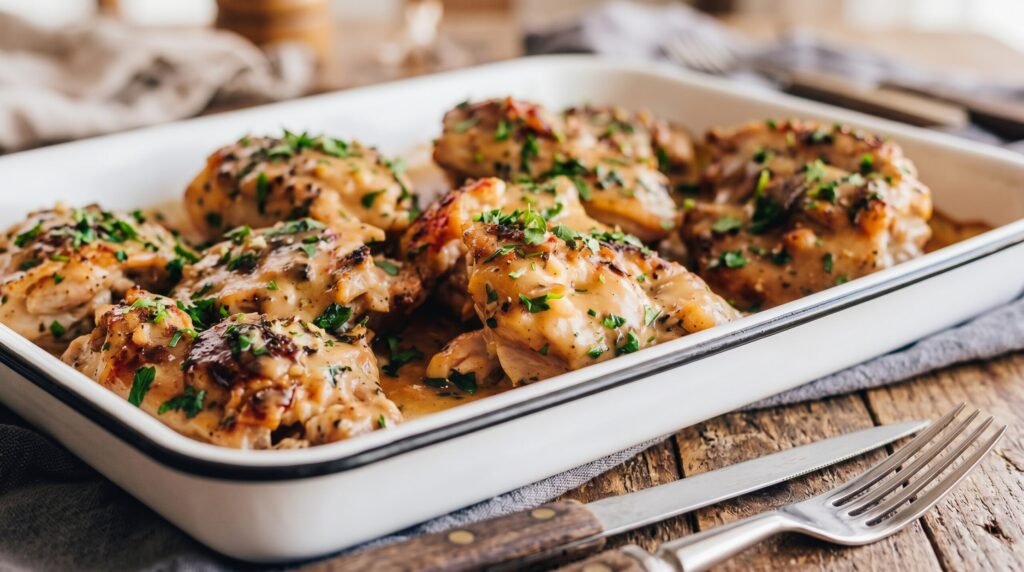
Six ingredients, four of which make the glaze, two of which are salt and pepper.
6 bone-in, skin-on chicken thighs (about 2.5 lbs)
3 tablespoons honey
3 tablespoons Dijon mustard
1 tablespoon whole grain mustard
2 cloves garlic, minced
1 tablespoon olive oil
1 teaspoon salt
1/2 teaspoon black pepper
Fresh thyme or rosemary, for serving
Variations Worth Trying
Add a teaspoon of apple cider vinegar to the glaze for a sharper, more tangy result that cuts through the richness of the chicken fat more aggressively — particularly good if serving the thighs over a starchy side like mashed potatoes or rice that benefits from a more acidic sauce.
Add a pinch of cayenne pepper or a teaspoon of hot sauce to the glaze for a honey mustard hot version that balances the sweetness of the honey with genuine heat — the fat in the chicken skin carries the spice through every bite and prevents it from being sharp and one-dimensional.
Use maple syrup instead of honey for a slightly deeper, more complex sweetness with a subtle smokiness that pairs particularly well with whole grain mustard and a sprig of fresh rosemary tucked under each thigh before baking.
Line the baking dish with sliced onions under the chicken — the onions cook in the rendered chicken fat and glaze drippings as the thighs bake above them and emerge from the oven sweet, jammy, and deeply caramelized without any separate cooking step.
How to Make Honey Mustard Baked Chicken Thighs
Step 1 – Prep the oven and chicken: Preheat your oven to 425 degrees F and lightly grease a 9×13 inch baking dish or line it with foil for easier cleanup. Pat the chicken thighs completely dry with paper towels — dry skin is the foundation of a properly caramelized glaze and a crispy surface. Wet skin steams in the oven rather than crisping, and the glaze cannot adhere properly to a surface that is still releasing surface moisture. Season both sides of each thigh with salt and pepper and set them aside while you make the glaze.
Step 2 – Make the honey mustard glaze: In a small bowl, whisk together the honey, Dijon mustard, whole grain mustard, minced garlic, and olive oil until completely smooth and uniform. Taste the glaze before it touches the chicken — it should be intensely sweet-tangy with a pronounced mustard sharpness that is almost too assertive on its own. The flavors mellow significantly during baking as the sugars caramelize, so a glaze that tastes slightly too strong raw will taste perfectly balanced after thirty-five minutes in a hot oven. Reserve two tablespoons of the glaze in a separate small bowl and set aside for finishing.
Step 3 – Coat and arrange: Place the seasoned chicken thighs skin-side up in the prepared baking dish, spacing them so they are not touching — thighs that are crowded together steam each other rather than roasting, which prevents the skin from crisping and the glaze from caramelizing properly. Spoon or brush the honey mustard glaze generously over the top of each thigh, making sure the entire skin surface is coated all the way to the edges. Tilt the dish slightly and use the back of the spoon to push any glaze that pooled in the dish back onto the chicken.
Step 4 – Bake: Bake at 425 degrees F for 30 minutes without opening the oven — the high, consistent temperature is what drives the caramelization of the glaze, and opening the oven door in the first thirty minutes drops the temperature and disrupts that process. At the 30-minute mark, remove the dish from the oven briefly and brush the reserved fresh glaze over the top of each thigh. Return to the oven for a final 5 minutes. The total bake time is 35 minutes. The finished thighs should be deeply golden with slightly darkened edges on the glaze, and an instant-read thermometer inserted into the thickest part of the thigh without touching bone should read 165 degrees F.
Step 5 – Rest and serve: Remove the baking dish from the oven and let the chicken rest for 5 minutes before serving. Resting allows the juices that have been driven toward the center of the meat by the oven heat to redistribute back through the entire thigh — cutting immediately causes them to pour out onto the plate rather than staying in the meat. Spoon any caramelized pan drippings over the thighs before serving and garnish with fresh thyme or a few leaves of flat-leaf parsley.
3 Mistakes That Ruin Honey Mustard Chicken
Using too low an oven temperature: Honey mustard chicken baked at 350 or 375 degrees F produces a pale, soft glaze that never develops the caramelized, sticky surface that makes this recipe worth making. The sugar in the honey needs the concentrated heat of 425 degrees F to caramelize within the 35-minute window that also produces properly cooked chicken. Lower temperatures extend the bake time significantly, which means the chicken may be fully cooked internally long before the glaze develops any color — and by the time the glaze looks right, the meat has been in the oven too long and has lost moisture. High heat, short time is the correct approach for glazed chicken thighs.
Skipping the second glaze application: The glaze applied before baking caramelizes completely during the thirty-minute initial bake, turning from a bright, vibrant sauce into a dark, deeply flavored coating that is delicious but no longer has the fresh, sharp honey-mustard flavor it started with. The final five-minute glaze application adds a thin layer of fresh, uncooked sauce on top of that caramelized base — it sets briefly in the oven without fully caramelizing, leaving a layer of bright, intact honey mustard flavor on the very surface of the chicken that you taste first with every bite. Without it, the chicken tastes good but one-dimensional; with it, the flavor has a complexity that most people assume came from a much more involved recipe.
Crowding the thighs in the pan: Chicken thighs placed touching or overlapping in the baking dish trap the steam that the meat releases during cooking between them, creating a humid microenvironment around each thigh that prevents the skin from crisping and causes the glaze to stay wet and sticky rather than caramelizing properly. Each thigh needs clearance on all sides so the hot oven air can circulate freely around the skin surface. Use a larger dish or bake in two dishes rather than crowding — the difference in the finished texture of the skin between properly spaced and crowded thighs is significant enough to determine whether the recipe is impressive or just acceptable.
What to Serve with Honey Mustard Chicken Thighs
These thighs produce a generous amount of caramelized pan drippings that are too good to leave in the dish — spoon them over whatever starchy side you are serving alongside, and they function as a built-in sauce with no extra work. Roasted potatoes tossed in the drippings are the most natural pairing: cut them into wedges, toss with olive oil and salt, and roast on a separate sheet pan in the same 425-degree oven while the chicken bakes. Steamed rice absorbs the drippings beautifully and keeps the plate simple and family-friendly. For a lighter vegetable side, roasted green beans or broccolini need only ten minutes in the same hot oven after the chicken comes out, using the residual heat so the oven is not wasted. For dessert, our Peach Cobbler Dump Cake continues the warm, sweet-savory spirit of the meal and can go into the oven to bake at a reduced temperature while the chicken rests and is served.

Easy Honey Mustard Chicken Thighs
Ingredients
Equipment
Method
- How to Make Honey Mustard Baked Chicken Thighs
- Step 1 – Prep the oven and chicken: Preheat your oven to 425 degrees F and lightly grease a 9×13 inch baking dish or line it with foil for easier cleanup. Pat the chicken thighs completely dry with paper towels — dry skin is the foundation of a properly caramelized glaze and a crispy surface. Wet skin steams in the oven rather than crisping, and the glaze cannot adhere properly to a surface that is still releasing surface moisture. Season both sides of each thigh with salt and pepper and set them aside while you make the glaze.
- Step 2 – Make the honey mustard glaze: In a small bowl, whisk together the honey, Dijon mustard, whole grain mustard, minced garlic, and olive oil until completely smooth and uniform. Taste the glaze before it touches the chicken — it should be intensely sweet-tangy with a pronounced mustard sharpness that is almost too assertive on its own. The flavors mellow significantly during baking as the sugars caramelize, so a glaze that tastes slightly too strong raw will taste perfectly balanced after thirty-five minutes in a hot oven. Reserve two tablespoons of the glaze in a separate small bowl and set aside for finishing.
- Step 3 – Coat and arrange: Place the seasoned chicken thighs skin-side up in the prepared baking dish, spacing them so they are not touching — thighs that are crowded together steam each other rather than roasting, which prevents the skin from crisping and the glaze from caramelizing properly. Spoon or brush the honey mustard glaze generously over the top of each thigh, making sure the entire skin surface is coated all the way to the edges. Tilt the dish slightly and use the back of the spoon to push any glaze that pooled in the dish back onto the chicken.
- Step 4 – Bake: Bake at 425 degrees F for 30 minutes without opening the oven — the high, consistent temperature is what drives the caramelization of the glaze, and opening the oven door in the first thirty minutes drops the temperature and disrupts that process. At the 30-minute mark, remove the dish from the oven briefly and brush the reserved fresh glaze over the top of each thigh. Return to the oven for a final 5 minutes. The total bake time is 35 minutes. The finished thighs should be deeply golden with slightly darkened edges on the glaze, and an instant-read thermometer inserted into the thickest part of the thigh without touching bone should read 165 degrees F.
- Step 5 – Rest and serve: Remove the baking dish from the oven and let the chicken rest for 5 minutes before serving. Resting allows the juices that have been driven toward the center of the meat by the oven heat to redistribute back through the entire thigh — cutting immediately causes them to pour out onto the plate rather than staying in the meat. Spoon any caramelized pan drippings over the thighs before serving and garnish with fresh thyme or a few leaves of flat-leaf parsley.
Notes
