
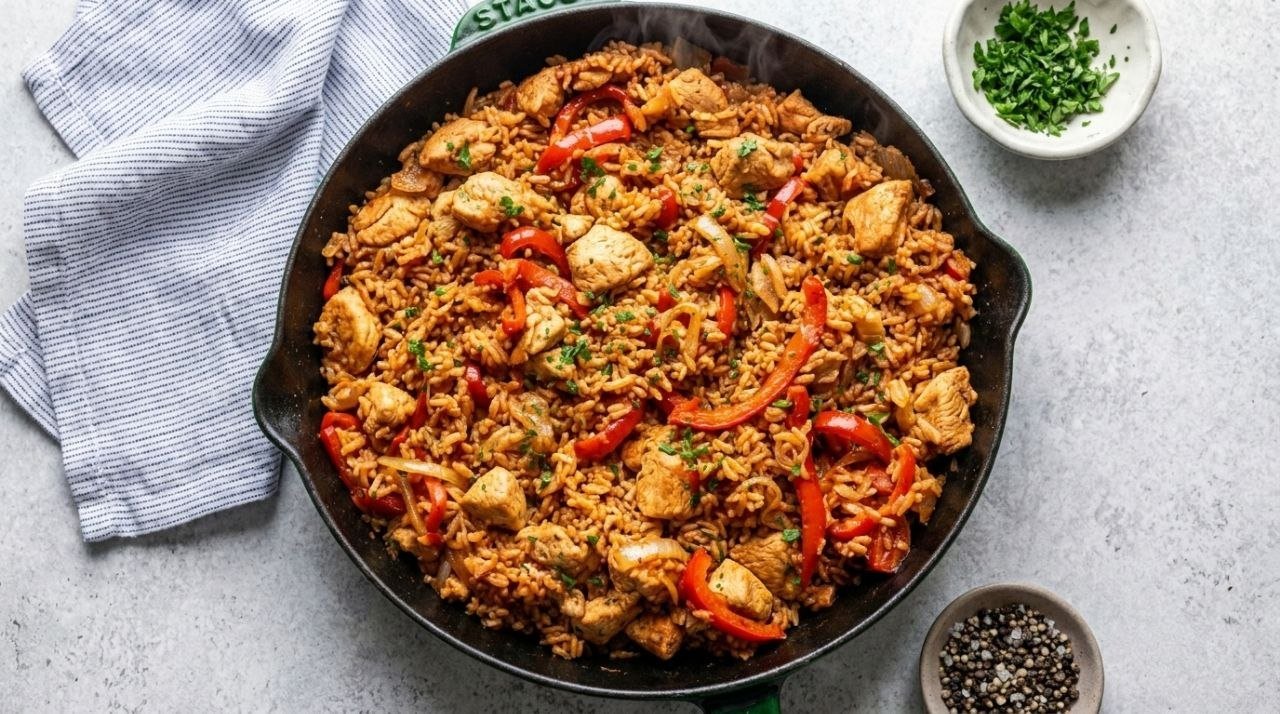
This one pan chicken and rice delivers everything a weeknight family dinner needs to deliver — juicy, well-seasoned chicken thighs cooked directly over fluffy, flavor-soaked rice in a single skillet, start to finish in thirty minutes, with one pan to wash at the end. The chicken sears first in the skillet to build a golden crust and render the fat that will flavor the rice below it, then the rice goes in with chicken broth and the chicken returns on top to finish cooking as the rice absorbs every bit of that savory liquid. The result is chicken that stays moist because it steams gently over the rice during the covered cook, and rice that tastes like it simmered in a rich chicken stock because it did — only the stock came from the chicken itself, cooking six inches above it in the same pan the whole time.
The one-pan format here is not just a convenience claim — it is the technical reason the dish tastes as good as it does. Every element in the pan shares the same cooking liquid and the same aromatic base, so by the time everything is done, the chicken, the rice, and the pan sauce have exchanged flavors in a way that only happens when ingredients cook together rather than separately and then combined. The chicken fat that renders during the sear coats the rice grains before any liquid is added, which creates a light toasted layer on the outside of each grain that keeps them from turning mushy even after absorbing a full cup of hot broth, and that rendered fat is the base note of flavor that ties the entire dish together from the first bite to the last.
Why Chicken Thighs Outperform Breasts in This Recipe
Bone-in, skin-on chicken thighs are the correct cut for one-pan chicken and rice, and the reason is entirely about fat and connective tissue. Thighs contain significantly more intramuscular fat than breast meat, which means they stay moist and tender through the full twenty to twenty-five minute covered cook that the rice requires — a cook time that would turn chicken breast dry and slightly chalky. The skin on bone-in thighs crisps during the initial sear and then releases rendered fat into the pan as the dish cooks, which is the primary flavoring agent for the rice below. The bones conduct heat into the thickest part of the meat from the inside while the pan conducts heat from the outside, which produces more even cooking than boneless cuts and results in chicken that hits the correct internal temperature at exactly the moment the rice finishes absorbing the broth.
The Rice Toasting Step That Changes Everything
Toasting dry rice in the fat remaining in the pan after the chicken sears — just one to two minutes of stirring over medium heat before the liquid goes in — is the most impactful thirty seconds in this entire recipe. When raw rice grains contact hot fat, the outer starch layer undergoes a dry-heat transformation that makes it slightly resistant to moisture absorption during the subsequent cooking. This means the grains absorb liquid more slowly and evenly, staying separate and distinct rather than clumping together or turning soft at the surface while the center is still undercooked. Toasted rice also develops a subtle nutty flavor from the Maillard reaction between the surface starches and the hot fat, adding a depth to the finished dish that plain untoasted rice simply cannot contribute regardless of how flavorful the cooking liquid is.
What Goes In
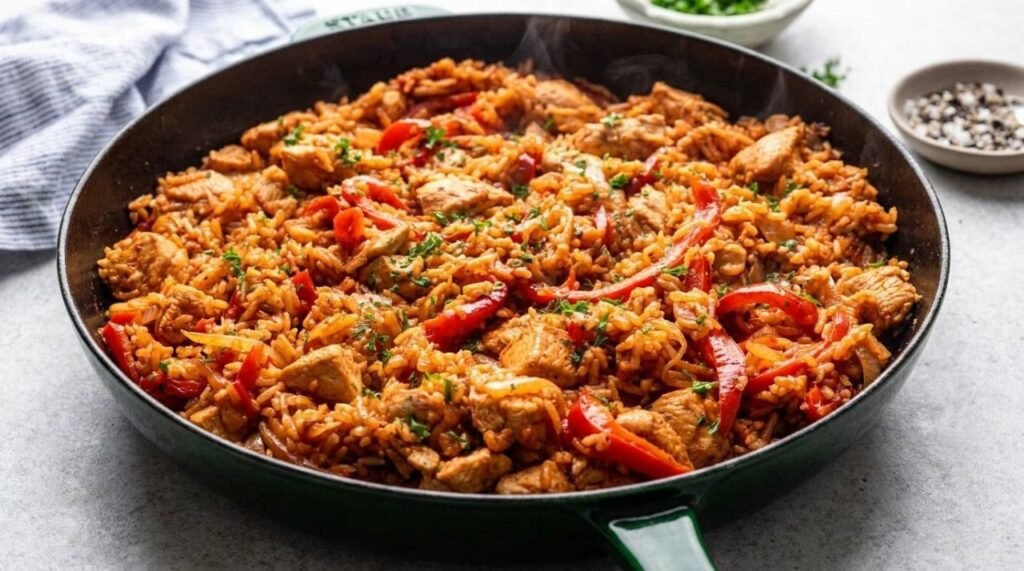
Pantry staples, one pan, thirty minutes.
4 bone-in, skin-on chicken thighs (about 2 lbs)
1.5 cups long-grain white rice, uncooked
2.5 cups low-sodium chicken broth
1 medium yellow onion, diced
4 cloves garlic, minced
1 tablespoon olive oil
1 teaspoon smoked paprika
1 teaspoon garlic powder
1/2 teaspoon onion powder
1/2 teaspoon dried thyme
1 teaspoon salt, divided
1/2 teaspoon black pepper
Fresh parsley, for serving
Easy Variations for the Same Base Recipe
Add one diced bell pepper — red, yellow, or orange — alongside the onion for color, sweetness, and one full vegetable serving built directly into the dish without any extra work or additional cook time.
Stir a teaspoon of tomato paste into the onion and garlic mixture before adding the rice — it adds a subtle savory depth and a warm, slightly reddish color to the rice that makes the finished dish look and taste more complex with no additional ingredients on the shopping list.
Use jasmine rice instead of long-grain white rice for a slightly more fragrant, sticky-tender result — jasmine absorbs liquid and flavor differently than long-grain and produces a rice layer that clings gently to the chicken rather than staying separate and fluffy.
Finish with a squeeze of fresh lemon juice over the entire pan immediately before serving — the acidity brightens every element of the dish and cuts through the richness of the chicken fat and broth in a way that makes the flavors more vivid and defined in the eating.
How to Make One Pan Chicken and Rice
Step 1 – Season the chicken: Pat the chicken thighs completely dry with paper towels — this is the single most important step for achieving a proper golden sear rather than a pale, steamed exterior. Mix the smoked paprika, garlic powder, onion powder, dried thyme, half a teaspoon of salt, and the black pepper together and rub the mixture evenly over both sides of each chicken thigh, pressing it into the surface so it adheres. Dry chicken with a well-adhered spice rub sears to a deep golden crust; wet chicken steams and stays pale regardless of how hot the pan is.
Step 2 – Sear the chicken: Heat the olive oil in a large, deep skillet or Dutch oven over medium-high heat until the oil is shimmering and a drop of water flicked into the pan evaporates immediately on contact. Place the chicken thighs skin-side down in the hot oil and cook without moving them for 4 to 5 minutes until the skin is deep golden brown and releases naturally from the pan surface — if it sticks, it is not ready yet. Flip and sear the second side for 2 to 3 minutes. The chicken will not be cooked through at this stage; it finishes cooking with the rice. Remove the chicken to a plate and set aside.
Step 3 – Build the aromatic base: Reduce the heat to medium. In the fat remaining in the pan, add the diced onion and cook for 2 to 3 minutes, stirring occasionally, until softened and translucent. Add the minced garlic and cook for one additional minute until fragrant. Add the dry rice to the pan and stir continuously for 1 to 2 minutes, coating every grain in the chicken fat and toasting lightly — the rice will look slightly translucent and smell faintly nutty when it is ready for the liquid.
Step 4 – Add the broth and chicken: Pour the chicken broth into the pan and stir to combine with the rice, scraping up any browned bits from the bottom of the pan with a wooden spoon — those browned bits are concentrated flavor and should be fully incorporated into the liquid. Add the remaining half teaspoon of salt and stir. Bring the broth to a simmer over medium-high heat, then nestle the seared chicken thighs skin-side up back into the pan, pressing them gently onto the surface of the rice so they sit level and stable.
Step 5 – Cover and cook: Reduce the heat to medium-low, place a tight-fitting lid on the pan, and cook for 18 to 20 minutes without lifting the lid. At the 18-minute mark, lift the lid and check: the liquid should be fully absorbed, the rice should be tender with no crunch at the center, and the chicken should read 165 degrees F on an instant-read thermometer inserted into the thickest part of the thigh without touching bone. If the rice needs more time, replace the lid and give it 2 more minutes. Once done, remove from heat and rest covered for 5 minutes, then fluff the rice with a fork, garnish with fresh parsley, and serve directly from the pan.
3 Mistakes That Ruin One Pan Chicken and Rice
Not patting the chicken dry before searing: Moisture on the surface of the chicken must evaporate before any browning can occur — the Maillard reaction that produces the golden crust happens only above 300 degrees F at the meat’s surface, and any surface water keeps the temperature at the boiling point of water (212 degrees F) until it fully evaporates. A wet chicken thigh placed in a hot pan steams for the first two to three minutes before the surface even begins to dry out enough for browning to start, which means by the time the crust begins forming, the meat beneath it is already partially cooked. A dry chicken thigh placed in the same hot pan starts browning within thirty seconds.
Using too much or too little liquid for the rice: The correct liquid ratio for long-grain white rice in this format is approximately 1.5 to 1.75 cups of broth per cup of dry rice. The chicken also releases a small amount of moisture as it cooks over the rice, which contributes to the total liquid the rice absorbs during the covered cook. Using the standard stovetop rice ratio of 2 cups per cup of rice without accounting for this additional moisture produces rice that is slightly over-hydrated and sticky at the end. The recipe’s 2.5 cups of broth for 1.5 cups of rice lands at the correct final ratio when the chicken’s contribution is factored in.
Cooking on too high a heat during the covered stage: Medium-low heat during the covered rice cook is not a suggestion — it is the temperature that allows the broth to absorb into the rice at the correct rate without scorching the bottom of the pan before the top layer finishes cooking. High heat drives the liquid up through the rice too quickly, leaves the bottom layer overcooked and stuck to the pan, and produces a finished dish with an uneven texture: sticky and wet at the top, burned and crunchy at the bottom. Medium-low produces a gentle, even simmer that cooks every grain at the same rate from the bottom of the pan to the surface.
What to Serve with One Pan Chicken and Rice
This dish is a complete protein-and-starch dinner on its own, so sides should be simple, vegetable-forward, and light enough not to add more richness to an already satisfying plate. A cucumber and tomato salad dressed with olive oil and red wine vinegar is the simplest and most complementary option — the acidity balances the savory chicken fat in the rice and the coolness of the raw vegetables contrasts the hot, hearty pan. Steamed green beans or roasted broccoli work equally well as a warm vegetable side that cooks while the chicken and rice rest. For dessert, our Peach Cobbler Dump Cake continues the simple, family-friendly spirit of the dinner and requires almost no effort if assembled before starting the chicken, or our 3-Ingredient Banana Oat Cookies offer a lighter, no-bake finish that works particularly well after a hot, filling main course.

Easy One Pan Chicken and Rice
Ingredients
Equipment
Method
- How to Make One Pan Chicken and Rice
- Step 1 – Season the chicken: Pat the chicken thighs completely dry with paper towels — this is the single most important step for achieving a proper golden sear rather than a pale, steamed exterior. Mix the smoked paprika, garlic powder, onion powder, dried thyme, half a teaspoon of salt, and the black pepper together and rub the mixture evenly over both sides of each chicken thigh, pressing it into the surface so it adheres. Dry chicken with a well-adhered spice rub sears to a deep golden crust; wet chicken steams and stays pale regardless of how hot the pan is.
- Step 2 – Sear the chicken: Heat the olive oil in a large, deep skillet or Dutch oven over medium-high heat until the oil is shimmering and a drop of water flicked into the pan evaporates immediately on contact. Place the chicken thighs skin-side down in the hot oil and cook without moving them for 4 to 5 minutes until the skin is deep golden brown and releases naturally from the pan surface — if it sticks, it is not ready yet. Flip and sear the second side for 2 to 3 minutes. The chicken will not be cooked through at this stage; it finishes cooking with the rice. Remove the chicken to a plate and set aside.
- Step 3 – Build the aromatic base: Reduce the heat to medium. In the fat remaining in the pan, add the diced onion and cook for 2 to 3 minutes, stirring occasionally, until softened and translucent. Add the minced garlic and cook for one additional minute until fragrant. Add the dry rice to the pan and stir continuously for 1 to 2 minutes, coating every grain in the chicken fat and toasting lightly — the rice will look slightly translucent and smell faintly nutty when it is ready for the liquid.
- Step 4 – Add the broth and chicken: Pour the chicken broth into the pan and stir to combine with the rice, scraping up any browned bits from the bottom of the pan with a wooden spoon — those browned bits are concentrated flavor and should be fully incorporated into the liquid. Add the remaining half teaspoon of salt and stir. Bring the broth to a simmer over medium-high heat, then nestle the seared chicken thighs skin-side up back into the pan, pressing them gently onto the surface of the rice so they sit level and stable.
- Step 5 – Cover and cook: Reduce the heat to medium-low, place a tight-fitting lid on the pan, and cook for 18 to 20 minutes without lifting the lid. At the 18-minute mark, lift the lid and check: the liquid should be fully absorbed, the rice should be tender with no crunch at the center, and the chicken should read 165 degrees F on an instant-read thermometer inserted into the thickest part of the thigh without touching bone. If the rice needs more time, replace the lid and give it 2 more minutes. Once done, remove from heat and rest covered for 5 minutes, then fluff the rice with a fork, garnish with fresh parsley, and serve directly from the pan.
Notes
