
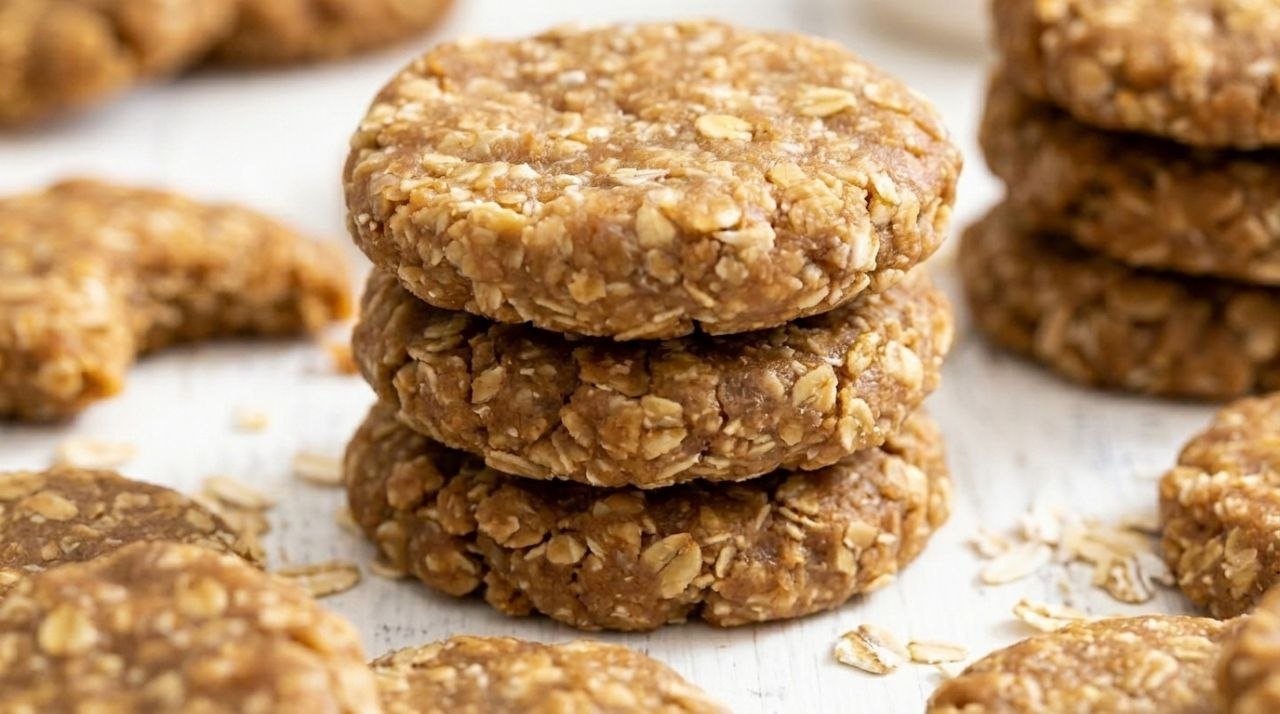
Three ingredients, one bowl, fifteen minutes from start to finish — these banana oat cookies are the kind of recipe that sounds too simple to be worth making until you actually make them and realize they are genuinely good. Two ripe bananas mashed together with rolled oats and a handful of chocolate chips produce a soft, chewy cookie with a naturally sweet, slightly caramelized flavor that comes entirely from the banana with no added sugar, no butter, and no flour anywhere in the recipe. They bake in twelve minutes, cool in five, and disappear from the counter in roughly the same amount of time it took to make them. They work as a quick breakfast, an afternoon snack, a lunchbox addition, or a guilt-free dessert that requires almost no decision-making to prepare.
What earns this recipe its place in regular rotation rather than being a one-time curiosity is how well it functions as a base. The three-ingredient core is genuinely satisfying on its own, but it also accepts additions without complaint — peanut butter, cinnamon, chopped nuts, dried fruit, vanilla extract — any of these folds in cleanly and produces a completely different cookie with the same minimal effort. You can make a different variation every week using the same base formula and the same technique, which means this is not just a recipe but a system that keeps working as long as you have bananas and oats in the kitchen.
Why Three Ingredients Are All You Need
Most cookie recipes require flour, butter, eggs, sugar, leavening, and salt because each ingredient serves a specific structural or flavor function that the others cannot cover. This recipe works with three ingredients because the banana replaces almost everything at once. It acts as the binder that holds the dough together in the absence of eggs, as the sweetener that provides all the sugar the recipe needs, as the fat that keeps the cookies moist after baking, and as the primary flavor. The rolled oats provide structure and chew that the banana alone cannot deliver, creating a matrix of starch granules and fiber that holds its shape in the oven. The chocolate chips are technically optional but they add a second flavor dimension and a small amount of fat that rounds out the texture in the final bite. Nothing is redundant, nothing is missing, and the recipe functions exactly as well with three ingredients as most cookies do with twelve.
The Ripeness Science That Makes It Work
The sweetness of this recipe depends entirely on how ripe the bananas are, and understanding why helps you make a deliberate choice rather than using whatever is on the counter. As a banana ripens, the starches inside its flesh are broken down by naturally occurring enzymes into simple sugars — primarily fructose, glucose, and sucrose — through a process called enzymatic ripening. A yellow banana with green tips contains mostly starch and very little free sugar, which means it tastes starchy and mildly sweet. A banana with a fully brown, spotted peel has converted almost all of that starch into sugar, which is why it tastes intensely sweet, soft, and almost honey-like compared to a barely ripe one. For this recipe, the more spotted and brown the banana, the sweeter and more flavorful the cookies — a barely ripe banana produces a flat, starchy result that needs added sweetener to taste like anything, while an overripe banana produces a cookie that is naturally sweet, aromatic, and complex without a single gram of added sugar.
The oats in this recipe do more than provide structure — they undergo a partial gelatinization process in the oven as the moisture from the banana heats the starch granules in each oat and causes them to swell and soften, which is what produces the chewy, slightly dense texture that distinguishes these cookies from a dry granola bar. Rolled oats work better than quick oats for this recipe because their larger, intact structure gives more texture and chew to the finished cookie, while quick oats absorb the banana moisture too rapidly during mixing and produce a denser, pastier result that bakes up less interesting in both texture and appearance.
What Goes In
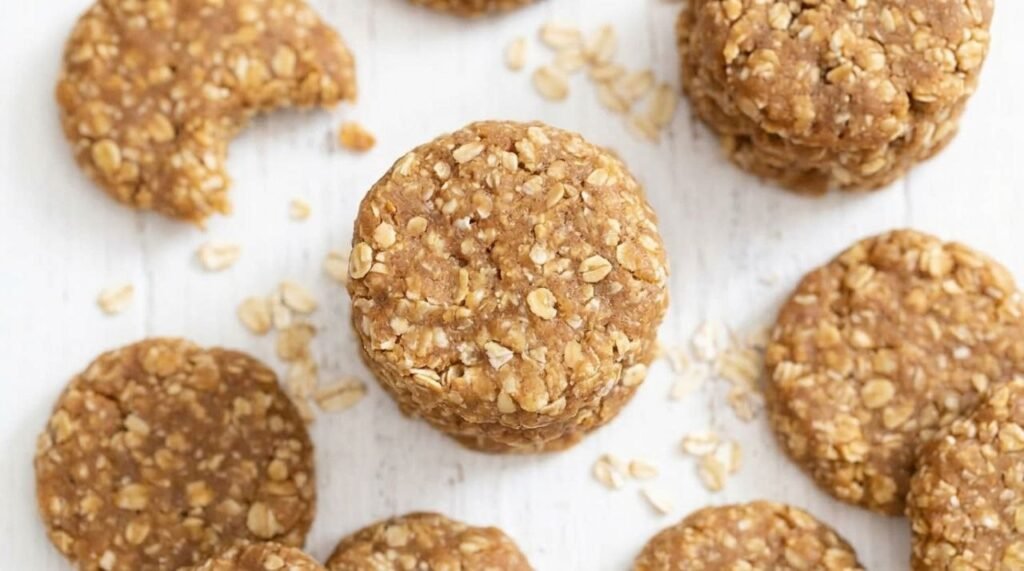
Three ingredients — nothing else required.
2 large overripe bananas, heavily spotted or fully brown
1 cup rolled oats, old-fashioned not quick oats
1/3 cup chocolate chips, semi-sweet or dark
Want to Build on It?
Add 2 tablespoons of natural peanut butter or almond butter to the mashed banana before mixing in the oats for a richer, more filling cookie with a nutty depth that pairs beautifully with the chocolate chips.
Stir in 1/2 teaspoon of cinnamon and 1/4 teaspoon of vanilla extract for a warmer, more aromatic flavor profile that makes the banana taste closer to a baked good than a plain piece of fruit.
Replace the chocolate chips with raisins, dried cranberries, or chopped dried apricots for a fruit-forward version with no added refined sugar of any kind, including in the mix-ins.
Add 2 tablespoons of chia seeds or ground flaxseed to the dough for an extra layer of nutrition, a slightly nuttier flavor, and a firmer texture after baking that holds up better in a lunchbox or container.
How to Make Banana Oat Cookies
Step 1 – Preheat and prepare: Preheat the oven to 350 degrees F and line a baking sheet with parchment paper. The parchment is important here — these cookies have no butter or fat in the dough itself, which means they will stick aggressively to an unlined or ungreased pan and tear apart when you try to remove them. Parchment eliminates this problem entirely and also makes cleanup effortless.
Step 2 – Mash the bananas: Peel the bananas and place them in a large bowl. Mash vigorously with a fork until no large chunks remain and the texture is smooth and almost liquid — think applesauce consistency rather than chunky mash. A few small pieces are fine, but large banana chunks will create uneven pockets in the cookies that affect both texture and how evenly they bake. The more thoroughly the banana is mashed, the more evenly it distributes through the oats.
Step 3 – Mix in the oats: Add the rolled oats to the mashed banana and stir until completely combined and every oat is coated in the banana mixture. Fold in the chocolate chips. The dough will look wet and loose at this point — do not add more oats to compensate. Let the mixture rest for five minutes undisturbed, then check the consistency. After resting, it should be thick enough to scoop and hold a rough shape on the pan.
Step 4 – Scoop and flatten: Using a spoon or a small cookie scoop, portion the dough into roughly 12 equal mounds on the prepared baking sheet, spacing them about an inch apart. Flatten each mound slightly with the back of the spoon — these cookies do not spread in the oven the way butter-based doughs do, so the shape you press them into before baking is approximately the shape they will have when they come out. Aim for a round disc about 1/2 inch thick.
Step 5 – Bake and cool: Bake for 12 to 14 minutes until the edges are set and the tops look dry and lightly golden rather than shiny and wet. The cookies will feel soft when you press them gently straight from the oven — this is correct. They firm up considerably as they cool and develop their final chewy texture over the following five to ten minutes on the pan. Do not try to move them to a rack immediately or they will fall apart. Let them cool on the baking sheet for at least eight minutes before transferring.
3 Mistakes That Ruin Banana Oat Cookies
Using bananas that are not ripe enough: A yellow banana with no spots produces a cookie that tastes starchy, mildly sweet, and flat — essentially a compressed oat cake with banana flavor in the background rather than a genuinely satisfying sweet treat. The minimum for this recipe is a banana that is fully yellow with at least some brown spotting beginning to develop. The ideal is a banana that is more brown than yellow, soft to the touch, and intensely fragrant — at that stage of ripeness, the natural sugar content is high enough that no added sweetener is needed and the cookies taste genuinely sweet from the first bite.
Skipping the resting time: Scooping the dough immediately after mixing produces cookies that spread thin in the oven because the oats have not yet had time to absorb the banana moisture and create a cohesive structure. The five-minute rest is a short but non-negotiable step that transforms a wet, unworkable mixture into a dough that holds its shape. If the dough still looks too loose after five minutes, rest for another two minutes — the oats continue to absorb moisture as long as they are in contact with the banana.
Moving the cookies too soon after baking: These cookies have no structural fat or egg to hold them together while hot, which means they are genuinely fragile for the first several minutes out of the oven. Trying to slide a spatula underneath them before they have cooled on the pan will break them in half or leave the bottom stuck to the parchment. Eight to ten minutes of cooling on the pan is the minimum — after that, they lift cleanly and hold together without any risk of breakage.
What to Serve with Banana Oat Cookies
These cookies are versatile enough to work at almost any point in the day, which is part of what makes them worth keeping in the kitchen. As a breakfast item, they pair naturally with a strong coffee or a glass of cold milk, and the oat-and-banana base makes them filling enough to function as an actual meal rather than just a sweet start to the morning. As a dessert, they work best after a lighter dinner where the banana sweetness does not compete with a richer main course — after our Ground Turkey Taco Bowl or our Honey Garlic Salmon, they provide a clean, naturally sweet finish that feels appropriate rather than excessive. If you are putting together a snack or dessert spread that includes multiple sweet options, place these alongside our Biscoff Cheesecake Bites for a table that offers both a clean, minimalist option and an indulgent one — the contrast makes both taste better.

Easy 3-Ingredient Banana Oat Cookies
Ingredients
Equipment
Method
- How to Make Banana Oat Cookies
- Step 1 – Preheat and prepare: Preheat the oven to 350 degrees F and line a baking sheet with parchment paper. The parchment is important here — these cookies have no butter or fat in the dough itself, which means they will stick aggressively to an unlined or ungreased pan and tear apart when you try to remove them. Parchment eliminates this problem entirely and also makes cleanup effortless.
- Step 2 – Mash the bananas: Peel the bananas and place them in a large bowl. Mash vigorously with a fork until no large chunks remain and the texture is smooth and almost liquid — think applesauce consistency rather than chunky mash. A few small pieces are fine, but large banana chunks will create uneven pockets in the cookies that affect both texture and how evenly they bake. The more thoroughly the banana is mashed, the more evenly it distributes through the oats.
- Step 3 – Mix in the oats: Add the rolled oats to the mashed banana and stir until completely combined and every oat is coated in the banana mixture. Fold in the chocolate chips. The dough will look wet and loose at this point — do not add more oats to compensate. Let the mixture rest for five minutes undisturbed, then check the consistency. After resting, it should be thick enough to scoop and hold a rough shape on the pan.
- Step 4 – Scoop and flatten: Using a spoon or a small cookie scoop, portion the dough into roughly 12 equal mounds on the prepared baking sheet, spacing them about an inch apart. Flatten each mound slightly with the back of the spoon — these cookies do not spread in the oven the way butter-based doughs do, so the shape you press them into before baking is approximately the shape they will have when they come out. Aim for a round disc about 1/2 inch thick.
- Step 5 – Bake and cool: Bake for 12 to 14 minutes until the edges are set and the tops look dry and lightly golden rather than shiny and wet. The cookies will feel soft when you press them gently straight from the oven — this is correct. They firm up considerably as they cool and develop their final chewy texture over the following five to ten minutes on the pan. Do not try to move them to a rack immediately or they will fall apart. Let them cool on the baking sheet for at least eight minutes before transferring.
Notes
